Is It Safe To Visit Freetown Christiania?
A practical safety guide to Freetown Christiania in Copenhagen: the rules to follow, what to avoid on Pusher Street, when to go, and which guided walks cover the district.
Is It Safe To Visit Freetown Christiania?
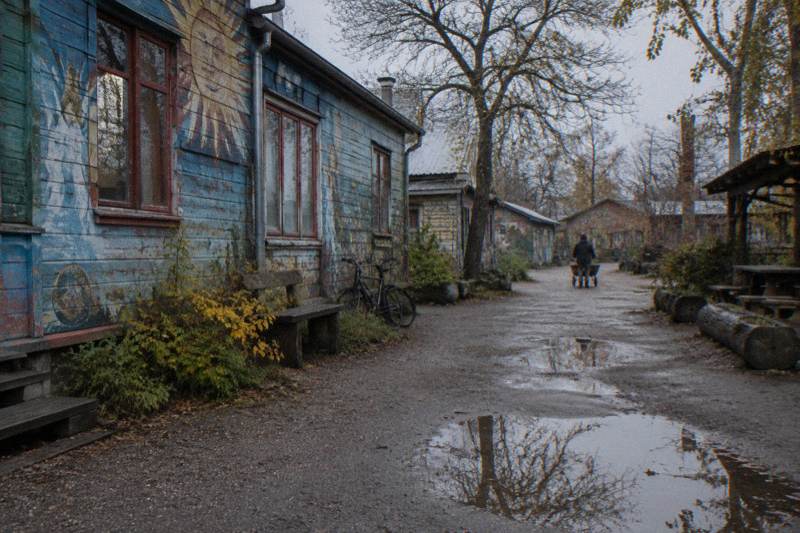
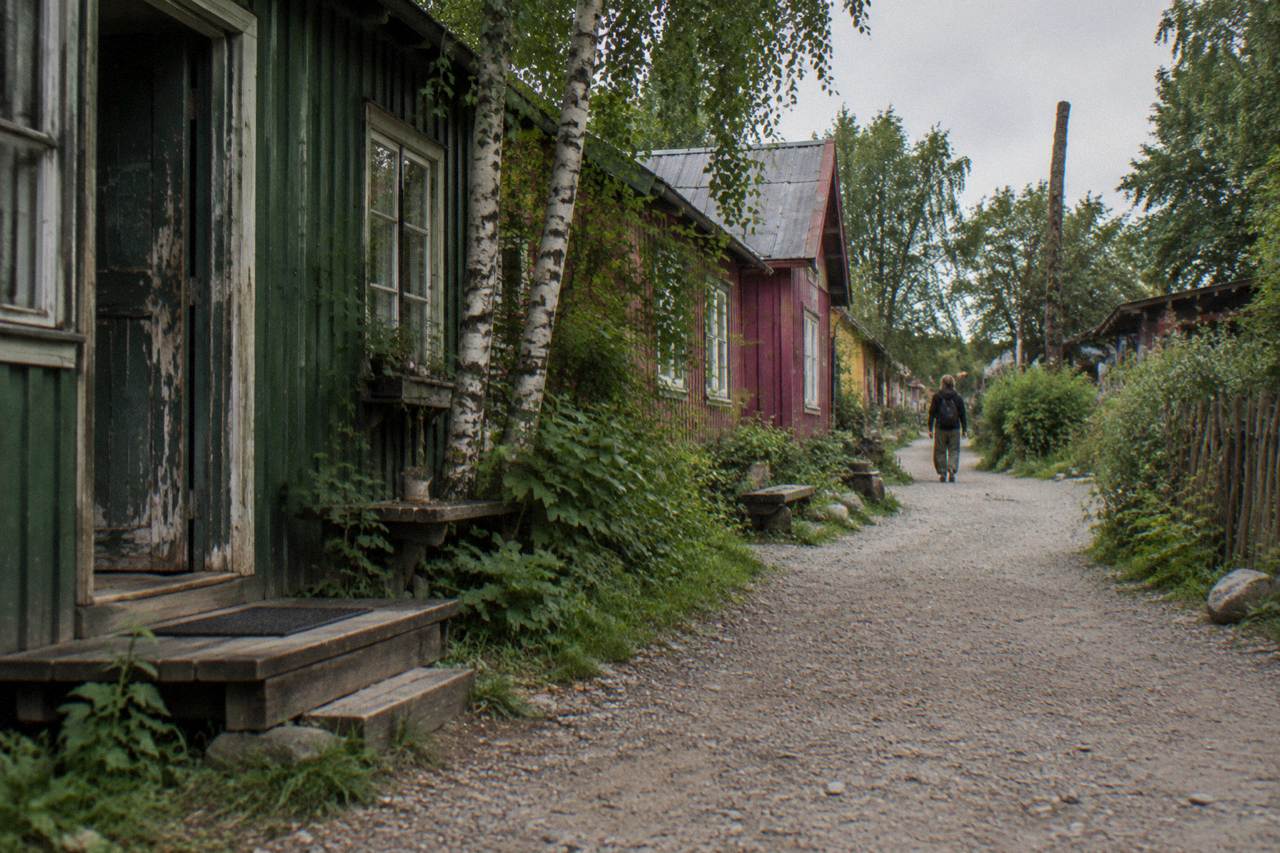
For most visitors who follow the local rules, yes: walking into Christiania is free, the district welcomes tourists on its own terms, and the overwhelming majority of trips pass without incident. The conditions are simple. Respect the photo rules, keep off the transactions on Pusher Street, and go in daylight with your wits about you rather than late at night.
Christiania sits inside Christianshavn, on the eastern side of Copenhagen's inner harbour, and it is one of the few places in Europe that genuinely governs itself. Walking in costs nothing. The verified facts on file for this site record it plainly: Freetown Christiania is free to enter on foot, with photo rules that apply inside. That single pairing, free entry plus photography restrictions, tells you almost everything about how the district works. It is open, but it is not a theme park, and the residents who run it expect visitors to behave like guests in someone's home rather than customers at an attraction.
The safety question is really three smaller questions. Is the walk through the district physically safe? Are there parts you should not enter or things you should not do? And is there a way to see it that reduces the risk further? The answer to the first is broadly yes, with the ordinary caveats that apply to any busy urban area. The answer to the second is that the rules are published, visible on signs at the entrances, and easy to follow. The answer to the third is that a guided walk with a local GuruWalk guide is the lowest-friction way to see the district, because the guide carries the local knowledge and the group carries the visibility.
This site keeps a pooled roster of 21 free and pay-what-you-want walks across GuruWalk and freetour.com, and several of them touch the Christianshavn and Christiania area. If you would rather see the district with a guide than navigate it alone, these three are a reasonable shortlist to start from.
One point worth making early, because scare stories online tend to blur it: the things that are genuinely restricted in Christiania are restricted visibly and in advance. The photo rules are posted. The areas where visitors are asked not to film are marked. Nobody wanders into trouble by accident; trouble comes from ignoring signs that are impossible to miss. Visitors who read the signs at the entrance and behave accordingly are doing exactly what the district asks of them.
What Are The Actual Rules Inside Christiania?
The core rules are short: photography is restricted in parts of the district, Pusher Street is off-limits for photos and for lingering, visitors are asked not to run or cause commotion inside, and the residential areas beyond the main paths are private. Everything is posted on signs at the entrances. Follow the signs and you have done your part.
The photo rules are the ones most visitors trip over, so they deserve the fullest explanation. Christiania's residents have fought long battles over their privacy and their image, and the district's own signage asks people not to photograph in the marked zones, particularly around Pusher Street. The verified facts file for this site records the district as free to enter with photo rules applying inside, and that is the honest summary: you can walk anywhere public, but your camera cannot. Signs mark the boundaries. When you see one, the lens goes away, not just down.
Pusher Street itself deserves its own reckoning, and the practical guidance is consistent across every credible source: do not photograph there, do not film there, do not buy anything offered there, and do not stop to linger. Move through, or better, take one of the parallel paths that skirt it. The street is the district's most sensitive strip and the one place where a tourist behaving badly can provoke a real reaction. Everything else in Christiania is dramatically more relaxed than its reputation suggests.
| Rule in practice | What it means for you | Where it applies |
|---|---|---|
| No photography in marked zones | Put the camera and phone away entirely, not just down | Signed areas, especially Pusher Street |
| Do not buy anything offered | Decline and keep walking, politely and without drama | Pusher Street and immediate surroundings |
| Do not run | Running can cause alarm in a district with its own security culture | Throughout the public paths |
| Residential areas are private | Stay on the main walking routes | Side paths and house clusters |
| Normal Danish law applies outside | Police and emergency services operate in the surrounding city | Christianshavn and the rest of Copenhagen |
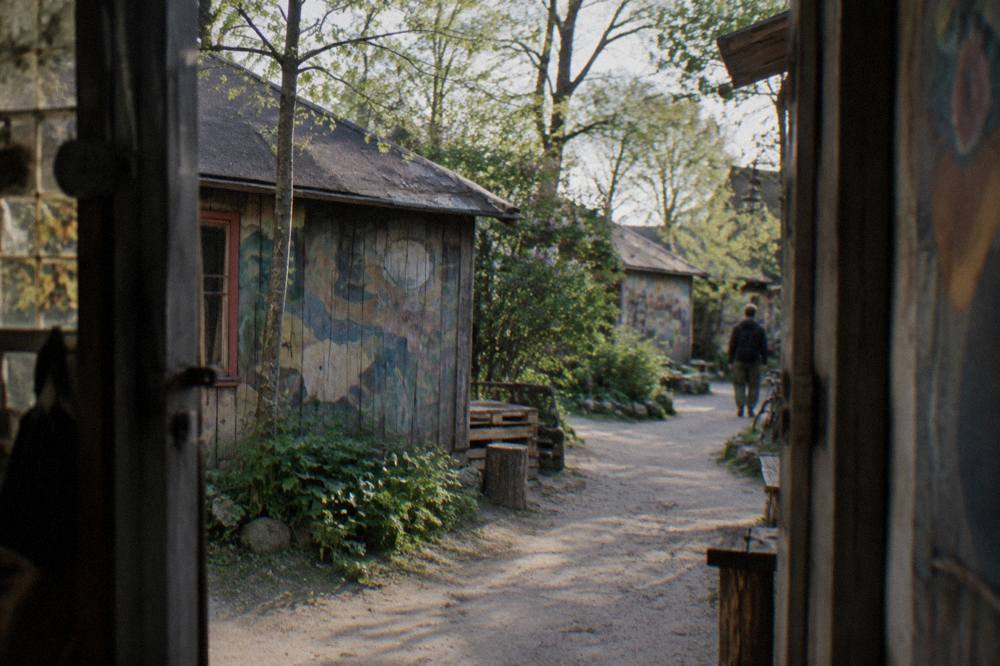
Beyond the rules, the ordinary safety logic of any city applies. Go during the day, when the craft workshops, music venues and food stalls are open and the paths are busy with families and tour groups. Keep your phone in a pocket rather than in your hand. Travel in a pair or a small group if the idea of going alone makes you nervous, though plenty of solo visitors walk through without a second thought. None of this is specific to Christiania; it is the same advice that applies to the centre of Copenhagen or any other European capital after dark.
The guided option is worth weighing seriously here, and not only for safety. A walk led by a local guide covers the context, the history and the etiquette in one pass, and the group setting makes the sensitive streets easier to navigate. The Christianshavn area is served by the Politically Incorrect Hippies Walk, an English-language GuruWalk that runs an hour and a half and is rated 4.74 out of 5 across 393 GuruWalk reviews, meeting at Havnegade 54. A guide who knows the district can answer the questions a sign cannot.
If a guided walk appeals, the natural companion reading is our fuller guide to the district, What To Know Before You Go To Christiania, which covers the practicalities in more depth than a safety article can.
Is Pusher Street Really The Risky Part?
Yes, and the risk is avoidable rather than ambient. Pusher Street is the one strip of Christiania where open cannabis dealing has historically taken place, and where photography and lingering are firmly off-limits. Visitors who walk through without filming, without buying and without stopping are left alone. The rest of the district is calm by comparison.
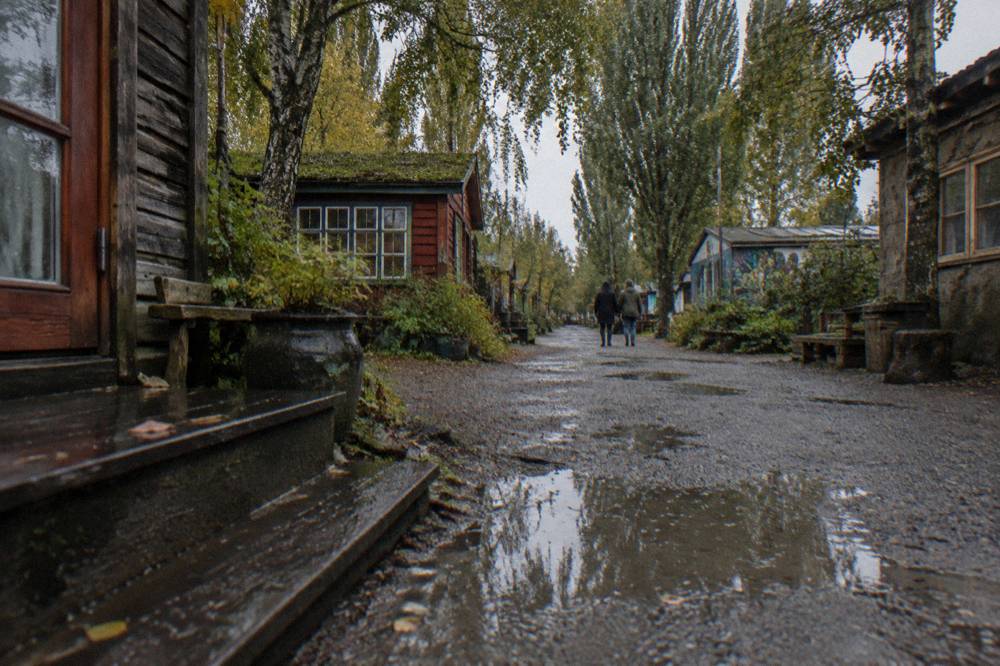
Pusher Street is the reason Christiania has a reputation that outruns its reality, and it is worth separating the street from the district. The street is a short, gravelled stretch near the main entrance. The district is eighty-plus acres of painted houses, workshops, galleries, music venues and green space, most of which has nothing to do with the street at all. Visitors who conflate the two end up either needlessly nervous about the whole area or needlessly casual about the one part that matters, and both mistakes are avoidable.
The mechanics of staying safe on the street are almost insultingly simple. Do not take photographs, do not film, do not buy, do not loiter, and do not argue with anyone who reminds you of the first three. Walk through at an even pace. The signs at both ends make the rules explicit, and the local hand-painted signage does not mince words. If you would struggle to explain the rules to a teenager in your group, the honest answer is that the district is best seen with a guide rather than solo, and there is no shame in that.
For a fuller treatment of the street itself, including what tourists can and cannot do there, our dedicated guide Pusher Street Rules in Copenhagen goes street by street through the restrictions. The short version for safety purposes stands as above: pass through, do not engage, and the street stays boring, which is the goal.
This is also where a guided walk earns its keep most visibly. The Politically Incorrect Hippies Walk, the English-language GuruWalk covering the Christianshavn and Christiania area, is built around exactly this kind of judgment: what to show, what to skip, and how to read the district's boundaries. It runs an hour and a half, is rated 4.74 out of 5 across 393 GuruWalk reviews, and meets at Havnegade 54 before heading across the water.
The walk's review pool is not enormous, but 393 reviews at 4.74 out of 5 is a substantial body of feedback for a neighbourhood walk of this length, and reviewers consistently describe a guide who handles the district's sensitivities with local knowledge. For a visitor whose main worry is etiquette rather than crime, that is the strongest argument for going guided.
When Is The Best Time To Visit Christiania Safely?
Daylight hours, and ideally late morning through mid-afternoon, are the safest window. The paths are busiest then, the stalls and workshops are open, and the district is at its most family-friendly. Late evening brings fewer people, more noise from the music venues, and no upside for a first-time visitor who is nervous about the area.
The logic here is the same as for any semi-autonomous urban district: visibility and footfall are your friends. A Saturday afternoon in Christiania looks like a street festival, with locals, tourists, children and dogs sharing the same gravel paths. The same paths at midnight look and feel entirely different, not necessarily dangerous, but emptier, darker and louder, with the music venues rather than the cafes setting the tone. There is no sightseeing payoff that justifies trading the first for the second on a first visit. More of these guides are collected on Free Things To Do In Copenhagen.
Weather matters less than you would think, because much of Christiania's interest is indoors or under trees, but a dry day does make the district easier to enjoy at a walking pace. Our guide to The Best Time To Visit Copenhagen For Good Weather covers the seasonal picture for the whole city, and the same windows apply here: the summer months give you long evenings, which cuts both ways, because daylight at 10pm makes even a late visit feel safe.
| Time of day | What it feels like | Safety read for a first visit |
|---|---|---|
| Late morning | Workshops opening, few crowds, quiet paths | Good, calm, easy to navigate |
| Mid-afternoon | Busiest, stalls open, families and groups | Best window for most visitors |
| Early evening | Music venues warming up, thinner crowds | Fine in summer daylight, less so in winter dark |
| Late night | Bar noise, very few tourists, low visibility | Not recommended for a first visit |
If your schedule only allows an evening, the compromise is a guided evening option or a walk that ends at the district's edge rather than passing through it. The Medieval Tour at Nightfall, a Spanish-language GuruWalk rated 4.95 out of 5 across 44 reviews, covers the medieval city after dark rather than Christiania itself, which tells you something: the night walks on the roster mostly stay in the historic core, where the evening streets are lit and policed like any capital's.
Practical note on getting home: Christiania's entrances face onto Christianshavn's public streets, where Copenhagen's ordinary buses, metro and harbour buses run late and normally. The district's edge is the boundary; step outside it and you are in the regular city again, with everything that implies for getting back to your hotel safely.
How Do You Get To Christiania Safely?
Christiania has three main entrances from Christianshavn, all reached by ordinary public transport, and the approach through the public streets is as safe as any part of central Copenhagen. The metro to Christianshavn station, the harbour bus across the water, or a walk across the Inner Harbour bridge from the city centre all work. The only transition that matters is at the entrance itself, where the signs begin.
The journey there is the easy part. Christianshavn is a calm, canal-crossed neighbourhood of old warehouses and houseboats, and the walk from the metro station to Christiania's main entrance takes you through ordinary residential streets. A single 2-zone ticket is commonly cited at around DKK 24, though that figure comes from a secondary information site rather than the transit authority's own page, so treat it as approximate. The 24-hour City Pass costs DKK 100 per the official journey planner at dinoffentligetransport.dk, and covers the metro, buses and harbour buses that serve the area.
The harbour bus deserves a special mention for nervous visitors, because it turns the approach into part of the outing. The little passenger ferries that cross the Inner Harbour are part of the regular transit network, and arriving at Christiania by water gives you a clear view of the district's scale before you are inside it. For families, it is also the option children enjoy most, and it deposits you a short walk from the main entrance.
| Approach | Route | What to expect |
|---|---|---|
| Metro | Line M1 or M2 to Christianshavn station, then a 10-minute walk | Fast, frequent, well-lit station |
| Harbour bus | Harbour ferry to the Christianshavn side, then walk | Scenic, part of the transit network, popular with families |
| On foot from the centre | Across the Inner Harbour bridge from Nyhavn | Around 20 minutes, entirely through public streets |
| Bus | Regular city bus services to Christianshavn | Ordinary Copenhagen transit, no special rules |
One caution that belongs here rather than buried in a footnote: do not confuse the transit ticketing with the Copenhagen Card. The card is a paid product, DKK 589 for 24 hours or DKK 859 for 48 hours at adult rates per the official price page, and nothing in this article is free because of it. Walking into Christiania is free on its own terms, no card required.
If you would rather arrive with a guide and a group, the walks that start in the city centre and cross toward Christianshavn handle the logistics for you. The Grand Tour, an English and Spanish GuruWalk that runs 2 hours and 30 minutes from Copenhagen City Hall, is rated 4.82 out of 5 across 2,538 GuruWalk reviews and covers the historic core before heading toward the harbour; it is the strongest all-round first walk for a visitor who wants one guided introduction to the city, with the Christianshavn walks as a second day's outing.
That review pool, 2,538 reviews at 4.82 out of 5, is the largest of any English-capable walk on the site's GuruWalk roster, and the meeting point at the City Hall square is impossible to miss. For a visitor combining a first-day orientation walk with a second-day Christiania visit, that sequencing works well in practice.
Should You Take A Guided Walk Or Go Alone?
Go alone if you are comfortable reading posted rules and walking unfamiliar streets; go guided if you want the district's context explained, its boundaries made explicit, and the sensitive streets handled by someone who knows them. Both are safe when the rules are followed. The guided option simply removes the guesswork, and on the Christianshavn side it costs nothing up front.
The free-walking-tour model, pay-what-you-want at the end, suits Christiania better than any paid excursion could, because the district's own economy runs on the same principle of direct, informal exchange. A guide who works on tips has every incentive to give a walk worth tipping, and the reviews on the GuruWalk platform reflect that dynamic: the Christianshavn-area walks on this site's roster score between 4.74 and 4.81 out of 5, with the strongest review pools in the thousands.
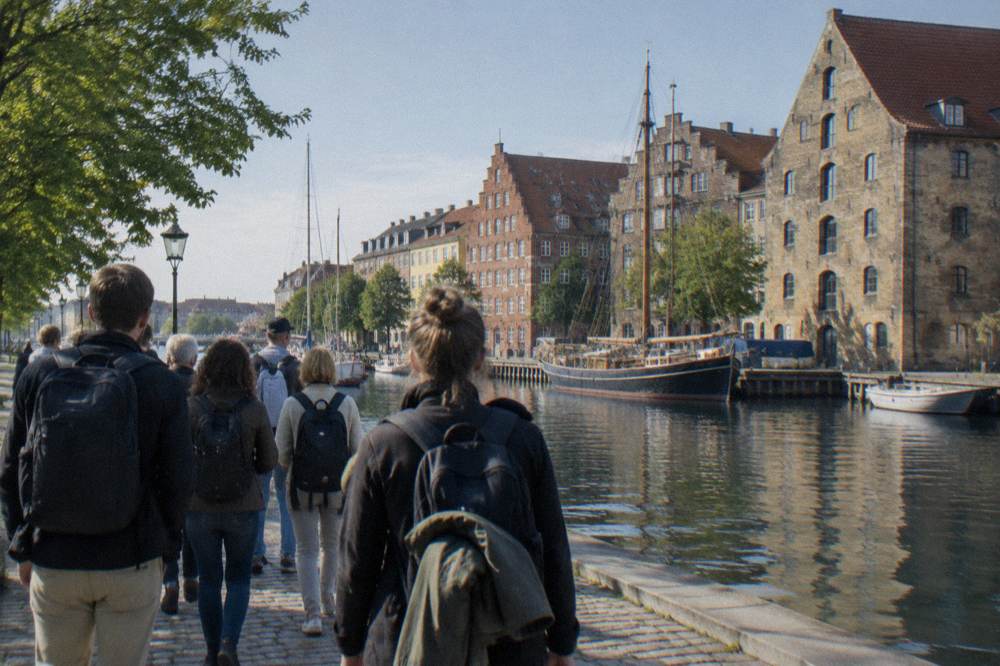
For visitors who prefer the solo route, the checklist from earlier sections is the whole of it: enter in daylight, read the signs, respect the photo rules, skip Pusher Street's transactions, and leave before the evening crowd thins. Solo visitors do this every day without incident. The guided route bundles the same rules with a running commentary, and on a first visit to a district that is genuinely unlike anywhere else in Europe, the commentary is worth more than the safety margin.
The choice also interacts with language. Christiania's signs are in Danish and English, but the guided walks around it run in several languages, and the roster includes Spanish and Italian options for the same streets, such as the Christianshavn in Spanish walk rated 4.56 out of 5 across 362 GuruWalk reviews. Whatever your comfort level, there is a format that matches it, and the underlying answer to this article's question does not change between them: yes, it is safe, on the district's terms.
Before the practical questions, here are three more walks worth a look if the Christianshavn side of the city has won you over.
Common Questions About Visiting Freetown Christiania
Is It Safe To Visit Freetown Christiania?
Yes, for the vast majority of visitors. Entry on foot is free, the district is used to tourists, and the rules that keep you safe are posted at the entrances. Follow the photo restrictions, avoid buying anything on Pusher Street, and visit in daylight, and your visit is likely to be entirely uneventful.
Can You Take Photos Inside Christiania?
Only outside the marked zones. Christiania has posted photo rules that apply in parts of the district, most firmly around Pusher Street, where photography is firmly off-limits. Elsewhere, look for signage before raising a camera, and when in doubt, ask a local or put the phone away.
Is Pusher Street Dangerous For Tourists?
It is the district's most sensitive street, and the risk is entirely avoidable. Do not photograph, do not film, do not buy anything offered, and do not linger. Walking through at an even pace draws no attention, and the rest of Christiania is far calmer than the street's reputation suggests.
When Should You Not Visit Christiania?
Late at night on a first visit. After dark the paths empty, the music venues dominate, and there is no sightseeing payoff that justifies the change in atmosphere. Late morning through mid-afternoon is the busiest and most family-friendly window.
Do You Need A Guide To Visit Christiania Safely?
No, but a guide removes the guesswork. The Politically Incorrect Hippies Walk, an English-language GuruWalk rated 4.74 out of 5 across 393 reviews, covers the Christianshavn and Christiania area in 1 hour 30 minutes and handles the district's etiquette with local knowledge.
Is Christiania Free To Enter?
Yes, walking in costs nothing. It is one of the 25 unconditionally free attractions on this site's verified list for Copenhagen, with the only conditions being the posted photo rules and the behavioural norms described above.