Copenhagen Itinerary 2 Days: When To Go And What To Do For Free
Copenhagen rewards two things above all: decent weather and comfortable shoes. This guide pairs the months worth booking with a two day route built almost entirely on free sights and pay-what-you-want walking tours.
Short answer
Late May through early September is the sweet spot for good weather, with June and July the warmest and longest days. A two day itinerary covers Indre By on day one, Christianshavn and the harbour on day two, anchored by free walking tours rated 4.46 to 4.84 out of 5 on GuruWalk and 9.5 out of 10 on freetour.com.
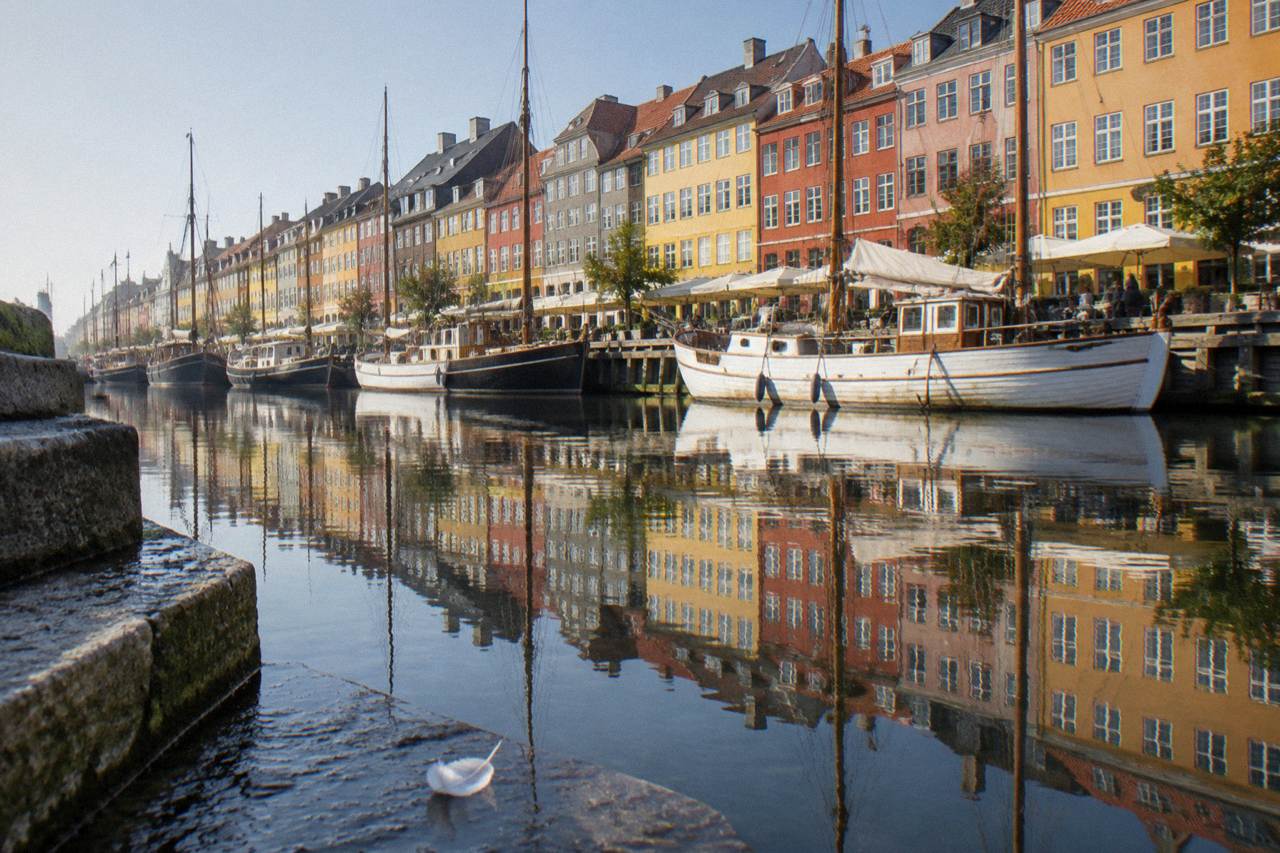
Nyhavn's gabled facades photograph well in any weather, but Copenhagen is genuinely a fair-weather city. The harbour baths open in summer, the parks fill from late spring, and the free walking tours that anchor most two day itineraries run longer and more often when the days stretch out. Get the timing right and the city's best experiences, nearly all of them free, line up neatly into a compact 48 hours.
This guide does two jobs at once. It answers when to visit for good weather, using verified figures rather than folklore, and it lays out a Copenhagen itinerary 2 days long that strings together Indre By, Christianshavn and Vesterbro on foot. The walking tours listed here are all pay-what-you-want listings on GuruWalk or freetour.com, run by independent local guides. For a broader look at how these tours work, read our guide to free walking tours in Copenhagen.
When Is The Best Time To Visit Copenhagen For Good Weather?
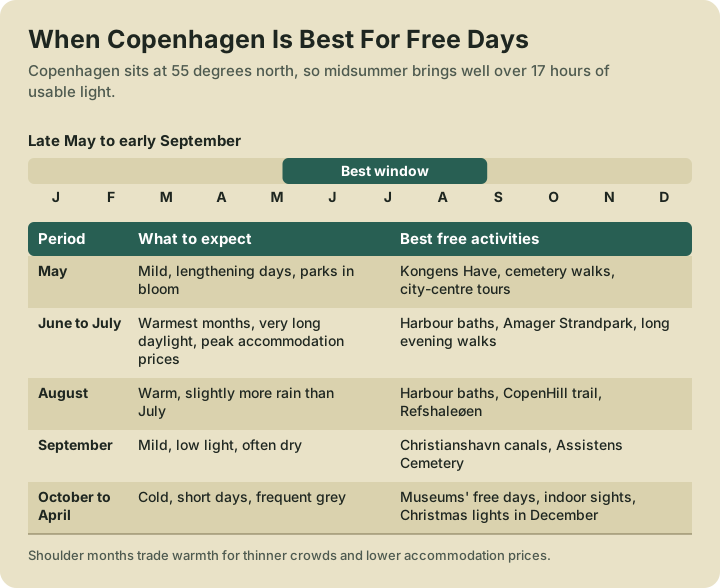
The best window is late May through early September, with June and July delivering the warmest temperatures and the longest daylight. Copenhagen sits at 55 degrees north, so midsummer gives you well over 17 hours of usable light, while winter compresses sightseeing into a short grey window. Shoulder months trade warmth for thinner crowds and lower accommodation prices.
Summer is when the city behaves the way the postcards promise. The harbour baths at Islands Brygge actually get used, Amager Strandpark becomes a real beach destination rather than a windswept stretch of sand, and the canals of Christianshavn look their best under a high sun. Danish summers are mild rather than hot, which suits a city built around walking. You will not melt on a two hour tour, and the frequent café stops that Danish culture demands feel pleasant rather than like shelter.
The shoulder seasons deserve more credit than they usually get. September in particular tends to stay dry and mild, and the light takes on a low, warm angle that photographers chase. May is similar, with the parks, Kongens Have above all, waking up after winter. The trade-off is variability: a fine week in either month can be followed by a cold, wet one, so pack layers and a rain shell regardless.
Winter has its own logic, and it is not nothing. The days are short, yes, but the free interior attractions, the David Collection, the Black Diamond library foyer, the cathedral, carry the sightseeing load, and the Christmas season lights up the city centre in a way that costs nothing to walk through. If your two days fall in December, plan them around indoor mornings and lit-up evenings rather than park time.
| Period | What to expect | Best free activities | Watch out for |
|---|---|---|---|
| May | Mild, lengthening days, parks in bloom | Kongens Have, cemetery walks, city-centre tours | Occasional cold snaps |
| June to July | Warmest months, very long daylight | Harbour baths, Amager Strandpark, long evening walks | Peak accommodation prices |
| August | Warm, slightly more rain than July | Harbour baths, CopenHill trail, Refshaleoen | Nothing serious |
| September | Mild, low light, often dry | Christianshavn canals, Assistens Cemetery | Variable weeks |
| October to April | Cold, short days, frequent grey | Museums' free days, indoor sights, Christmas lights in December | Daylight window closes early |
One planning note that matters for a short trip: several of Copenhagen's best museums are conditionally free rather than always free. The Ny Carlsberg Glyptotek is paid most days, around DKK 150, but offers free entry to the whole museum on the last Wednesday of every month, a schedule confirmed on the museum's own site. If your two days can be nudged to include a final-Wednesday, you trade a paid afternoon for a free one.
What Does A Two Day Copenhagen Itinerary Actually Look Like?
Two days is enough to cover Copenhagen's three most rewarding neighbourhoods on foot: Indre By's medieval core on day one, then Christianshavn, the harbour front and Freetown Christiania on day two, with Vesterbro slotted in as a final half-day or evening. Free walking tours anchor both days, and everything between them is free to enter or walk through.
The geography makes this easy. Indre By, the old town, is compact and walkable end to end in under half an hour. Christianshavn sits directly across the inner harbour, a short walk over Knippelsbro or a quick metro hop. Vesterbro starts on the far side of the City Hall square. Nothing in this itinerary requires more than a single 2-zone journey, and most of it requires none at all, which matters when a 24-hour City Pass runs DKK 100 per the official journey planner's fare pages.
Structure the days around the tours, not the sights. The pay-what-you-want walks give each day a spine, a local guide, a fixed start time and a route that connects the major free sights in a sensible order. Fill the gaps before and after with the attractions that suit the weather. A wet morning belongs inside the David Collection or the cathedral; a fine evening belongs on the harbour front or the CopenHill rooftop trail.
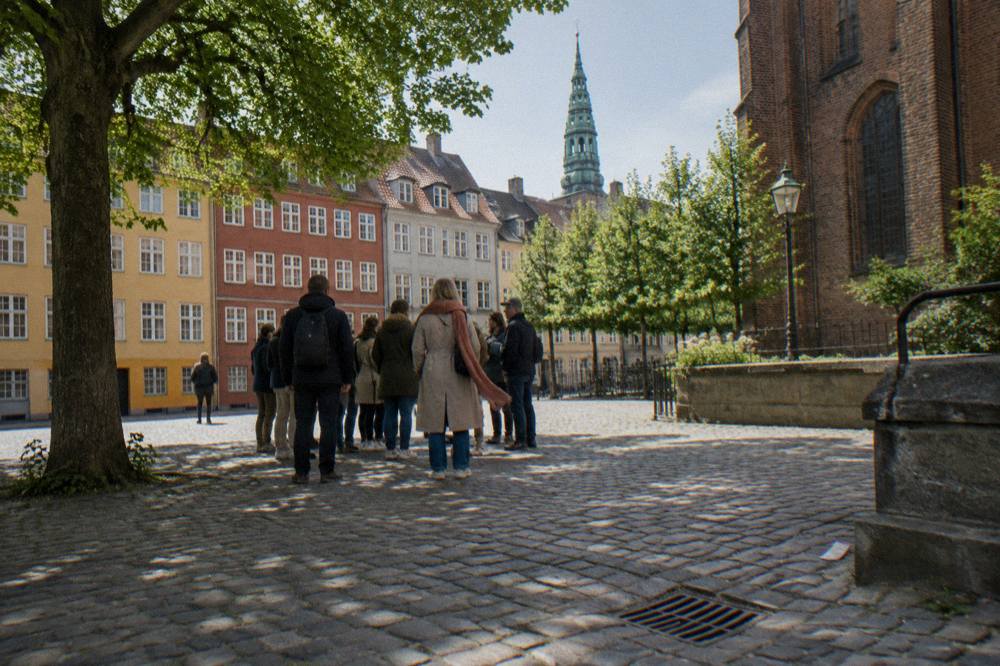
For the first day, the strongest English-language options are the Grand Tour, English and Spanish, rated 4.82 out of 5 across 2,538 GuruWalk reviews and running 2 hours and 30 minutes from City Hall, the Historic Center Walk with its included recommendations map, rated 4.84 out of 5 across 1,421 GuruWalk reviews, and the Nordic Freedom Tours City Walk, rated 4.46 out of 5 across 24 GuruWalk reviews. All three are GuruWalk listings.
Whichever you choose, book the earliest slot the listing offers. Copenhagen's free tours fill up in summer, and a morning start leaves the whole afternoon for the sights the tour only points at. If you are weighing which walk suits you, our comparison of Copenhagen's best free walking tours breaks down the differences in depth.
Day One: Indre By, The Medieval Core On Foot
Day one belongs to Indre By: Rådhuspladsen, Strøget, Gammel Strand, the cathedral, the Round Tower's street and Kongens Nytorv, all within a 20 minute walk of each other. A morning free tour covers the history, then the afternoon is free attractions: Nyhavn, the Black Diamond foyer, Amalienborg's changing of the guard at noon.
Start at the City Hall square, Rådhuspladsen, which is free to wander and is the meeting point for several of the strongest tours. The Grand Tour, English and Spanish, leaves from Rådhuspladsen 1 and covers the medieval core over 2 hours and 30 minutes, rated 4.82 out of 5 across 2,538 GuruWalk reviews on its GuruWalk listing. For a two day visit it is the natural day one anchor: the route threads the old town, and everything it passes can be revisited on foot afterwards at no cost.
Booking it costs nothing upfront. The walk runs on the pay-what-you-want model, so you reserve a place on the GuruWalk listing, turn up at the City Hall steps, and pay the guide in cash or by app at the end based on what the tour was worth to you. That makes it an easy commitment even on a trip where the weather forecast is still shifting, and it is the reason free tours anchor so many short itineraries in this city.
After the tour, walk Strøget, the pedestrian street that runs from the square to Kongens Nytorv. It costs nothing and connects most of the old town's free sights. Detour to the Copenhagen Cathedral, Vor Frue Kirke, which is free to enter, and to Gammel Strand, the old fish market street along the canal. The Royal Danish Library's Black Diamond building is a short walk further; the building and foyer are free to visit, and the waterfront ledge outside is one of the better free seats in the city.
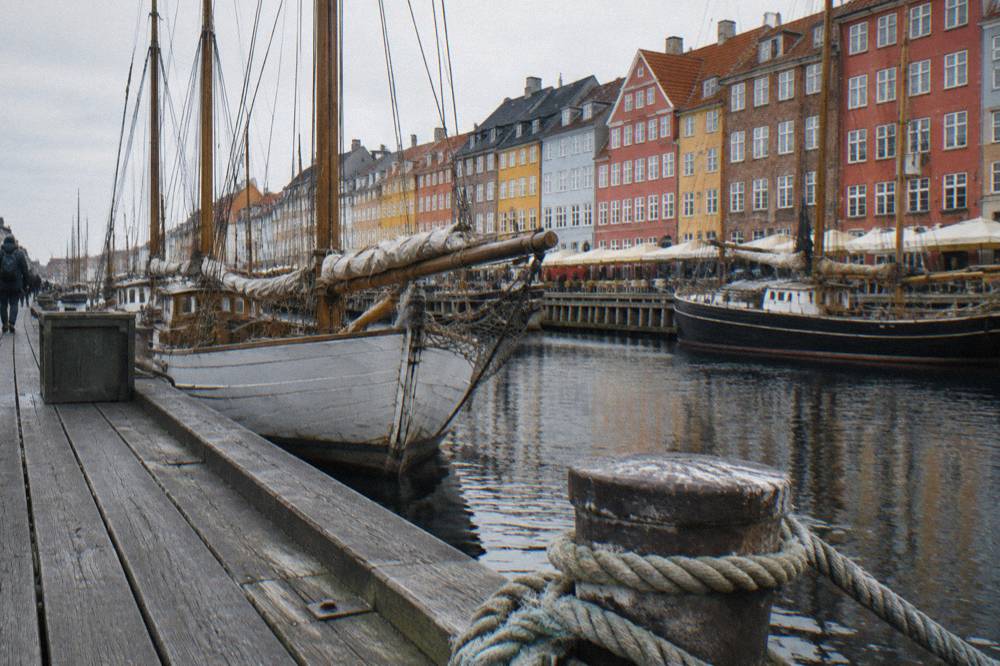
Nyhavn is the afternoon's centrepiece, and it is free to visit, free to photograph and free to sit beside. The colourful gabled houses and the old wooden ships need no ticket, and the quayside people-watching is arguably the city's cheapest entertainment. If you are weighing a longer stop, our Nyhavn free things to do guide covers the canal and its surroundings in detail.
Finish the day at Amalienborg if your legs allow. The changing of the guard is free to watch, viewing only, and happens at noon, so plan it as a day two morning item if day one runs long. Note the distinction that catches many visitors out: watching the guard ceremony outside is free, but the palace museum interior is paid, roughly DKK 150, with the exact current figure unconfirmed. Two of the classic tower climbs nearby follow the same pattern: the Church of Our Saviour's interior is free while its spire climb costs around DKK 70, and Frederik's Church's interior is free while its dome climb costs around DKK 50.
If the evening is warm, the Comedy Walk in English is the strongest after-dark option in the old town. It meets at Gammel Strand 26, runs 2 hours, and is rated 4.82 out of 5 across 1,863 GuruWalk reviews. It is an English-only GuruWalk listing, and it turns the same streets you walked at midday into something considerably funnier.
Day Two: Christianshavn, The Harbour And Christiania
Day two crosses the water to Christianshavn: the canal district, the Church of Our Saviour's free interior, the ramparts of the old fortress, and Freetown Christiania, which is free to walk into. A 90 minute pay-what-you-want tour covers the district's strange history, then the harbour front and Refshaleoen fill the afternoon.
Christianshavn is where Copenhagen stops looking like a Scandinavian capital and starts looking like a Dutch canal town with a commune attached. The walk over Knippelsbro takes ten minutes from the old town. Once there, the canals themselves are the attraction: free, quiet in the mornings, and lined with houses that lean at angles no modern builder would permit. The Politically Incorrect Hippies Walk, rated 4.74 out of 5 across 393 GuruWalk reviews, covers the district and its countercultural history in 1 hour and 30 minutes in English, meeting at Havnegade 54 on its GuruWalk listing. The rest of the planning pages sit on Free Things To Do In Copenhagen. One of the free walking routes passes through here: Politically Incorrect Hippies Walk.
Freetown Christiania deserves honest framing rather than mythology. Walking in is free, and the district's own photo rules apply, particularly on and around Pusher Street, where photography is prohibited. The community's status has shifted over the years, and our guide to what Christiania is actually like today covers the current situation, with the Pusher Street rules explained in a dedicated page.
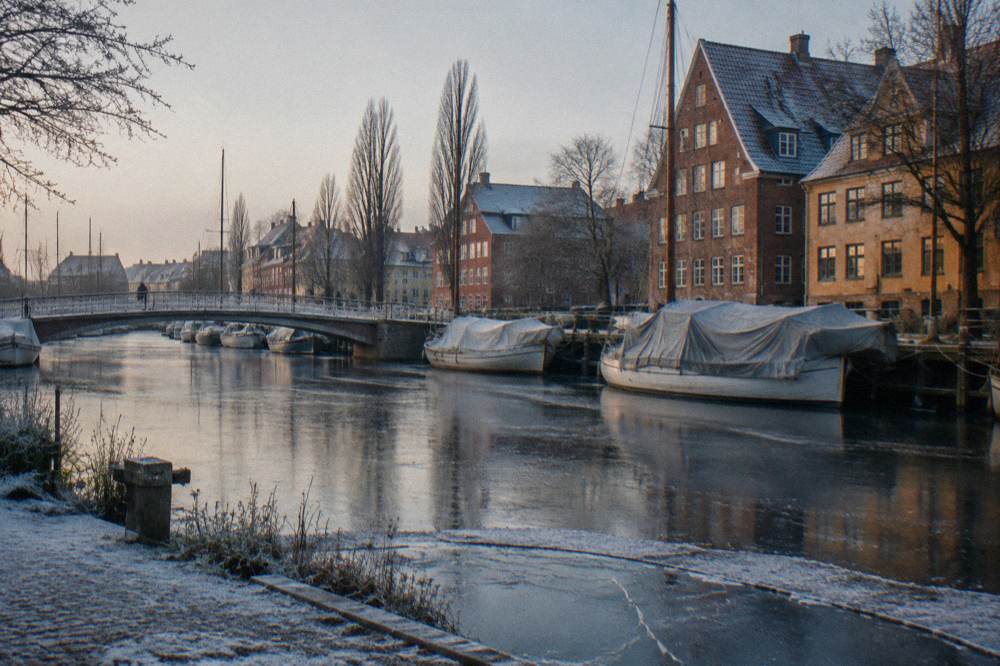
The Church of Our Saviour anchors the district's southern edge. Its interior is free to enter, a baroque space worth fifteen unhurried minutes, while the famous exterior spiral staircase climb is a paid add-on at around DKK 70. Decide based on the weather: the climb is an outdoor spiral with views across the harbour, wasted on a grey day, spectacular on a clear one.
Afternoon options depend on the season. In summer, head to the harbour baths at Islands Brygge, free to swim in, or carry on to Refshaleoen, the former industrial island now given over to food halls and street art, free to wander. In colder months, the Kastellet fortress grounds are free and make a short loop, and the Little Mermaid sits on the rocks nearby, free to see and, honestly, smaller than expected. Our free viewpoints guide lists the best free vantage points if the day is clear.
If day two falls on a Wednesday, the David Collection is worth building the afternoon around. It is one of the city's finest museums and it is free unconditionally, no qualifying day needed. The same cannot be said for every museum in the centre, and our free museums guide separates the genuinely free from the conditionally free and the paid.
Vesterbro And Carlsberg Byen: The Half Day Extension
Vesterbro, west of the City Hall square, fills a final half day or an evening: the old working-class district, the Meatpacking District's food halls, and Carlsberg Byen, which is free to walk as a district even though the brewery experience inside is paid. A 90 minute English tour covers the neighbourhood's red-light past.
Vesterbro is the least touristy of the three neighbourhoods in this itinerary, which is exactly its value on a short trip. The Working-Class Vesterbro walk, covering the industrial era and the former red light district, runs 1 hour and 30 minutes in English from the Central Station, rated 4.81 out of 5 across 27 GuruWalk reviews. The review pool is small, so treat the rating as a promising early signal rather than a settled verdict, but the walk is one of the few English-language options that leaves the old town entirely.
Carlsberg Byen, the former brewery site turned neighbourhood, is free to walk around: the streets, the restored buildings and the public spaces cost nothing. The Visit Carlsberg brewery experience inside is a paid, ticketed attraction, with its exact current price unresolved, so budget for it separately if it appeals. Our Vesterbro free things to do guide covers the district's free attractions in full.
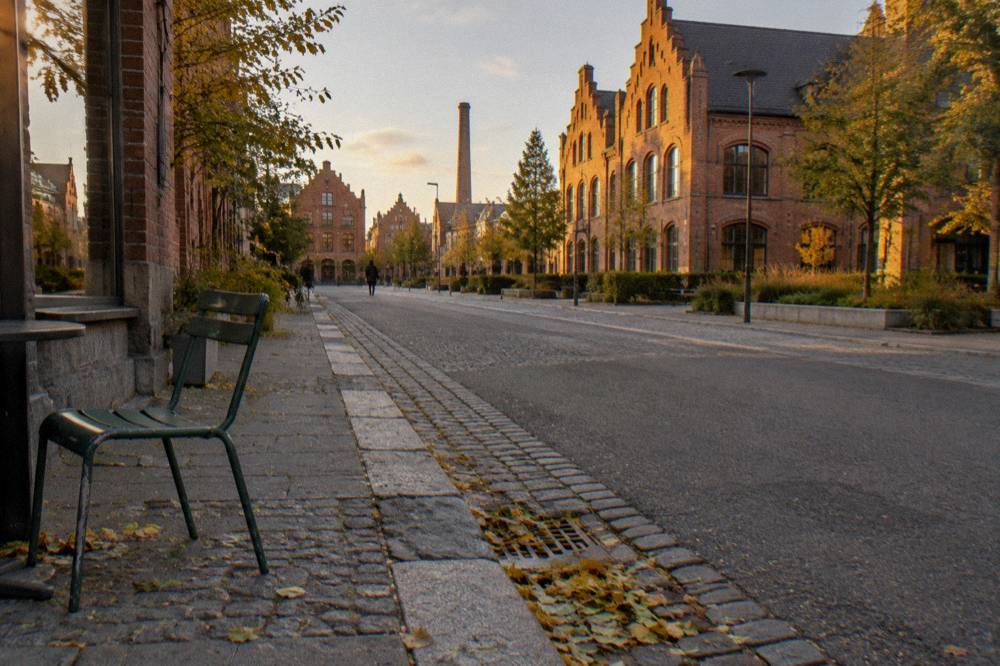
For a slower day two alternative, the 3-Hour Hygge Experience is worth considering. It meets at the City Hall, runs 3 hours in English, Spanish or Italian, and is rated 4.66 out of 5 across 2,132 GuruWalk reviews. Where the Grand Tour covers buildings and dates, the hygge walk covers how the city actually lives: the coffee culture, the design sensibility, the Danish habit of making ordinary evenings feel deliberate. On a two day trip it is a lot of hours to commit, but it is the tour most likely to change how you spend the rest of the visit.
How Much Rain Should You Actually Plan Around?
Copenhagen gets rain fairly evenly across the year rather than in a single wet season, so plan for showers in any month and build each day with one indoor fallback. The free walking tours run in rain, the museums' free days absorb a wet afternoon, and the city's compactness means shelter is never more than a few minutes away.
The honest answer is that no month is reliably dry, and no month is a write-off. Danish weather is changeable within a single day, which is why locals check the forecast hourly and why the city is built around short distances between indoor refuges. A two day itinerary should therefore never be all outdoor or all indoor. Pair each morning tour with an afternoon option that flips depending on the sky.
The free fallbacks are strong. The David Collection is free unconditionally. The cathedral is free. The Black Diamond foyer is free. Kastellet's grounds are free and actually pleasant in light rain, and the Glyptotek's last-Wednesday free entry can rescue a wet Wednesday entirely. Tivoli Gardens, by contrast, is paid entry from DKK 180 per the gardens' official site, so it belongs on the budget as a treat rather than a default shelter, and our guide to whether Tivoli is free covers what that ticket does and does not include.
Packing for two days is simple. Layers, a rain shell, and shoes that can handle cobbles. If you are joining tours in both neighbourhoods, you will be on your feet for four to five hours a day. Our what to wear on a free walking tour article covers the specifics, and the tipping side of pay-what-you-want tours is explained in our Copenhagen tipping and money basics guide.
| Situation | Free fallback | Cost if you switch |
|---|---|---|
| Rain on day one morning | Take the tour anyway, then the David Collection | Nothing |
| Rain on day one afternoon | Black Diamond foyer, cathedral, Strøget arcades | Nothing |
| Wet day two | Glyptotek if it is the last Wednesday, otherwise plan indoor stops | DKK 150 unless it is the free day |
| Cold snap either day | Harbour front walk swapped for Kastellet and the cathedral | Nothing |
| Perfect weather | Harbour baths, CopenHill trail, Amager Strandpark | Nothing |
Which Walks Fit A Two Day Trip Best?
For a two day visit, one tour per day is the right dose, and the strongest English-language pairing is the Grand Tour in Indre By on day one and either the Christianshavn hippies walk or the Vesterbro working-class walk on day two. Both freetour.com walks, the Renaissance Era City Walk and the Royal Highlights Walk, rated 9.5 out of 10, are strong day one alternatives.
Choosing is mostly a question of neighbourhood and tone. The Grand Tour is the safe default: long, well reviewed, bilingual, and starting from the most obvious place in the city. The comedy option suits travellers who remember jokes better than dates. The hygge walk suits anyone whose interest is less in kings and more in how the city lives now. And the two freetour.com exclusives suit visitors who prefer that platform's format, both rated 9.5 out of 10, the Renaissance Era City Walk across 11,288 freetour.com reviews and the Royal Highlights Walk across 6,894.
| Walk | Neighbourhood | Platform | Rating and reviews | Duration |
|---|---|---|---|---|
| Grand Tour, English and Spanish | Indre By | GuruWalk | 4.82 out of 5, 2,538 reviews | 2 hours 30 minutes |
| Comedy Walk in English | Indre By | GuruWalk | 4.82 out of 5, 1,863 reviews | 2 hours |
| 3-Hour Hygge Experience | Indre By based | GuruWalk | 4.66 out of 5, 2,132 reviews | 3 hours |
| Politically Incorrect Hippies Walk | Christianshavn | GuruWalk | 4.74 out of 5, 393 reviews | 1 hour 30 minutes |
| Working-Class Vesterbro | Vesterbro | GuruWalk | 4.81 out of 5, 27 reviews | 1 hour 30 minutes |
| Renaissance Era City Walk | Indre By | freetour.com | 9.5 out of 10, 11,288 reviews | Listing shows duration |
Remember the scales differ between platforms and never convert them. A 4.82 out of 5 on GuruWalk is a stronger score than a 9.5 out of 10 on freetour.com on a common scale, not a weaker one, which is why both figures always appear here with their scale named. If you are still deciding how tours work at all, our free tour how-it-works guide covers booking, meeting points and tipping end to end.
For the second day, the three walks that best fill out a two day plan are the Royal Highlights Walk from freetour.com, rated 9.5 out of 10 across 6,894 freetour.com reviews and covering the city's royal core in English or Spanish, the Politically Incorrect Hippies Walk through Christianshavn's countercultural history, and the Working-Class Vesterbro walk through the district's industrial and red-light past. Each suits a different second day, and all three are pay-what-you-want.
Common Questions About The Best Time To Visit Copenhagen
When Is The Best Time To Visit Copenhagen For Good Weather?
Late May through early September, with June and July the warmest and longest days. Copenhagen sits far north, so summer daylight is generous and winter days are short. September is the shoulder-season pick: often mild and dry, with fewer crowds than midsummer.
Is Two Days Enough For Copenhagen?
Yes, for the core. Two days covers Indre By, Christianshavn and a Vesterbro half-day comfortably, since the three neighbourhoods sit within a 20 minute walk of each other. A third day helps if you want day trips, but a well-built two day itinerary misses very little of the city centre's best.
Do The Free Walking Tours Run All Year?
Yes, though frequency drops in winter. The 21 walks shipped on this site's roster across GuruWalk and freetour.com run through the colder months with fewer daily slots, so book ahead in summer and check the listing's calendar in winter.
What Is Free In Copenhagen If It Rains?
More than you might expect. The David Collection is free unconditionally, the cathedral is free, the Black Diamond library foyer is free, and the Glyptotek is free on the last Wednesday of every month. The paid museums, the National Museum at DKK 150, SMK at DKK 140, are the fallbacks with a cost attached.
How Much Should I Budget Beyond The Free Stuff?
Transit is modest, a 24-hour City Pass at DKK 100 covers a two day visit's needs, with a single 2-zone ticket commonly cited at around DKK 24. The main paid temptations are the tower climbs, around DKK 70 for the Church of Our Saviour spire and around DKK 50 for the Marmorkirken dome, and Tivoli entry from DKK 180.
Which Free Tour Should I Book For Day One?
The Grand Tour, English and Spanish, is the strongest default: 2 hours and 30 minutes from City Hall, rated 4.82 out of 5 across 2,538 GuruWalk reviews. If you prefer a different platform, the Renaissance Era City Walk on freetour.com, rated 9.5 out of 10 across 11,288 reviews, covers the same core in English or Spanish.