Is Freetown Christiania Worth Visiting?
An honest answer to whether Freetown Christiania is worth your time, covering what it costs to enter, the photo rules, safety, and the free walking tours that cover Christianshavn and the freetown.
Is Freetown Christiania Worth Visiting?
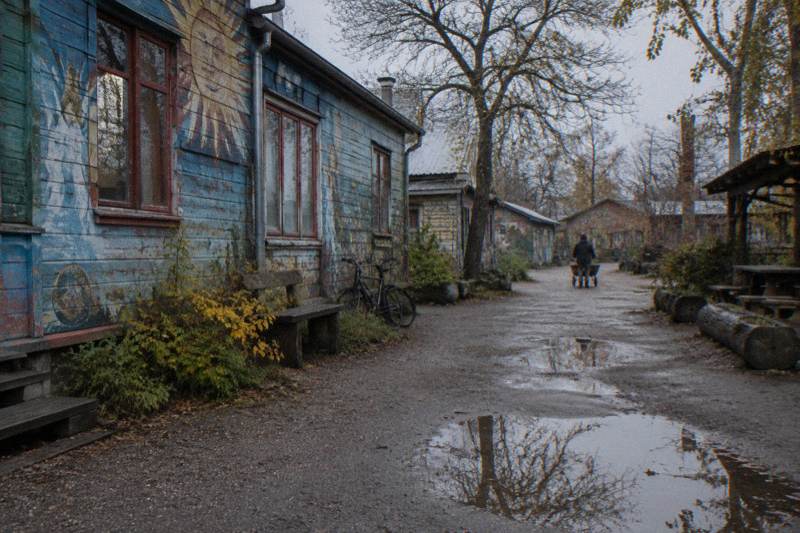
Yes, for most curious visitors. Walking into Christiania costs nothing, which makes it one of the few Copenhagen attractions with no ticket at all, and its mix of painted houses, workshops and self-governed street life exists nowhere else in the city. It is worth visiting if you treat it as a living neighbourhood rather than a staged attraction.
That distinction is the whole answer in miniature. Copenhagen is an expensive city, and its headline sights quietly stack up tickets: Tivoli Gardens starts at DKK 180 for entry, the National Museum of Denmark charges DKK 150, and the Round Tower costs DKK 60 to climb. Christiania sits outside that entire economy. You walk in, you look around, you walk out, and nobody has charged you anything. In a city where even the viewing platforms sometimes carry a fee, a genuinely free district with this much character is rare.
The qualification matters as much as the price. Christiania is not a museum with opening hours and a gift shop. It is a self-declared freetown where people live, work and argue about their own future, and visitors are guests inside that daily life. Some travellers find that the most interesting thing in Copenhagen. Others walk through in twenty minutes, feel uneasy, and leave wishing they had spent the afternoon in a park instead. Both reactions are common, and neither is wrong.
The best way to decide which camp you fall into is to arrive with a guide who can explain what you are looking at. The Politically Incorrect Hippies Walk is the English-language free walk built for exactly this question, and you can See this free tour on its GuruWalk listing before you travel. It is rated 4.74 out of 5 across 393 GuruWalk reviews, runs an hour and a half, and starts from Havnegade 54, a short stroll from the city centre side of the harbour.
If you would rather build your own picture first, the three walks below all operate on the pay-what-you-want model and all cover ground that connects to the Christiania question, from the harbour-side approach to the city context around it.
What Is Freetown Christiania, Actually?
Christiania is a self-governing neighbourhood occupying a former military site in Christianshavn, on the island of Amager just across the inner harbour from the city centre. It declared itself a freetown after people settled the disused barracks land, it maintains its own rules and collective decision-making, and today it is partly a residential area, partly a visitor attraction, and entirely unlike the rest of Copenhagen.
The short version of its story is squatting, settlement and an uneasy truce with the state. People moved onto the disused barracks land, stayed, and built a community that has spent decades negotiating its own existence with successive governments. The long version, including what the commune structure looks like today and how much of the original experiment survives, is covered properly in Is Christiania Still A Commune, What Is It Actually Like Today?, and it is worth reading before you go, because the answer changes how you see every street.
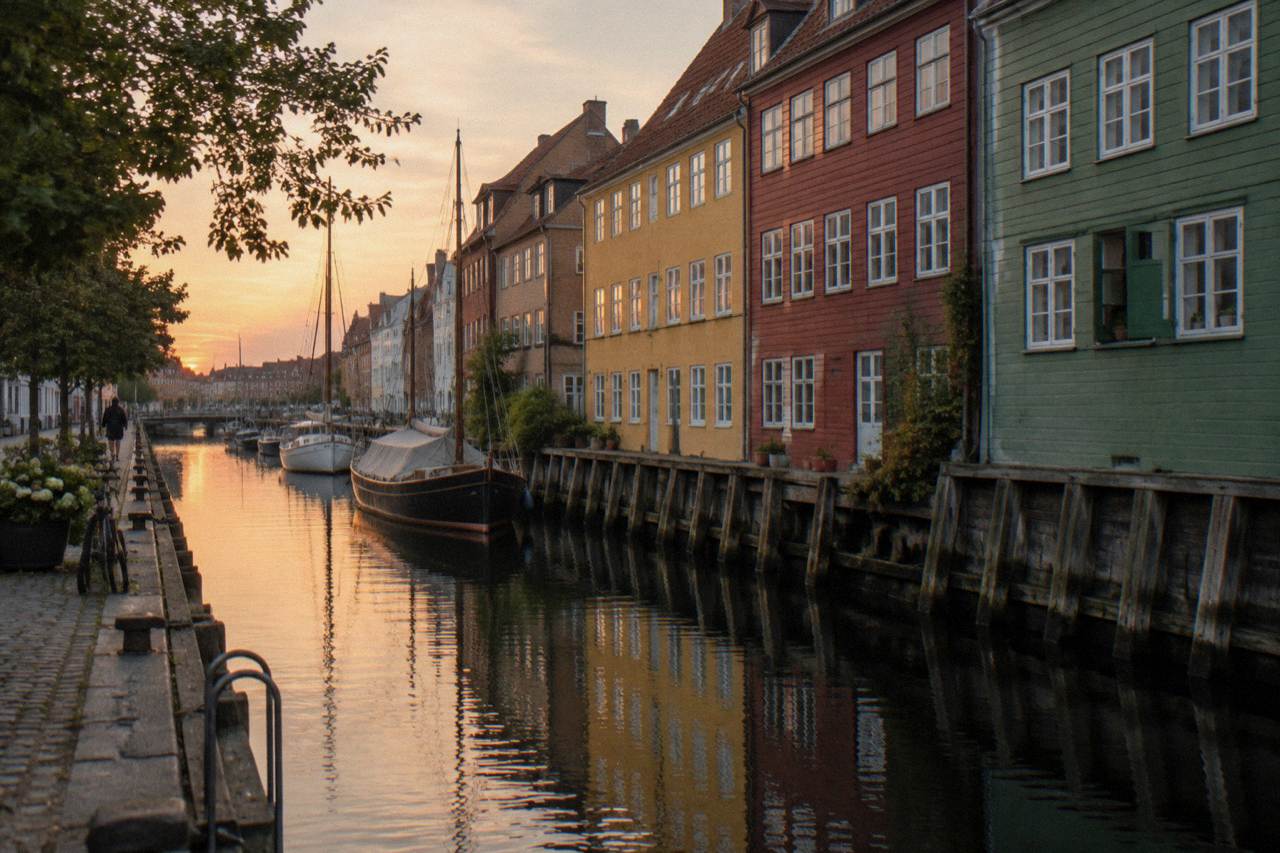
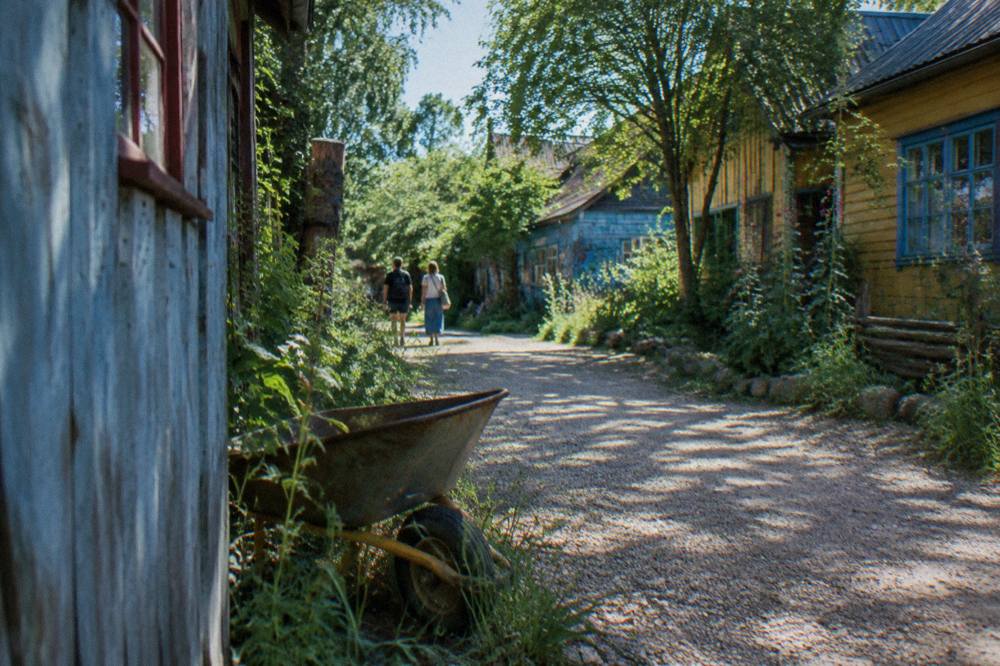
What visitors actually encounter is a district of hand-built houses, workshops, music venues, art installations and gardens, threaded with paths that range from picturesque to genuinely scruffy. The contrast with the polished Nyhavn side of the harbour is deliberate and stark. That contrast is the point for many people. Copenhagen is one of the most orderly capitals in Europe, and Christiania is the one place where the order visibly breaks down and something messier grows in the gap.
The most famous street inside the area is Pusher Street, which has its own rules and its own reputation, and which is treated seriously by residents and police alike. The specifics of what Pusher Street is, what is and is not allowed there, and whether tourists should walk down it are covered in detail in What Is Pusher Street And Can Tourists Visit?. The short guidance for this article is simpler: follow the posted rules, keep your camera away, and use the same street sense you would in any unfamiliar neighbourhood.
That last point deserves its own heading, because safety is the question that stops most people from going at all.
Is It Safe To Visit Freetown Christiania?
For the great majority of daytime visitors, yes. Christiania is one of Copenhagen's most-visited areas, it is walked through daily by families, tour groups and commuters, and the risks are concentrated in specific places and behaviours rather than spread across the district. The honest answer is that it is safe in the way any big-city neighbourhood is safe: with normal awareness, in daylight, and with the local rules respected.
Thousands of people visit every week without incident, and the free walking tours that cover the area run on a regular schedule, which tells you something about how routine those visits are. The problems that do occur cluster around Pusher Street and around photography where it is not welcome, both of which are avoidable behaviours rather than random risks. The full risk picture, including what to avoid and what the area is like at night, is laid out in Is It Safe To Visit Freetown Christiania?.
The practical advice is unglamorous. Go during the day. Stay on the main paths unless you know where you are going. Leave the camera in your bag in the areas where photography is restricted, which we cover next. Keep the same wariness about your phone and wallet that you would carry on a crowded street anywhere. And go with a guide if the area feels intimidating from the outside, because a guided walk removes most of the uncertainty that makes people nervous in the first place.
What Are The Photo Rules In Christiania?
Photography is restricted in parts of Christiania, and the restrictions are enforced by residents rather than by signage alone. The verified rule for visitors is that photo rules apply throughout the freetown, and they are strictest on and around Pusher Street, where taking pictures is treated as a serious violation of local norms rather than a minor faux pas.
This is not a guideline you can negotiate with a smile. The community has spent decades protecting its residents from being turned into a spectacle, and the reaction to a raised camera in the wrong place can be immediate and unfriendly. Visitors who respect the rules rarely have any trouble at all. Visitors who do not respect them can expect to be told, firmly, and in a place where you would rather not be told firmly.
The workable approach is simple. Photograph the canals, the harbour and the streets of Christianshavn outside the freetown to your heart's content, then put the camera away when you cross into Christiania proper unless you are somewhere clearly public and clearly welcoming, such as an open event space. If a sign says no photos, that is the whole rule. If you are unsure, ask, or simply do not take the picture. The memory of the place survives without a photo of it, and the residents' goodwill is worth more than any image.
This is also where a guided walk earns its keep. A guide who knows the area can tell you which corners are fine and which are not, which removes the guesswork entirely. The Politically Incorrect Hippies Walk covers this ground in English, and its GuruWalk listing spells out the current meeting point and schedule before you commit to anything.
What Does It Cost To Visit Christiania?
Nothing. Walking into Freetown Christiania is free and unconditional, one of 25 free unconditional attractions verified for this site out of 42 tracked across the city. There is no gate, no ticket and no suggested donation, which makes it one of the most accessible things to do in a city where the major sights mostly charge between DKK 60 and DKK 180 per adult.
That figure set is worth spelling out, because it frames how unusual Christiania's pricing is. The Round Tower charges DKK 60. The National Museum of Denmark charges DKK 150 at the door, or 135 online. Rosenborg Castle costs DKK 140 online or 150 at the door. Tivoli Gardens starts at DKK 180 just to walk in. Against that backdrop, a whole district you can wander for free is genuinely exceptional, and it is the reason Christiania appears on nearly every budget itinerary for the city. The full index of guides sits on Free Things To Do In Copenhagen.
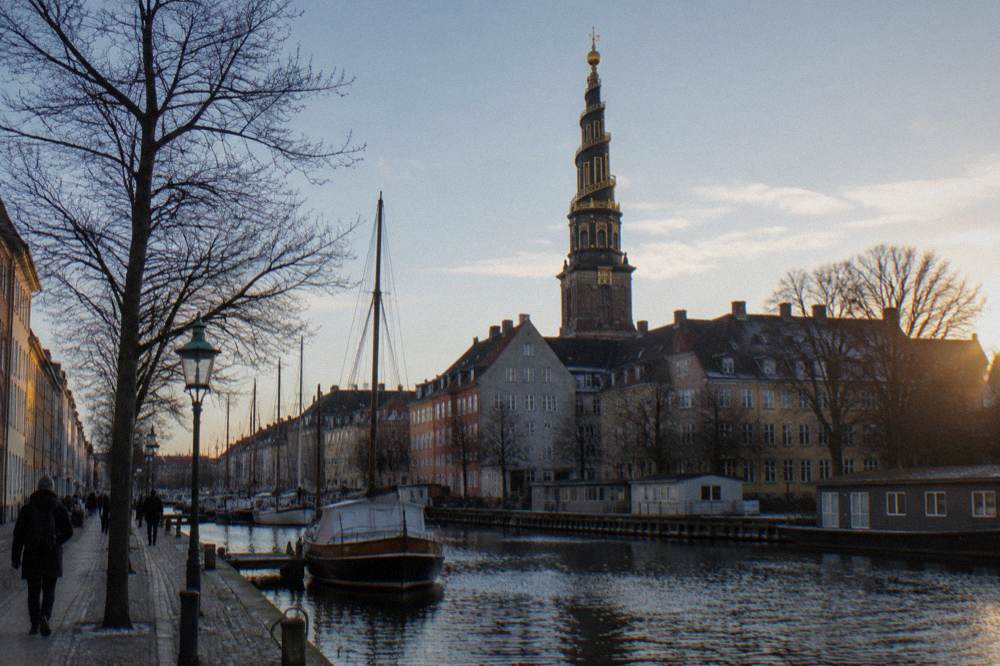
The things around Christiania follow the same free-or-cheap pattern, with one classic exception. The Church of Our Saviour, the baroque church with the twisting spire that dominates the Christianshavn skyline, keeps its interior free while charging for the climb, roughly DKK 70 for the spire. That free-interior, paid-tower split is worth knowing before you queue. The Copenhagen Card, meanwhile, is a paid product at DKK 589 for a 24-hour adult pass and DKK 859 for 48 hours, and nothing about Christiania requires it, since nothing about Christiania costs anything in the first place.
| Place or activity | Cost |
|---|---|
| Walking into Freetown Christiania | Free, photo rules apply |
| Church of Our Saviour interior | Free |
| Church of Our Saviour spire climb | Around DKK 70 |
| Christianshavn canals and bridges | Free |
| Copenhagen harbour baths, such as Islands Brygge | Free |
| Refshaleoen | Free to wander |
| Copenhagen Card, 24-hour adult | DKK 589, and unnecessary here |
If you are weighing the card for the rest of your trip, the honest arithmetic is covered in a dedicated piece on this site, but for a Christiania visit the calculation is trivial: the freetown is free, the church interior is free, and the canals are free.
How Do You Get To Christiania?
Christianshavn sits directly across the inner harbour from the city centre, and Christiania sits inside it, so the journey is short and can cost anything from nothing to around DKK 24 depending on how you travel. On foot from the city centre it is free, a single 2-zone transit ticket is commonly cited at around DKK 24, and a 24-hour City Pass is DKK 100.
The single-ticket figure comes with a caveat worth printing rather than hiding: it is commonly cited at around DKK 24, but the source is a secondary information site rather than the transit authority's own fare page, so confirm the current fare before you build a budget on it. The City Pass figure is on firmer ground, with the 24-hour pass priced at DKK 100 per the official public transport fare information at dinoffentligetransport.dk.
For most visitors staying in the city centre, the honest answer is that you may not need a ticket at all. The walk across the harbour, over the bridge and into Christianshavn passes some of the best free scenery in the city, including the Nyhavn waterfront and the harbour-side paths, and it takes little more time than the transit alternative once you account for buying tickets. If your hotel is further out, or the Danish weather turns, the transit option is cheap and quick.
| Travel option | Cost | Notes |
|---|---|---|
| On foot from the city centre | Free | Passes Nyhavn and the harbour paths |
| Single 2-zone ticket | Commonly cited at around DKK 24 | Secondary source, confirm the fare locally |
| 24-hour City Pass | DKK 100 | Covers a day of unlimited travel |
| Copenhagen Card, 24-hour adult | DKK 589 | A paid sightseeing product, priced at copenhagencard.com, not needed for Christiania |
One planning note: the Copenhagen Card is sometimes marketed as the way to see the city for less, and for a heavy itinerary of paid museums it can pay off. For a Christiania-centred day it cannot, because everything on this particular route is already free.
Which Free Walking Tours Cover Christiania?
Three walks on this site's roster cover Christiania or the Christianshavn district around it, and all operate on the pay-what-you-want model. The English-language option is the Politically Incorrect Hippies Walk, rated 4.74 out of 5 across 393 GuruWalk reviews, while the two Spanish-language walks cover the same ground for Spanish-speaking visitors, rated 4.56 and 4.94 out of 5 respectively.
The Hippies Walk is the one most international visitors want. It runs an hour and a half in English, meets at Havnegade 54 on the city-centre side of the harbour, and its whole premise is the story of the hippie era and the freetown it produced, told without sentimentality. GuruWalk reviewers consistently describe it as direct, funny and willing to say uncomfortable things, which is what the title promises. For anyone whose main hesitation about Christiania is not knowing what they are looking at, this walk resolves it.
The Spanish options matter more than their language tag suggests, because they signal how deep the Spanish-speaking guide scene in Copenhagen runs. Christianshavn in Spanish, rated 4.56 out of 5 across 362 GuruWalk reviews, covers the district's canals and history in a loop of an hour and a half. Christiania Contrasts, a Spanish walk rated 4.94 out of 5 across 34 GuruWalk reviews, goes inside the freetown itself over two hours, though with a review pool that small you should read the listing's recent feedback yourself rather than treating the number as a verdict.
| Walk | Platform | Rating and reviews | Duration | Language |
|---|---|---|---|---|
| Politically Incorrect Hippies Walk | GuruWalk | 4.74 out of 5, 393 reviews | 1 hour 30 minutes | English |
| Christianshavn in Spanish | GuruWalk | 4.56 out of 5, 362 reviews | 1 hour 30 minutes | Spanish |
| Christiania Contrasts, Spanish Walk | GuruWalk | 4.94 out of 5, 34 reviews | 2 hours | Spanish |
All three are free to join with tips at the end, and the etiquette for that exchange, including what a fair tip looks like in Denmark, is worth reading up on before your first pay-what-you-want walk in the city.
Can You Combine Christiania With A City Centre Walk?
Yes, easily. The classic budget day pairs a city-centre free walking tour in the morning with a self-guided or guided Christianshavn visit in the afternoon, and the two halves connect across the harbour on foot. The Grand Tour, rated 4.82 out of 5 across 2,538 GuruWalk reviews, is the natural morning choice, a 2 hour 30 minute walk from City Hall covering the historic core.
The Grand Tour meets at Rådhuspladsen, outside City Hall, and runs in English and Spanish. Its 2,538-review pool on GuruWalk is one of the largest on the entire roster for this site, which means the 4.82 out of 5 rating carries more weight than the same number from a walk with a few dozen reviews. It covers the Indre By core, the squares and the stories that explain why the city looks the way it does, and it finishes you back in the centre with the afternoon free.
The geography works in your favour. From the City Hall side of the centre you can walk east through the medieval streets to the harbour, cross to Christianshavn, spend an hour or two in and around Christiania, and still be back at your hotel by early evening, all without a transit ticket. Anyone who wants the full picture of how these neighbourhoods fit together can read the neighbourhood-by-neighbourhood breakdown of the free walk scene, but the short version is that Indre By and Christianshavn are the two halves of one walkable shoreline.
If you would rather not self-guide the Christiania half, the Hippies Walk slots into an afternoon slot without clashing with a morning Grand Tour, and the two walks together give you the city's official story and its unofficial one on the same day.
Who Should Skip Christiania?
Visitors who want polish, predictability and photographs should skip Christiania, and so should anyone unwilling to follow rules they did not set. The freetown is scruffy, rule-bound about photography, and uninterested in being a comfortable attraction. For those visitors, Copenhagen's parks, canals and free museum days deliver more of what they are actually looking for, at the same price.
That is not a dismissal of the place, it is a matching exercise. Christiania rewards curiosity and penalises expectation. A traveller who arrives wanting a tidy open-air museum with clear sightlines and photo opportunities will be disappointed, and their disappointment is legitimate. A traveller who arrives wanting to see what a self-governing experiment looks like after decades, mess included, will get more from a visit here than from any ticketed attraction in the city.
| You will likely enjoy Christiania if... | You should probably skip it if... |
|---|---|
| You are curious about alternative communities and how they actually function | You want a polished attraction with clear photo spots |
| You are comfortable following local rules without questioning them | You feel uneasy in unpolished or semi-legal spaces |
| You are travelling on a tight budget and want maximum experience per krone | Your time in the city is one day and the classics matter most |
| You are happy walking with a guide who tells uncomfortable truths | You prefer scripted, family-style commentary |
For the skip crowd, the honest alternatives on this site's verified free list are strong: Frederiksberg Gardens, Kongens Have, the harbour baths at Islands Brygge, the Botanical Garden grounds, and the last-Wednesday free day at the Ny Carlsberg Glyptotek, which opens the entire museum free once a month. Any of those gives you a memorable free afternoon without a single rule to memorise.
For everyone else, the verdict from the top of this page stands. Christiania is free, it is unlike anywhere else in Copenhagen, and with the right guide it is the part of the trip people talk about afterwards.
If a guided visit sounds better than going alone, three more walks from the roster fit a Christiania-centred trip: the Nordic Freedom Tours City Walk for a no-frills English introduction from Kongens Nytorv, and the two freetour.com exclusives, the Renaissance Era City Walk and the Royal Highlights Walk, both rated 9.5 out of 10 across 11,288 and 6,894 freetour.com reviews respectively. The Nordic Freedom walk is a GuruWalk listing rated 4.46 out of 5 across 24 reviews, a small pool worth reading before you book.
Common Questions About Freetown Christiania
Is Freetown Christiania Worth Visiting?
Yes, for most visitors. It is free to enter, unlike nearly every major attraction in the city, and it offers something no ticketed sight can: a self-governing neighbourhood that has run its own affairs for decades. It suits curious travellers who respect local rules, and it disappoints visitors expecting a polished attraction.
Is Christiania free to visit?
Yes, completely. Walking into Freetown Christiania is free and unconditional, with no gate, ticket or donation. It is one of 25 free unconditional attractions verified for this site out of 42 tracked across Copenhagen.
Can you take photos in Christiania?
Only in some areas. Photo rules apply throughout the freetown and are strictest on and around Pusher Street, where photography is treated as a serious violation of local norms. Keep your camera away unless you are certain photography is welcome, and always respect posted signs.
Is Christiania safe for tourists?
For the great majority of daytime visitors, yes. It is walked through daily by families, tour groups and commuters. The risks concentrate around Pusher Street and around unwanted photography, both of which are avoidable by following the local rules and using ordinary city street sense.
Which free walking tour covers Christiania in English?
The Politically Incorrect Hippies Walk, a GuruWalk walk of an hour and a half meeting at Havnegade 54, rated 4.74 out of 5 across 393 GuruWalk reviews. It is free to join, with tips at the end.
How do you get to Christiania from the city centre?
On foot, across the harbour and into Christianshavn, which costs nothing and passes Nyhavn on the way. By transit, a single 2-zone ticket is commonly cited at around DKK 24, and a 24-hour City Pass costs DKK 100. The Copenhagen Card, at DKK 589 for 24 hours, is unnecessary for this trip.