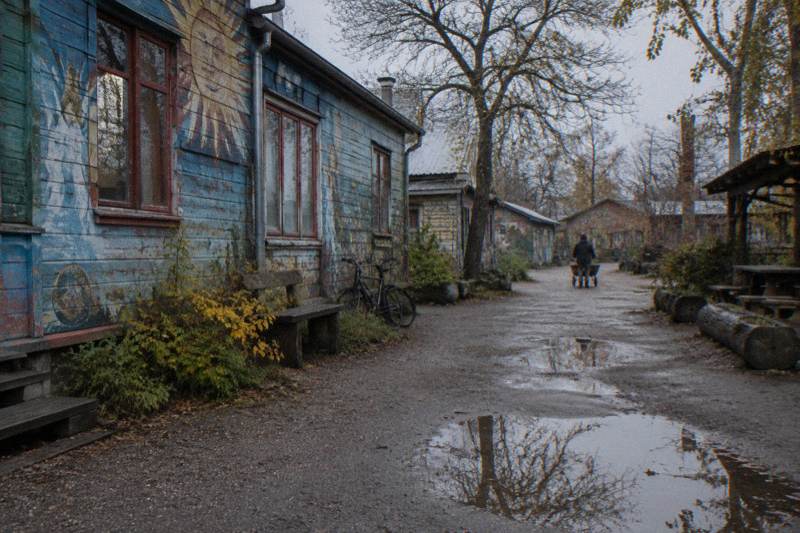
Christiania Copenhagen Rules: What Visitors Need To Know About Pusher Street
Freetown Christiania has its own rules, and the ones on Pusher Street are enforced by the community itself. Here is what actually applies to visitors, from the photography ban to where guided walks fit in.
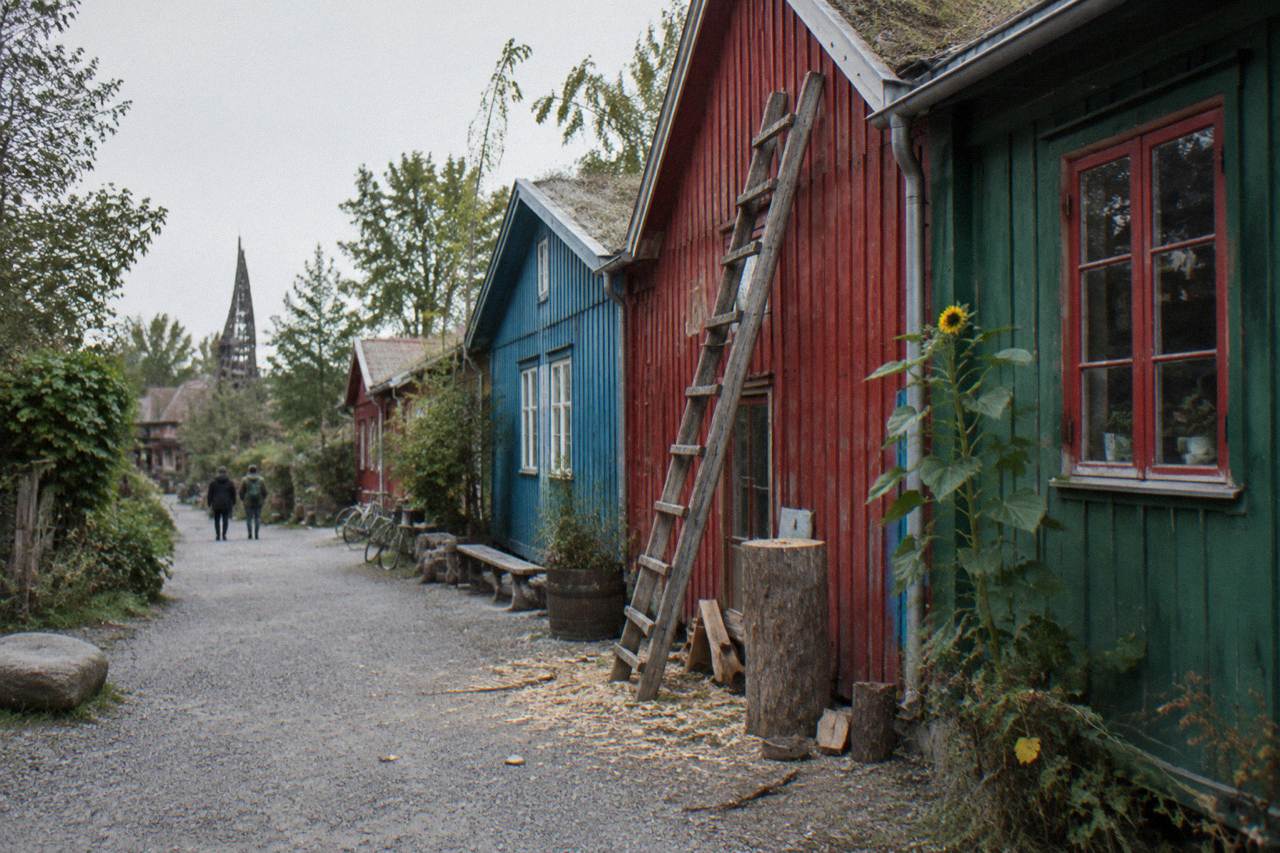
Short answer
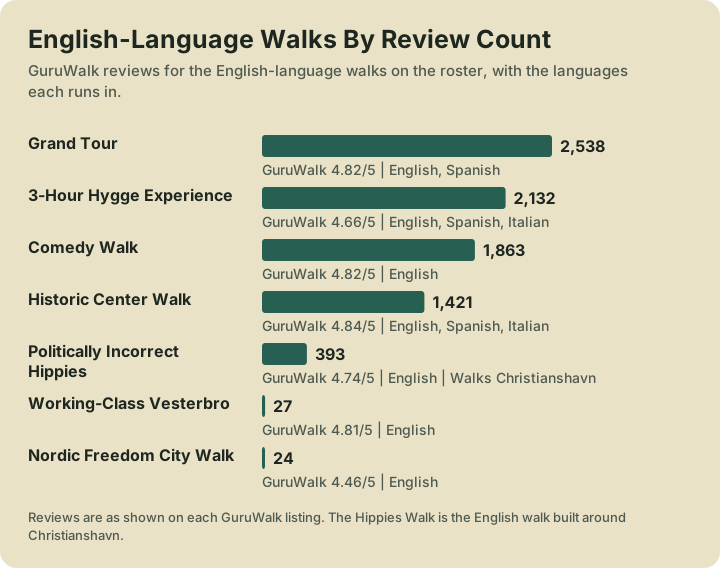
Christiania is free to walk into, but it is not a normal neighbourhood. Photography is banned on Pusher Street, visitors are asked not to run there, and the community's own posted signs set the boundaries. A guided walk such as the Politically Incorrect Hippies Walk, rated 4.74 out of 5 across 393 GuruWalk reviews, covers the context.
Freetown Christiania occupies the old military barracks on the eastern edge of Christianshavn, and it has run by its own rules since the community first squatted the grounds. The most quoted of those rules concern Pusher Street, the central lane where, for decades, hash was sold openly and where photography remains banned outright. Visitors who know nothing else about the district usually know that one rule. The rest of the picture is less dramatic but more useful: Christiania is free to enter, walkable in an hour or two, and covered in English by at least one pay what you want walking tour, the Politically Incorrect Hippies Walk, rated 4.74 out of 5 across 393 GuruWalk reviews.
The rules matter because Christiania is a living community, not a museum piece. The community posts its own signs at the entrances, and the signs are the law of the district in practice. This guide sets out what those rules are, how they differ from street to street, what is genuinely free nearby, and how the guided walks on this site's roster, 21 pooled walks across GuruWalk and freetour.com, cover the area.
What Are The Rules For Visiting Christiania?
The core rules are simple: entry is free, photography is banned on Pusher Street, visitors should not run or film there, and the community asks that you respect residents and buy nothing on Pusher Street itself. The rules are posted at the entrances and enforced by residents, not by a formal police presence. Breaking the photo ban is the fastest way to get told off, sometimes sharply.
The rules come from the community rather than the city. Christiania declared itself a free town when activists occupied the disused military grounds, and while the Danish state and the community have since signed agreements about land ownership and normal Danish law applying, the day to day code of conduct on the streets is the residents' own. The signs at the main entrances state the essentials in plain language, and long time residents patrol the boundaries of acceptable behaviour, especially on Pusher Street.
Three of those rules deserve spelling out because they surprise people. First, the photography ban is not a request, it is a hard rule on Pusher Street and it extends to filming and to holding your phone up as if filming. Second, do not run on Pusher Street, even if something feels off; walking calmly out is the accepted move. Third, the community asks visitors not to photograph people or homes in the rest of the district either, though outside Pusher Street the rule softens to asking permission for anything with identifiable people in it.
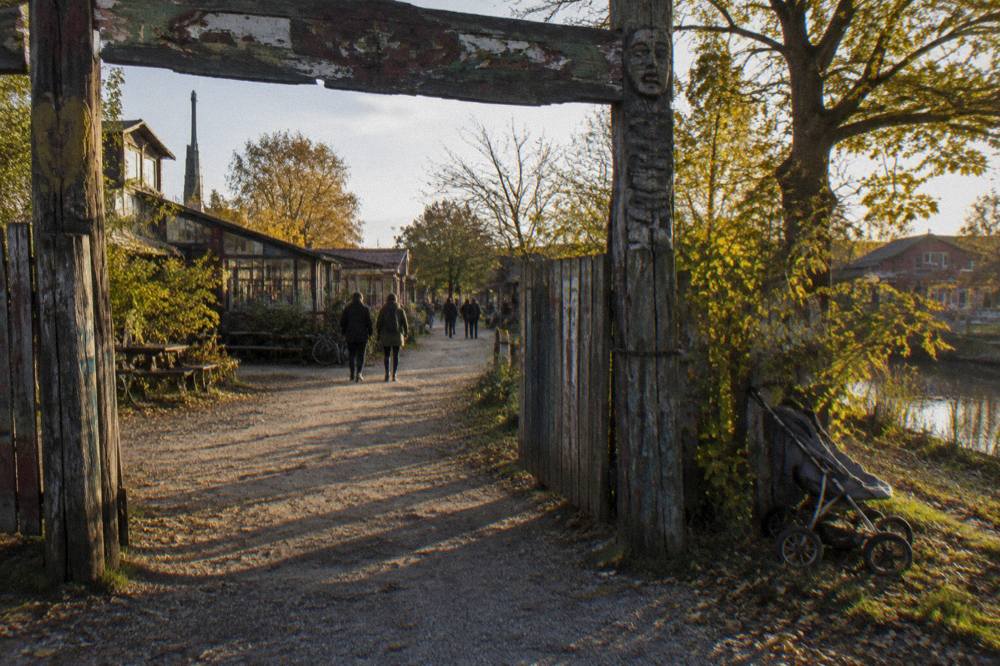
The practical summary looks like this:
| Rule | Where it applies | What visitors should actually do |
|---|---|---|
| No photography or filming | Pusher Street, strictly | Keep camera and phone put away until you are clear of the lane |
| Do not run | Pusher Street | Walk calmly; leave the lane at a normal pace |
| Do not buy anything | Pusher Street | The lane's trade is illegal under Danish law; the community says leave it alone |
| Ask before photographing people | Rest of Christiania | Permission first, especially near homes |
| Respect residents' privacy | Whole district | Stick to public paths, avoid peering into doorways |
| Normal Danish law applies | Whole district | Theft, violence and hard drugs are police matters as anywhere else |
For the fuller background on how the district works, its history and its current status, our Christiania visitor preparation guide goes deeper than the street level rules do.
What Is Pusher Street And Why Is Photography Banned There?
Pusher Street is the central lane through Christiania where hash was sold openly for decades. Photography and filming are banned because sellers and residents do not want their faces recorded, a rule that survived the demolition of the street's stalls and still stands. The lane is small, roughly a couple of hundred metres, and it is entirely skippable if you would rather not walk it.
The photography ban predates the legal crackdowns. Sellers on the street never wanted evidence of who stood where, and residents never wanted tourists treating their home's most notorious corner as a photo set. When the community itself tore down the stalls on Pusher Street, in a public stand against hard drugs and gang involvement, the photo rule stayed because the underlying reason had not changed: faces on that lane are not public property.
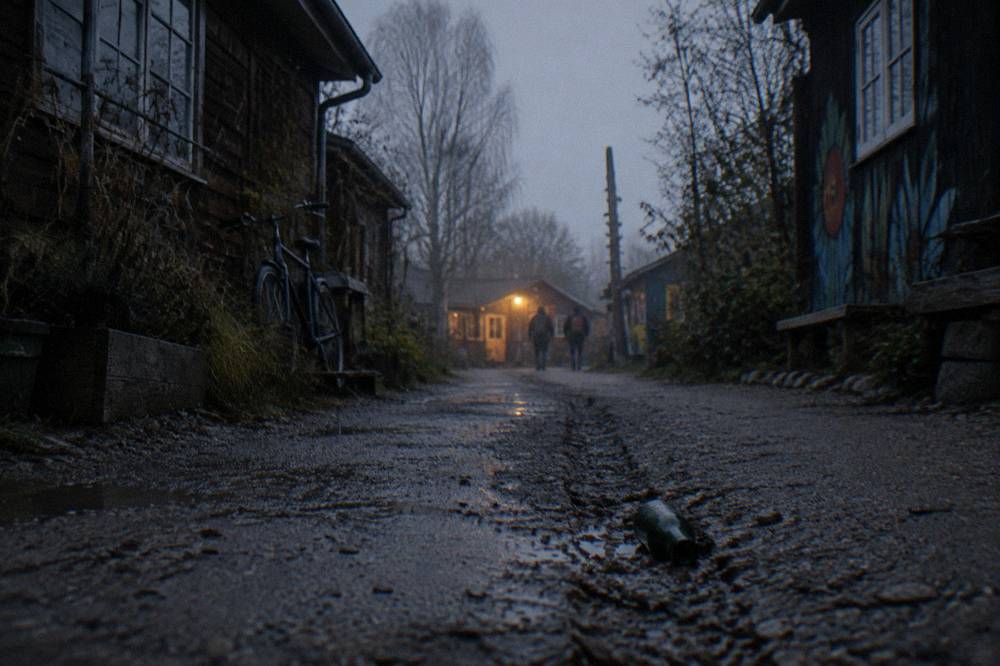
What surprises many first time visitors is how small the lane is. Pusher Street is not a district, it is a single short stretch that you can avoid entirely by taking one of the parallel paths. Most of what people come to see, the painted houses, the workshops, the lake edge, the music venues, sits outside it. If you follow the photo ban and keep walking, you will have passed through it in under five minutes.
The ban has a second, less obvious function: it protects visitors as much as residents. Anyone standing on the lane with a raised camera draws attention immediately, and the accepted etiquette of keeping phones away keeps the street calm. Our dedicated explainer on what Pusher Street is and whether tourists can visit covers the history of the lane and its trade in detail.
A guided walk is the easiest way to see the district with the rules already handled for you. These are three of our nine featured picks, each pay what you want:
Can Tourists Walk Into Freetown Christiania For Free?
Yes, entry is completely free and always has been. Christiania is an ordinary walking district with no gate, ticket or tour requirement, though a handful of community buildings and venues may charge for events. The district sits on the eastern side of Christianshavn, reachable on foot from the city centre in about 25 minutes or by metro to Christianshavn station.
Walking in costs nothing, but the district is not a public park in the usual sense. The former military land now belongs to a foundation created through the settlement between the community and the Danish state, and residents manage the area day to day. That is why the community's signs, not city signage, greet you at the entrances. The free entry is a fact on this site's verified attractions list alongside 24 other unconditionally free things in Copenhagen, from Nyhavn to the harbour baths at Islands Brygge.
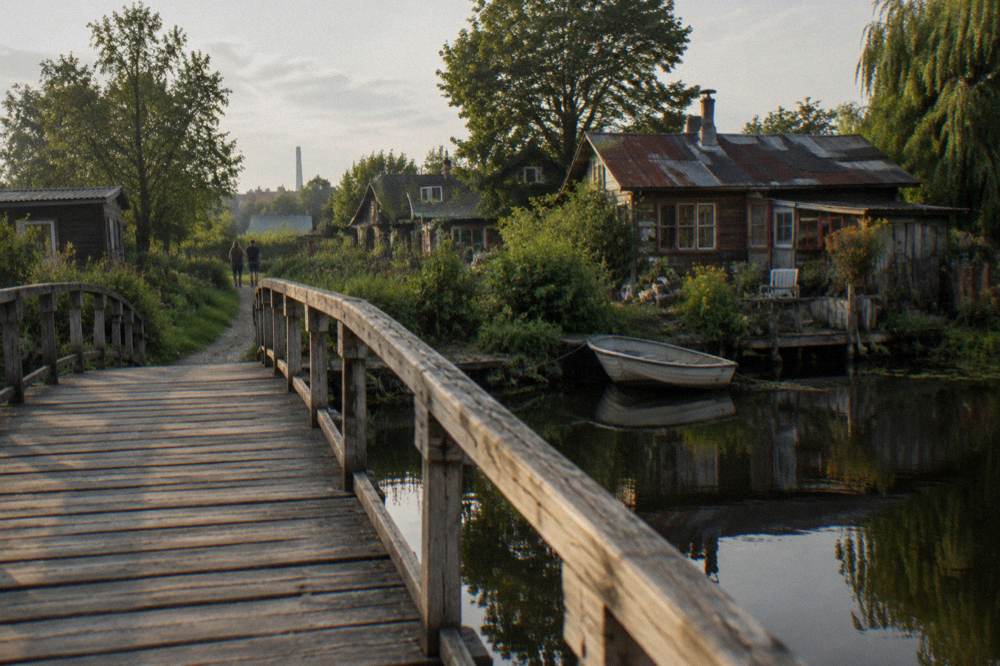
Getting there is straightforward. From the city centre, cross Knippelsbro into Christianshavn and follow the canal east; the walk from Rådhuspladsen takes around 25 minutes at a normal pace. By metro, the Christianshavn stop on the M1 and M2 lines sits a few minutes from the main entrance. A single 2-zone ticket is commonly cited at around DKK 24, though that figure comes from a secondary source rather than the transit authority's own page, so check the current fare before relying on it. A 24-hour City Pass costs DKK 100 per the official dinoffentligetransport.dk fare page, published by the Danish public transport portal.
The strongest way to enter the district with context is a guided walk. The Politically Incorrect Hippies Walk on GuruWalk is the roster's English language Christianshavn walk: an hour and a half, meeting at Havnegade 54, rated 4.74 out of 5 across 393 GuruWalk reviews. Guides on this style of walk cover the occupation of the barracks, the land settlement and the demolition of the Pusher Street stalls, all context that the entrance signs do not give you.
If you would rather have a local guide walk you through the district's whole story, the same operator's listing is easy to book on the pay what you want model, and you can decide your price at the end of the walk.
Is Christiania Safe To Visit?
For the great majority of visitors, during daylight hours, yes. Christiania's daytime streets are busy with tourists, families and residents, and the incidents that make headlines cluster around the drug trade at night. The standard advice is unchanged: go in daylight, keep your phone away on Pusher Street, and treat the district as you would any urban area after dark.
The safety picture has genuinely improved since the community demolished the Pusher Street stalls and since gang pressure on the hash market led to renewed community pushback. Shootings that made international news in past decades were tied to disputes over that trade, not to tourists, and the community's own actions since have been aimed squarely at ending them. Daytime visits to the main paths are ordinary tourist activity; thousands of people do it daily in season.
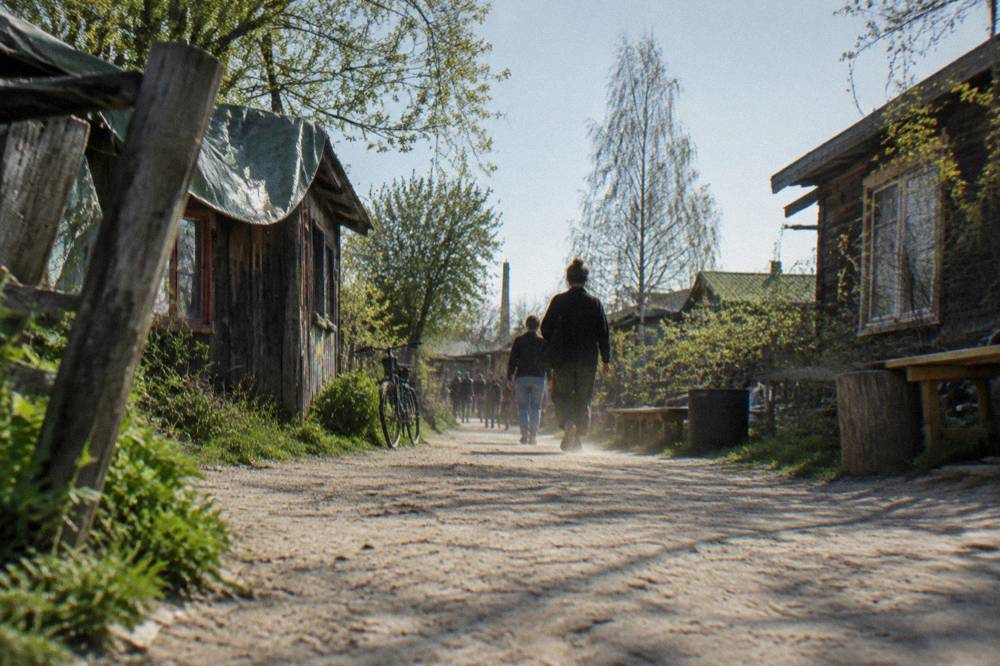
The rules from the first section carry the safety weight here: no photos on Pusher Street, no running, no filming. Visitors who follow them and stay on the main paths during the day rarely have any issue at all. The areas around the lake and the southern edge are quieter and more residential, and the same respect for privacy applies there. Our longer treatment of whether Christiania is safe to visit weighs the evidence in more detail.
One honest caveat: the district's edge with the rest of Copenhagen is not equally polished. Christianshavn around the district is a well off canal neighbourhood, but the walk between the metro and the entrance passes ordinary residential streets where the usual city precautions about wallets and phones apply. Nothing about that is specific to Christiania.
Which Free Walking Tours Cover Christiania And Christianshavn?
The roster carries 21 pay what you want walks across GuruWalk and freetour.com, and the English language option covering this district is the Politically Incorrect Hippies Walk, rated 4.74 out of 5 across 393 GuruWalk reviews, an hour and a half, meeting at Havnegade 54. Spanish speakers have a dedicated Christianshavn walk, and the city centre walks cover the approach from Indre By.
The Christianshavn cluster on the roster is small but focused. The Politically Incorrect Hippies Walk is the only cardable English walk in the district, and its angle is exactly what the name suggests: the hippie era, the squat, the clashes with the state and the uneasy truce that followed. GuruWalk reviewers frequently note the guide's local knowledge of the district. Alongside it sits Christianshavn in Spanish, rated 4.56 out of 5 across 362 GuruWalk reviews, and the Spanish language Christiania Contrasts walk, rated 4.94 out of 5 across 34 GuruWalk reviews, though that one is Spanish only. The full index of guides sits on Free Things To Do In Copenhagen.
| Walk | Platform | Rating and reviews | Language | Duration |
|---|---|---|---|---|
| Politically Incorrect Hippies Walk | GuruWalk | 4.74 out of 5, 393 reviews | English | 1 hour 30 minutes |
| Christianshavn in Spanish | GuruWalk | 4.56 out of 5, 362 reviews | Spanish | 1 hour 30 minutes |
| Christiania Contrasts, Spanish Walk | GuruWalk | 4.94 out of 5, 34 reviews | Spanish | 2 hours |
Visitors basing themselves in the city centre usually pair a Christianshavn walk with a general Copenhagen walk on another day. The Grand Tour, English and Spanish is the roster's biggest English language city walk: 2 hours and 30 minutes from Rådhuspladsen, rated 4.82 out of 5 across 2,538 GuruWalk reviews. It covers Indre By, the medieval core, and it ends close to the bridge crossing toward Christianshavn, which makes it a natural first day walk before a dedicated district walk.
The Comedy Walk in English takes a different route through the same core: 2 hours from Gammel Strand, rated 4.82 out of 5 across 1,863 GuruWalk reviews, delivered as stand up style commentary rather than a lecture. Reviewers on the GuruWalk listing describe it as fast, funny and heavier on jokes than dates. It does not enter Christiania, but it covers the harbour side streets the hippies crossed when they marched from the city to the barracks.
The two freetour.com walks on the roster, the Renaissance Era City Walk rated 9.5 out of 10 across 11,288 freetour.com reviews and the Royal Highlights Walk rated 9.5 out of 10 across 6,894 freetour.com reviews, both stay in the city centre. The freetour.com scale runs out of 10 rather than out of 5, so those 9.5 figures are not comparable at a glance with GuruWalk's out of 5 scores. Neither walk covers Christiania, but both cover the royal and renaissance core that the district's founders walked out from.
What Else Is Free Near Christiania In Christianshavn?
Christianshavn is one of the most free friendly districts in the city. Walking the canals, the Our Saviour's Church interior and the Christiansborg Palace Tower viewing platform all cost nothing, and the harbour baths at Islands Brygge are free in summer. Only the church's spire climb, around DKK 70, and the palace state rooms, DKK 150 at the door, charge.
The district around Christiania rewards walkers. Christianshavn's canal grid was built as a planned extension of the city, and the streets between the water and the church are free to wander at length. The Church of Our Saviour sits on the district's western side: its interior is free, while the famous corkscrew spire climb is ticketed at around DKK 70. The same free interior and paid tower pattern applies across the city, including Frederik's Church, where the dome climb costs around DKK 50 and the interior costs nothing.
| Attraction near Christiania | Cost | Notes |
|---|---|---|
| Christianshavn canal streets | Free | The whole grid is walkable, no ticket anywhere |
| Church of Our Saviour interior | Free | Spire climb is separate, around DKK 70 |
| Christiansborg Palace Tower | Free | Viewing platform only; state rooms are DKK 150 at the door, 140 online |
| Freetown Christiania entry | Free | Photo rules apply, Pusher Street strictly |
| Islands Brygge harbour baths | Free | Open air harbour swimming, summer season |
| Refshaleoen walk | Free | Former shipyard peninsula east of Christiania |
Across the harbour, the Christiansborg Palace Tower viewing platform is one of the genuinely free viewpoints in a city where towers usually charge: the Round Tower costs DKK 60, but the palace tower costs nothing. Note the split within the same building: the tower is free while the state rooms below it are DKK 150 at the door or 140 online. Our free viewpoints guide lists the full set.
The Copenhagen Card is sometimes pitched as the answer to those paid entries, but it is itself a paid product: DKK 589 for 24 hours and DKK 859 for 48 hours for an adult, per the official Copenhagen Card price page. Nothing on this site is free with the card, and for a trip built around free attractions and pay what you want walks, the card rarely pencils out. Our Copenhagen Card value analysis runs the numbers.
When Should You Not Visit Christiania?
Avoid the district after dark, avoid it during periods of reported police activity in the news, and avoid Pusher Street entirely if you are not comfortable with the drug trade that still operates around it. Events and festivals in the district can also close areas or change the atmosphere, so check the community's own channels before a special visit.
Daylight is the standard advice, and it is not a formality. The district's problems have always clustered around the hash market and its hours, and the residential streets that feel busy and open at midday feel very different late at night. Visitors who want the evening side of Christiania, its music venues and its cafe culture, should go with someone who knows the district or stick to a specific venue rather than wandering.
Police activity is the other trigger to watch. Periodic crackdowns on Pusher Street have closed the lane for hours at a time, and the community's own announcements flag when tensions are running high. A quick check of local news on the morning of your visit is enough; the district is not dangerous in the way the headlines imply, but it is a place with an active illegal market at its centre, and pretending otherwise does visitors no favours.
Festival days flip the calculation in the other direction. Christiania's open air stages and market days draw big, friendly crowds and are among the best times to see the district's culture at its loudest, but accommodation and transport around Christianshavn fill up, and the photo rules still apply even when the whole place feels like a party. The community's own website and notice boards are the primary source for event dates.
How Do The Christiania Rules Fit The Rest Of A Free Copenhagen Trip?
Christiania's rules are stricter than anywhere else in the city, but the district slots easily into a free itinerary: enter free, walk the canals free, join a pay what you want tour for context, and reserve your budget for the few paid towers and museums you actually care about. The rest of Copenhagen's headline sights, Nyhavn, the Little Mermaid, Kastellet, are free with no rules beyond ordinary courtesy.
The contrast is the point. Copenhagen's free list is long, 25 unconditionally free attractions on this site's verified file, and almost all of them come with no conditions at all. Christiania is the one place where the free entry carries a code of conduct, and that code is the price of admission. Follow the photo ban, walk calmly, respect the residents, and the district gives back a version of the city you cannot see anywhere else in Scandinavia.
A sensible pairing is a city centre walk on day one and a Christianshavn walk on day two. The walks on this site's roster are all pay what you want, so the cost of both is whatever you choose to tip, and our tipping guide for free walking tours covers what Copenhagen guides typically receive. Budget the saved admission money for one paid highlight, the Our Saviour spire or the Glyptotek, which is free only on the last Wednesday of each month and charges around DKK 150 the rest of the time.
If you are deciding between the district's walks, these three picks cover the range from the hippie history of Christianshavn to the broader city context:
Common Questions About Christiania And Pusher Street
What are the main rules for visiting Christiania?
No photography or filming on Pusher Street, do not run there, do not buy anything on the lane, ask before photographing people elsewhere in the district, and respect residents' privacy. The rules are posted at the entrances and enforced by the community itself.
Is it free to enter Freetown Christiania?
Yes, entry is free and always has been. There is no gate, ticket or booking requirement. Individual venues and events inside the district may charge, but walking the streets costs nothing.
Why is photography banned on Pusher Street?
The ban protects the identities of everyone on the lane, sellers and residents alike. It predates the demolition of the street's stalls and remains in force because the reasons for it never went away. Phones and cameras should stay put away until you are clear of the lane.
Is Christiania safe for tourists?
During daylight hours on the main paths, yes, for the great majority of visitors. Incidents have historically clustered around the drug trade at night. Go in daylight, follow the posted rules, and treat the district as you would any urban area after dark.
Are there guided tours of Christiania in English?
Yes. The Politically Incorrect Hippies Walk on GuruWalk runs an hour and a half in English, meeting at Havnegade 54, rated 4.74 out of 5 across 393 GuruWalk reviews. It is pay what you want, like every walk on this site's roster.
Can you skip Pusher Street entirely?
Yes. The lane is short and parallel paths bypass it completely. Most of what visitors come to see, the painted houses, the workshops and the lake edge, sits outside Pusher Street, and skipping it costs you nothing of the district's character.