What Is Pusher Street, And Can Tourists Actually Visit?
Pusher Street is the most talked-about strip inside Freetown Christiania in Copenhagen. This guide explains what it is, whether tourists can walk it, the rules that apply, and which free walking tours cover the area.
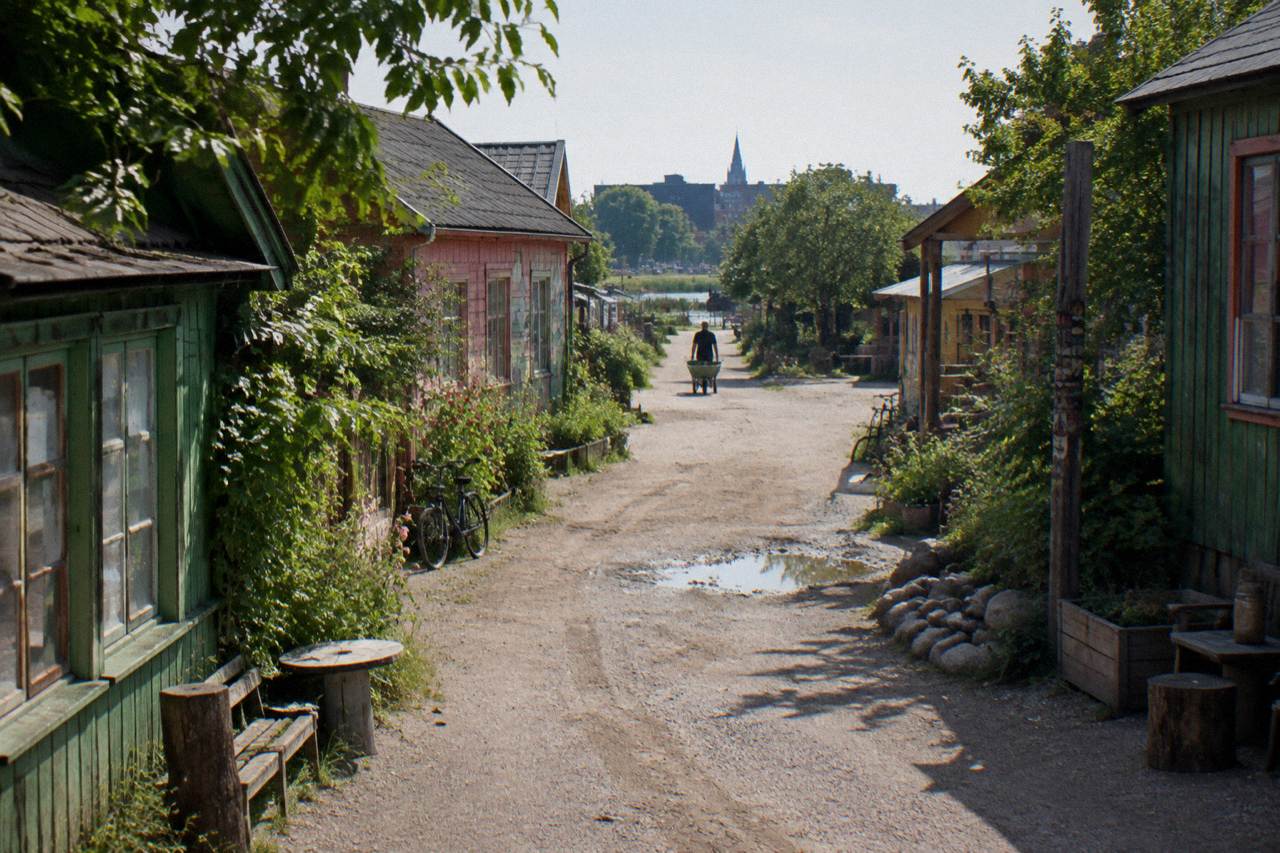
Pusher Street is a stretch of bare gravel and timber shacks running through the middle of Freetown Christiania, the partly self-governing neighbourhood founded on an old military site in Christianshavn. It earned its name from the open hash trade that operated there for decades, and it remains the single most misunderstood corner of Copenhagen. Visitors walk it every day, but the street sits inside a living community with its own rules, and the residents post those rules at the gates. Getting them right is the difference between a curious visitor and a nuisance.
What Is Pusher Street, And Can Tourists Actually Visit?
Pusher Street is the central thoroughfare of Freetown Christiania, historically known for its open cannabis market, and yes, tourists can visit it on foot, since walking into Christiania costs nothing and no ticket or tour is required. The catch is conduct: photo rules apply in Christiania, and Pusher Street in particular has long been a no-photography zone enforced by residents, so visiting is easy but visiting respectfully takes a little preparation.
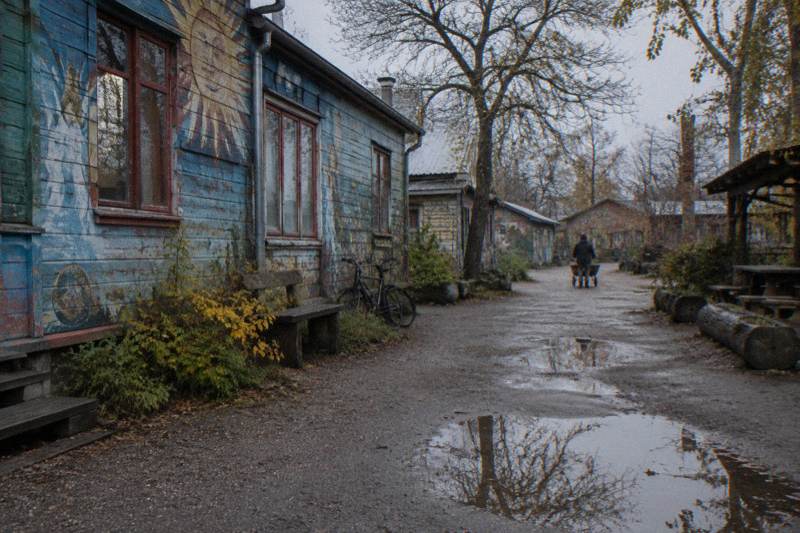
The street itself is unremarkable to look at, which surprises most first-time visitors. It is a wide, unpaved lane lined with small wooden stalls and hand-painted buildings, cutting between the neighbourhood's two main entrances. What made it famous was the trade that happened openly along it for decades, when Christiania's residents tolerated a hash market that the rest of Denmark did not. That trade has been contested for the entire life of the district, through police raids, negotiations, and repeated attempts to close it, and the street's character has shifted with each round of that fight.
For a tourist, the practical answer has barely changed across all of it. The gates are open, there is no entrance fee, and people walk through constantly, on their own or with guides. The residents ask for specific behaviour in return, and the requests are painted on signs rather than buried in terms and conditions. The most important of them is simple: put the camera away on Pusher Street itself. Christiania applies photo rules across the district, and they are strictest on this one street.
If you want the story rather than just the stroll, several free walking tours cover the area. The strongest English-language option is the Politically Incorrect Hippies Walk, a GuruWalk rated 4.74 out of 5 across 393 reviews, which starts at Havnegade 54 and spends 1 hour 30 minutes on the hippie history of Christianshavn and Christiania. Two other English-friendly walks make good company pieces if you are building a wider plan.
Where Is Pusher Street Inside Freetown Christiania?
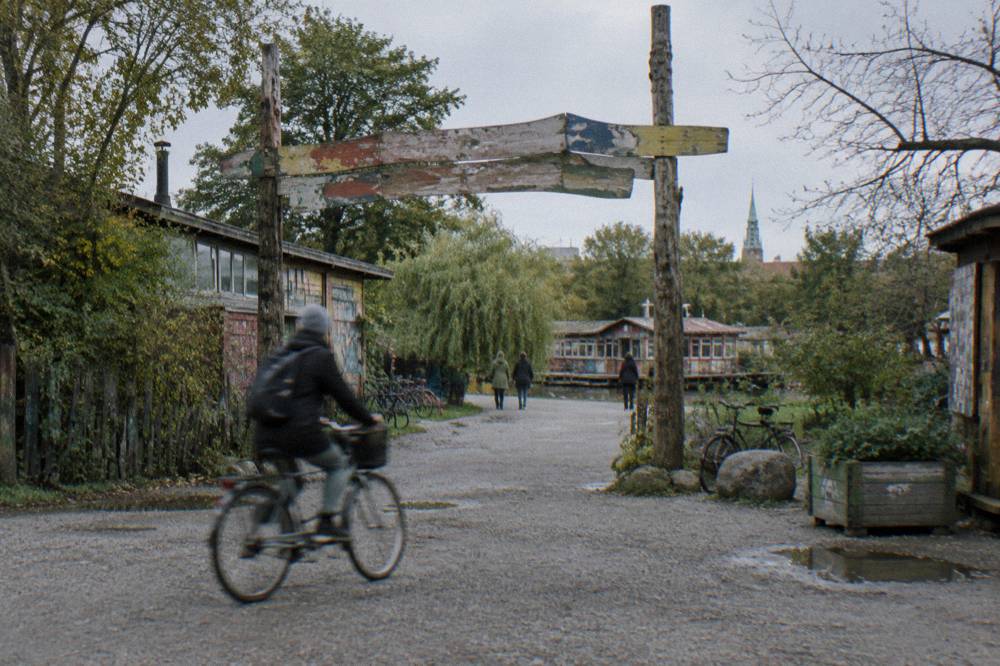
Pusher Street runs through the core of Freetown Christiania, which occupies a former military barracks site on Amager, reached across the water from Indre By through Christianshavn. The main entrance most tourists use sits at the end of Refshalevej, a short walk from the Church of Our Saviour, and the street begins almost immediately inside the gate.
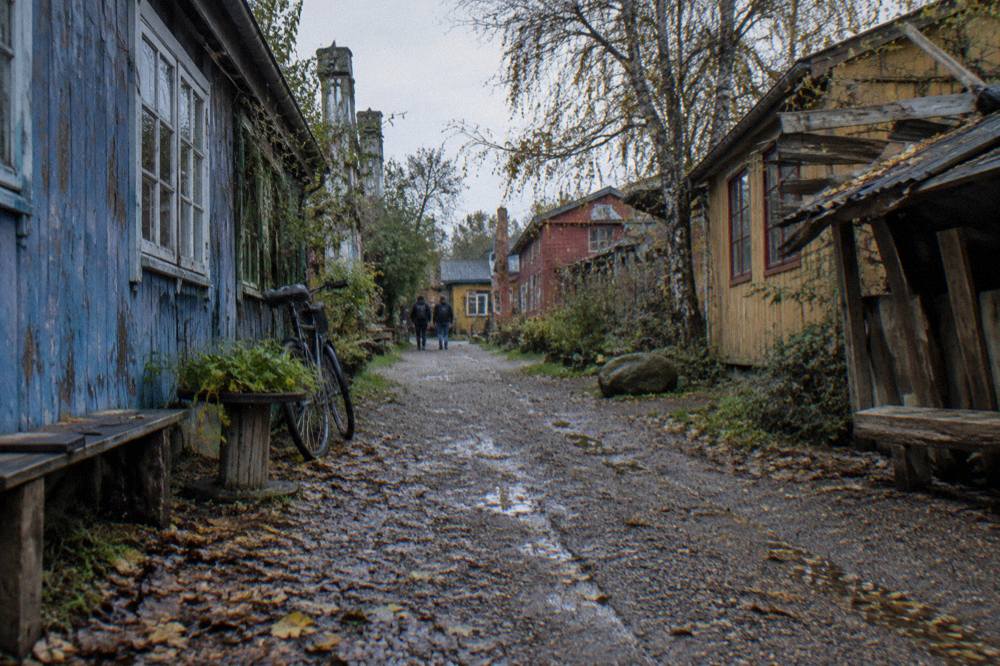
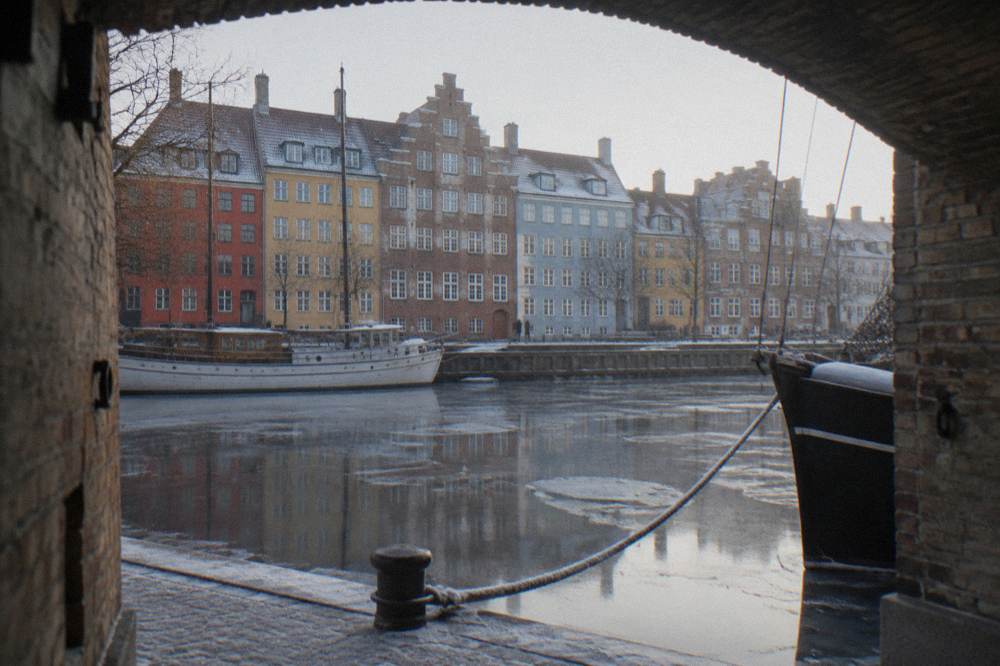
Christiania's geography explains a lot of its character. The district sits on the eastern edge of Christianshavn, the canal district built on reclaimed land, and the old naval base it grew out of gave it walls, water, and a defensible shape. Walking there from the city centre takes in some of the best free scenery Copenhagen has: you cross the inner harbour, pass the colourful facades of Christianshavn, and arrive at a neighbourhood that looks and feels nothing like the rest of the city. The whole approach is free to walk, and the district itself charges nothing for entry.
The layout inside is loose and organic. Paths, not roads, connect small houses built by residents over five decades, and Pusher Street is the spine that most of them branch off. The two practical landmarks to know are the main entrance near the Prinsessegade side and the harbour-facing end toward Refshaleøen, the former shipyard area that now holds food halls and workshops. If you arrive from the Church of Our Saviour, the spire behind you makes an easy orientation point for the walk back.
A local guide makes the geography click much faster than a map does. The Politically Incorrect Hippies Walk on GuruWalk covers exactly this approach, and the same operator family runs Christianshavn walks in Spanish for visitors who prefer them, including a Christianshavn free tour rated 4.56 out of 5 across 362 GuruWalk reviews. Whichever language you walk in, the meeting points sit on the city side of the water, so the crossing is part of the tour.
Can You Take Photos On Pusher Street?
No, photography on Pusher Street itself is off limits, and this is the single rule every visitor should know before entering. Christiania applies photo rules across the district, but on Pusher Street they are firm and enforced by residents, so the safe habit is to keep the camera or phone away entirely until you are back on the public streets of Christianshavn.
The reasons are practical rather than precious. The street's history means that many people photographed there have reasons not to want their faces recorded, and residents have policed this themselves for decades, because the consequences of careless pictures land on them, not on the tourist who leaves the next morning. Signs at the entrances say it plainly. Treat the whole of Christiania as a place to ask before photographing people, and treat Pusher Street as a place where the answer is already no.
The rest of the district is more forgiving, within limits. The painted houses along the side streets, the lake views toward the ramparts, and the general street art of Christiania are photographed constantly, and the community that paints its buildings is not hiding them. The distinction that matters is people and stalls over buildings and landscapes. When in doubt, lower the camera. A guide will tell you exactly where the line sits on the day you visit, since enforcement varies with what is happening on the street.
This is one reason a guided walk earns its tip here. The GuruWalk listing for the Politically Incorrect Hippies Walk describes the route and the ground rules before you reach the gate, which saves the awkwardness of learning them in real time. For the rules in more detail, the site's dedicated guide to Christiania's photo and street rules covers them street by street.
What Are The Unwritten Rules Beyond The Signs?
The written rules cover photos and running, but the unwritten ones are about posture: walk calmly, buy nothing on Pusher Street, treat the district as someone's home rather than an attraction, and leave the pusher trade to the people who live with its consequences. Visitors who follow those instincts are welcome, and most of the friction on the street comes from people who forget them.
The signs at the gates are the short version. The longer version is a set of habits that residents appreciate and that cost a visitor nothing. Move at walking pace, because running on Pusher Street has long been read as a signal of trouble. Keep conversation volume normal. Do not film video where you would not take a still photo. Spend money in the district's cafes, workshops, and music venues rather than on the street's grey-market side, because that is the trade the community actually wants to sustain.
The distinction between the community and the trade is worth holding onto. Christiania is home to hundreds of people, hosts venues and businesses, and maintains its own building and maintenance culture. Pusher Street's market has been the flashpoint in every confrontation between the district and the state, and residents have themselves pushed to close or contain it at various points. Treating the whole neighbourhood as a spectacle because of one street undersells the rest of its history, and a good guide will make that contrast the theme of the walk.
The table below compresses the rules into a checklist you can remember at the gate.
| Rule | Where It Applies | Why It Exists |
|---|---|---|
| No photography | Pusher Street, strictly | Residents do not want faces or stalls recorded |
| Ask before photographing people | All of Christiania | It is a home first and an attraction second |
| Do not run | Pusher Street | Running has long been read as a warning signal |
| Do not buy on the street | Pusher Street | The trade is the community's main legal risk |
| Support the venues | Cafes, music venues, workshops | That is the economy residents want |
| Walk in via the main entrances | Prinsessegade and harbour sides | The gates are where the rules are posted |
Is Pusher Street Safe For Tourists?
For the vast majority of visitors, yes: Pusher Street is walked by tourists daily and the practical risks are low, provided you follow the posted rules and keep to the main thoroughfares in daylight. The real safety story is ordinary city caution rather than danger, and the neighbourhood's own venues and family traffic set the tone more than the street's reputation does.
The reputation outruns the reality, but the reputation is not baseless either. The hash market brought police raids and periodic flare-ups over five decades, and visitors should not pretend that history away. The honest framing is that the street's risks concentrate around its illegal trade and around behaviour that provokes residents, and a tourist with a camera in their pocket and no interest in buying anything has little to do with either. Daytime visits, main paths, and a guide for the first pass are the standard advice.
Guided visits add a layer of local judgement that a solo walk cannot. The Politically Incorrect Hippies Walk, rated 4.74 out of 5 across 393 GuruWalk reviews, is built around exactly this: a guide who lives in the story explains what the district is actually like now, not what an old headline said. For a deeper look at the question, the site's guide on whether Christiania is safe to visit weighs the record in full, and the guide to what to know before you go covers the practical prep.
If you would rather build the day around it, pairing the walk with the free things nearby costs nothing. The Christianshavn canals, the harbour baths, and the Refshaleøen food scene are all within a short stroll, and the whole loop can be done on foot from the city centre.
Which Free Walking Tours Cover Christiania And Pusher Street?
The main English-language free walk covering Christiania is the Politically Incorrect Hippies Walk on GuruWalk, a 1 hour 30 minute tour rated 4.74 out of 5 across 393 reviews, while Spanish speakers have a dedicated Christianshavn free tour rated 4.56 out of 5 across 362 reviews. Several other walks on the city roster touch the district's edges or pair well with it.
The roster for this site pools 21 free walks across GuruWalk and freetour.com, and the Christianshavn cluster is where Christiania coverage lives. The table below sets out the walks most relevant to a Pusher Street visit, with every rating on its own platform's scale, because GuruWalk rates out of 5 and freetour.com rates out of 10 and the two numbers must never be compared bare.
| Walk | Platform | Rating And Reviews | Duration | Language |
|---|---|---|---|---|
| Politically Incorrect Hippies Walk | GuruWalk | 4.74 out of 5, 393 reviews | 1 hour 30 minutes | English |
| Christianshavn Free Tour | GuruWalk | 4.56 out of 5, 362 reviews | 1 hour 30 minutes | Spanish |
| Christiania Contrasts Walk | GuruWalk | 4.94 out of 5, 34 reviews | 2 hours | Spanish |
| Renaissance Era City Walk | freetour.com | 9.5 out of 10, 11,288 reviews | Posted on the freetour.com page | English and Spanish |
| Royal Highlights Walk | freetour.com | 9.5 out of 10, 6,894 reviews | Posted on the freetour.com page | English and Spanish |
The two freetour.com walks do not enter Christiania, but they cover the royal and renaissance core of Indre By, which is the natural morning half of a day that ends in Christianshavn. The Renaissance Era City Walk, rated 9.5 out of 10 across 11,288 freetour.com reviews, is the highest-volume walk on the entire roster, and the Royal Highlights Walk sits close behind at 9.5 out of 10 across 6,894 reviews. Both are free to join and tip-based, both run in English and Spanish, and both leave from meeting points shown on their listings.
For a single walk that bridges the two halves of the city, the Grand Tour on GuruWalk is the roster's anchor: 2 hours 30 minutes from Copenhagen City Hall, rated 4.82 out of 5 across 2,538 GuruWalk reviews, running in English and Spanish. It stays in the centre rather than crossing to Christiania, which makes it a clean morning companion to an afternoon in Christianshavn. If you want the full comparison before choosing, the site's free walking tours in Christianshavn and Christiania guide breaks the options down walk by walk.
How Does A Pusher Street Visit Fit Into A Free Day In Copenhagen?
A Pusher Street visit slots naturally into a day built almost entirely from free pieces: a morning walking tour in Indre By, the free walk across to Christianshavn, free entry to the Church of Our Saviour's interior, and free swimming at the harbour baths, with only optional paid extras like the spire climb costing anything. The district sits close enough to the centre that no transit fare is needed if you walk.
The geography does the budget a favour. Indre By, the medieval core, sits within a 30 minute walk of Christiania's gates via the Christianshavn canals, so a day that starts at City Hall and ends at Pusher Street needs no ticket at all. If you do use transit, a 24-hour City Pass is listed at DKK 100 on the official Danish public transport site, and the single 2-zone fare is commonly cited at around DKK 24, though that figure comes from a secondary source rather than the transit authority's own page.
The free and paid pieces around the walk are worth knowing before you plan. Christiania itself charges nothing, the Church of Our Saviour keeps its interior free while the spire climb runs about DKK 70, and the harbour baths cost nothing in season. Further afield, the same free-interior, paid-tower pattern repeats across the city, as the table shows.
| Site Or District | Free Part | Paid Part |
|---|---|---|
| Freetown Christiania | Walking in, photo rules apply | Nothing required |
| Church of Our Saviour | Interior | Spire climb, about DKK 70 |
| CopenHill | Rooftop hiking trail | Ski slope, price on site |
| Carlsberg Byen | Walking the district | Brewery experience, price on site |
| Frederik's Church | Interior | Dome climb, about DKK 50 |
| Copenhagen harbour baths | Swimming, in season | Nothing |
One paid product deserves a plain warning here, because it is marketed on the idea of free things. The Copenhagen Card is a paid pass, DKK 589 for a 24-hour adult ticket and DKK 859 for 48 hours per its own pricing page, and nothing about a Pusher Street day depends on it, since every element of the day described above is either free or paid at the door. The site's analysis of the Copenhagen Card against a free trip runs the numbers properly.
What Should You Actually Do When You Get To The Gate?
Walk in through the main entrance, put the phone away before you reach Pusher Street, walk the lane at a calm pace without buying anything, then carry on into the rest of Christiania, where the lake paths, the workshops, and the venues are the parts the community wants visitors to see and spend in. A guide for the first visit turns a cautious walk into an informed one.
The sequence matters because most of the friction happens in the first hundred metres. Visitors who arrive with a camera already raised, or who treat the stalls as a photo backdrop, create the incidents that give the street its reputation for hostility. Visitors who arrive quietly, walk through, and spend their time and money in the district's legal economy get a completely different Christiania: one with a bakery culture, music venues, and some of the most distinctive hand-built architecture in Northern Europe.
For structure, a guided first pass is hard to beat, and Free Things To Do In Copenhagen keeps the full roster of tip-based walks for exactly this kind of day. Beyond the Hippies Walk, the roster's English options include a Comedy Walk rated 4.82 out of 5 across 1,863 GuruWalk reviews and a 3-hour Hygge Experience rated 4.66 out of 5 across 2,132 GuruWalk reviews, both of which cover the city's character rather than Christiania itself, and both of which pair well with an afternoon across the water. If your day has room for one more walk after the Christiania visit, the Nordic Freedom Tours City Walk, rated 4.46 out of 5 across 24 GuruWalk reviews, circles back through the centre.
Common Questions About Pusher Street And Christiania
What Is Pusher Street, And Can Tourists Actually Visit?
Pusher Street is the central lane of Freetown Christiania, famous for its historical open hash market. Tourists can visit: entry to Christiania is free, no booking is needed, and people walk the street daily. The conditions are behavioural: no photography on the street itself, no running, and no buying.
Is It Free To Enter Freetown Christiania?
Yes. Walking into Christiania is free and unconditional. There is no gate fee, no ticket, and no requirement to join a tour, though a tip-based guided walk adds context that a solo visit misses.
Can You Take Photos In Christiania?
Photo rules apply across Christiania, and on Pusher Street they are strict: no photography at all. Elsewhere in the district, ask before photographing people and avoid filming stalls. The safest habit is to keep the camera away until you are back in Christianshavn.
Is Pusher Street Safe For Tourists?
For visitors who follow the posted rules, the practical risk is low and the street is walked by tourists every day. The caution is ordinary: visit in daylight, stay on the main paths, do not photograph, and do not engage with the street's trade. A guided walk adds local judgement.
Which Free Walking Tour Covers Christiania?
The Politically Incorrect Hippies Walk, a GuruWalk rated 4.74 out of 5 across 393 reviews, covers Christianshavn and Christiania in English over 1 hour 30 minutes. Spanish speakers have a dedicated Christianshavn free tour rated 4.56 out of 5 across 362 GuruWalk reviews.
What Else Is Free Near Pusher Street?
The whole approach is free: the Christianshavn canals, the harbour baths in season, the Refshaleoen district, and the interior of the Church of Our Saviour. Only optional extras like the spire climb, about DKK 70, cost anything.