Is Christiania Still A Commune? What Freetown Christiania Is Actually Like Today
What Freetown Christiania is today: the rules, the photo bans, the safety picture, and which free walking tours in English actually cover the district.
Is Christiania Still A Commune? What Freetown Christiania Is Actually Like Today
Christiania is not a commune in the classic sense anymore, but it is not an ordinary Copenhagen neighbourhood either. It is a self-managed district of roughly 1,000 residents on a former military site in Christianshavn, free to walk into, governed by its own community rules, and famous for one street where photography is banned and hash is sold openly. Visitors are welcome on most of the territory, and the practical rules are simple once you know them.
That is the honest short version, and it is worth unpacking, because the word "commune" carries a lot of assumptions that stopped matching reality a long time ago. Christiania began as a squat on abandoned military land and grew into a permanent settlement with its own flag, its own meetings, and its own idea of what a neighbourhood could be. Over the decades it has negotiated its existence with the Danish state repeatedly, and today it operates somewhere between a housing community, a tourist attraction, and a living experiment that the residents themselves are still arguing about.
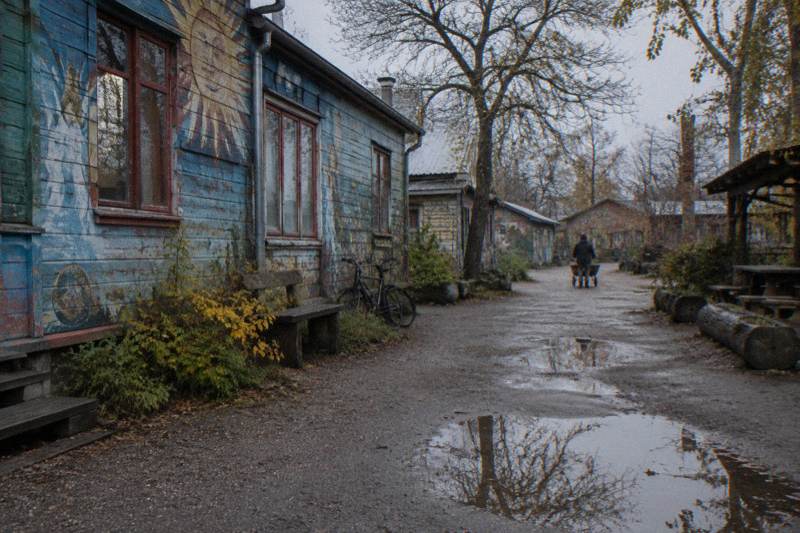
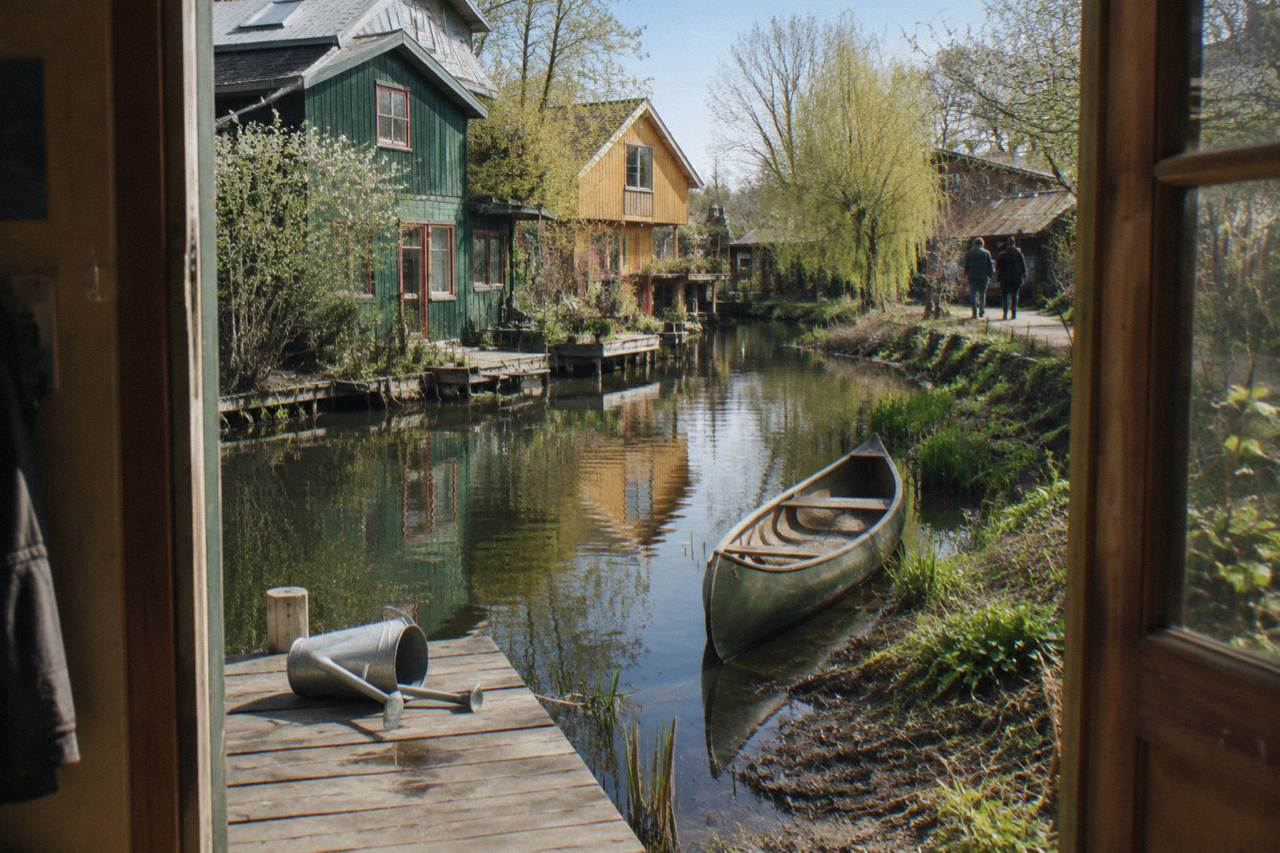
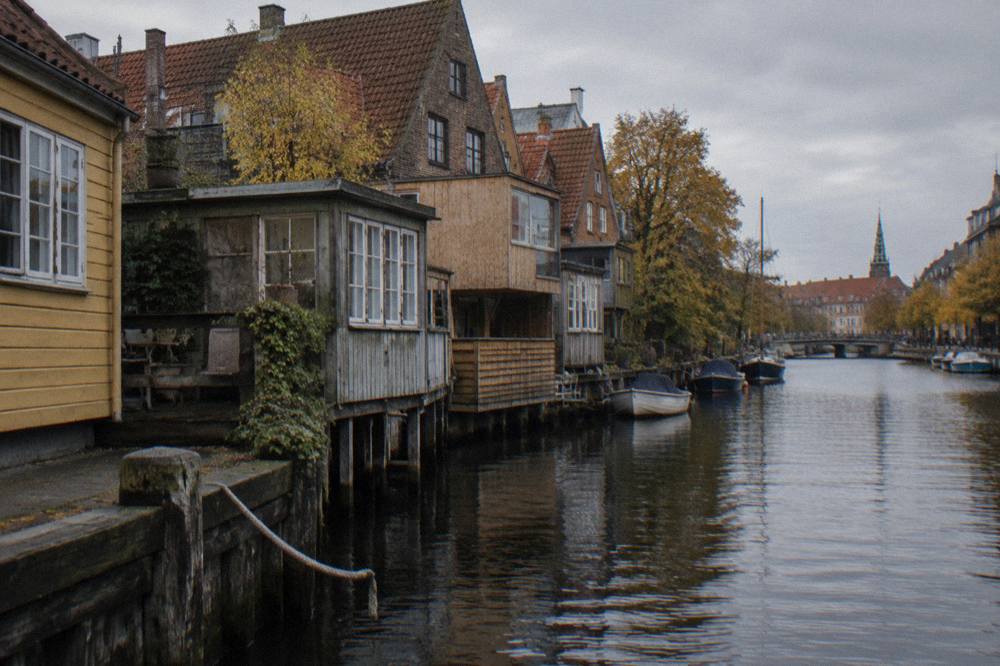
What surprises most first-time visitors is how normal large parts of it feel. Past the entrance, there are workshops, cafés, music venues, allotment gardens, and families with pushchairs. The famous hand-built houses, painted in every colour the residents could find, sit along canals that look like a scrapbook version of a Danish village. The district's own rules matter more than Danish law in daily life here, and those rules are posted, discussed, and enforced by the community rather than by police walking a beat.
The one part everyone has heard about is Pusher Street, and it is genuinely different from the rest of the territory. Photography is banned there, the trade is openly tolerated up to a line that has shifted over the years, and guides who bring groups through give a short speech before entering. If you want the full picture on that street and what tourists can and cannot do there, our separate piece on what Pusher Street is and whether tourists can visit goes into the rules in detail.
Walking the district with a guide is the easiest way to understand what you are looking at, and the roster of free, tip-based walks includes several that touch this part of the city. Here are three of the strongest options on the books right now, all free to join with tips at the end.
The Politically Incorrect Hippies Walk is the one most directly aimed at this story: a 90-minute GuruWalk tour in English, rated 4.74 out of 5 across 393 GuruWalk reviews, starting at Havnegade on the harbour edge and working through the Christianshavn context that produced the freetown. The Comedy Walk and the Hygge Experience stay mostly in the centre, but both are strong English-language GuruWalk options if you want a second walk on a different day.
What Does Christiania's Self-Management Actually Look Like Now?
Christiania runs its own affairs through community meetings and its own common law, which residents treat as binding inside the district. Cars are not allowed, land and houses cannot be bought or sold on the open market, and decisions about the area are made collectively rather than by a municipality or landlord. That structure is what survives of the original commune idea, and it is still functioning today.
The community's own law is short, and it is the closest thing the district has to a constitution. It is posted at the entrances, and it commits residents to a set of principles about self-management and shared responsibility rather than a legal code. In practice, disputes about noise, building, or behaviour are handled inside the community first, and the residents' meetings that decide these things are the real government of the place.
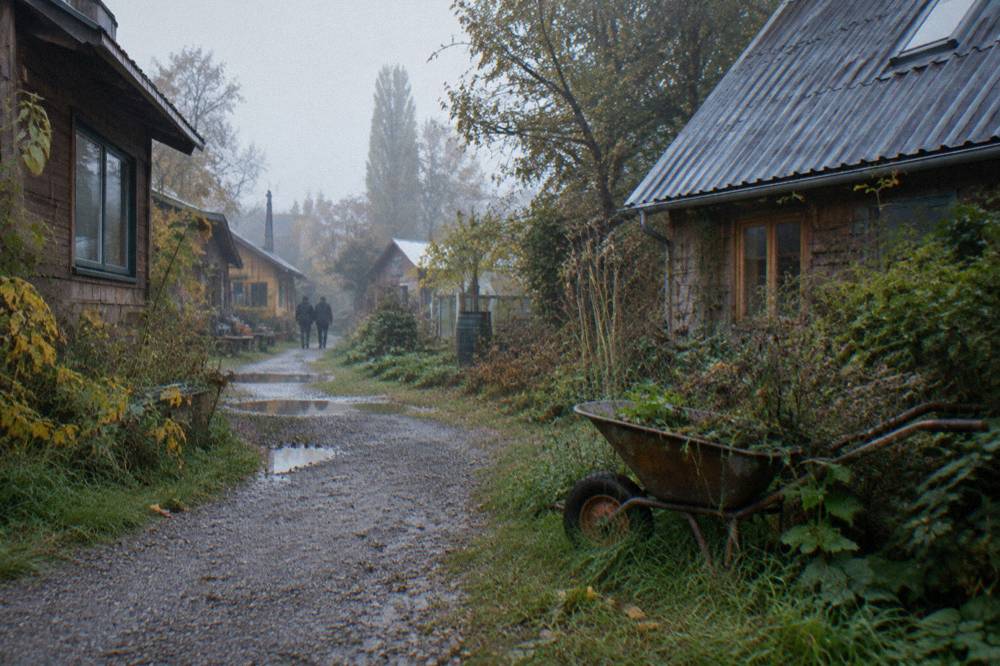
The no-cars rule is one of the most visible signs that you have crossed a boundary. The streets inside are gravel and dirt, the transport is bicycles and wheelbarrows, and the quiet that results is part of why the district feels so different from the rest of Copenhagen only a few hundred metres away. Visitors notice it within a minute of walking in.
The housing side is the other survivor of the commune era. Residents do not own their plots in the conventional sense, and the arrangement the community reached with the state over the years is designed to keep the land out of the ordinary property market. That is why the hand-built houses have not been replaced by apartment blocks, and why the district still looks like something assembled by hand rather than by a developer.
If you are weighing whether to visit at all, the honest answer is that most of the territory is calm, walkable, and interesting, and the parts that are not are clearly signposted. Our guide on what to know before you go to Christiania covers the practical side, and the piece on whether Freetown Christiania is safe to visit deals with the safety question directly.
Can Tourists Just Walk In, And What Does It Cost?
Yes, walking into Christiania is free, with no ticket, no gate, and no guided requirement. The district's photo rules apply as soon as you enter, and the ban on photography is strict on Pusher Street in particular. Outside that street, the general rule residents ask visitors to follow is to ask before photographing people and homes.
That free entry is one of the reasons Christiania features on every budget list of things to do in the city, and it is genuinely unconditional: no Copenhagen Card, no museum day, no seasonal window. The Copenhagen Card itself is a paid product anyway, at DKK 589 for 24 hours and DKK 859 for 48 hours for an adult, and nothing in Christiania needs it, as the card's own pricing page makes clear.
Getting there costs a little, but not much. The district sits on Amager island's edge in Christianshavn, walkable from the city centre in about half an hour, or a short metro or bus hop. A 24-hour City Pass for the Copenhagen area runs at DKK 100 according to the public transport authority's fare information, which covers a day of hopping between the centre, Christianshavn, and the harbour baths if you want to build a full free day around the visit.
The photo rules deserve their own sentence, because they are the one thing that gets visitors into trouble. On Pusher Street, do not raise a camera or phone at all. Elsewhere in the district, residents tolerate photography of the landscape but ask to be asked first, and the community has made its position clear over the years: this is a home first and an attraction second.
Here is how the free-entry picture looks across the surrounding neighbourhood, based on the verified attraction data for the area.
| Place near Christiania | Free part | Paid part |
|---|---|---|
| Freetown Christiania | Walking the district, no ticket | Nothing, though cafés and venues sell normally |
| Church of Our Saviour, Christianshavn | Interior, during opening hours | Spire climb, around DKK 70 |
| Christianshavn canals and bridges | All of it, on foot | Nothing |
| Nyhavn and the harbour front | All of it | Nothing |
| CopenHill, Amager | Rooftop hiking trail | Ski and snowboard slope, ticketed |
The Church of Our Saviour pair is worth flagging because it catches people out: the baroque interior with its enormous organ is free to see, but the famous corkscrew spire climb is a separate ticket at roughly DKK 70. The CopenHill pair works the same way, a free rooftop trail and a paid slope, as our free viewpoints in Copenhagen guide explains in more detail.
What Is It Actually Like To Walk Through The District Today?
Walking through Christiania today feels like moving through three different places in twenty minutes: a scruffy commercial strip, a quiet residential village of hand-built houses, and a green waterfront where the city noise disappears. Most visitors spend between one and two hours. The atmosphere is relaxed in most zones and tense only on the one street with the trade.
The entrance most tourists use brings them first into the commercial zone, where stalls, murals, and the smell of food vendors set the tone. This is the busiest part, and it is where the district's identity is most performed for outsiders: hand-painted signs, recycled-material sculptures, and a general aesthetic that has been described as a carnival built from scrap. It is loud, and it is the part most photographs come from. The rest of the planning pages sit on Free Things To Do In Copenhagen.
Pusher Street sits at the heart of this zone, and the change in atmosphere when you step into it is immediate. Cameras go away, voices drop, and the men standing along the street make no secret of what they are selling. The community has fought its own battles over this street, and the residents' own position on it has shifted over the years, but the visitor-facing rules have stayed stable: no photos, no lingering to gawk, and no trouble if you simply walk through.
Past that street, the district opens out. The residential areas are the part most people do not expect: quiet lanes, gardens, and some of the most photographed houses in Denmark, built by hand over decades and repaired the same way. The lakefront on the southern edge, toward the ramparts, is where the district feels most like a village, with ducks, canoes, and residents who wave at people they recognise.
The ramparts themselves, part of the old Christianshavn fortifications, wrap the district in green and are free to walk. From the top of them you can see the whole geography at once: the district on one side, the harbour and the city centre on the other, and the modern apartment blocks of Amager beyond. It is the best single place to understand why the freetown ended up where it did.
Visitors who want the local framing rather than a self-guided wander have a real option here, and it is the walk this article is paired with.
The Politically Incorrect Hippies Walk, a GuruWalk listing, is the only English-language featured walk on the roster built around this territory. GuruWalk reviewers consistently describe the guide's framing as candid about the district's contradictions, which is what you want from a walk with "politically incorrect" in the title. It runs 90 minutes from Havnegade, and the tip is whatever you decide at the end.
Which Free Walking Tours Cover Christiania Or Contextualise It?
Only one featured English-language free walk on the current roster centres on Christiania and Christianshavn: the Politically Incorrect Hippies Walk on GuruWalk, rated 4.74 out of 5 across 393 reviews. The other featured walks cover the city centre and treat Christiania as a mention, not a destination. Spanish-language walkers have separate options, including a dedicated Christiania walk.
The full site roster is 21 pooled walks across GuruWalk and freetour.com, each with its own page, and the spread across languages is wide. Spanish speakers are unusually well served in this city: there is a Spanish-language Christiania contrasts walk, a Spanish Christianshavn tour, and a Spanish essentials walk rated 4.97 out of 5 across 2,882 GuruWalk reviews, one of the biggest review pools on the whole roster. Italian and German walkers each have a dedicated city walk too.
For English speakers, the choice is narrower but real. The featured English options, all on GuruWalk unless noted, break down like this.
| Walk | Platform | Rating and reviews | Duration | Language |
|---|---|---|---|---|
| Politically Incorrect Hippies Walk | GuruWalk | 4.74 out of 5, 393 reviews | 1 hour 30 minutes | English |
| Grand Tour, English and Spanish | GuruWalk | 4.82 out of 5, 2,538 reviews | 2 hours 30 minutes | English, Spanish |
| Historic Center Walk, Map Included | GuruWalk | 4.84 out of 5, 1,421 reviews | 2 hours | English, Spanish, Italian |
| Comedy Walk in English | GuruWalk | 4.82 out of 5, 1,863 reviews | 2 hours | English |
| Renaissance Era City Walk | freetour.com | 9.5 out of 10, 11,288 reviews | Not stated | English, Spanish |
Note the two rating scales in that table, because they are not comparable at a glance. GuruWalk rates out of 5 and freetour.com rates out of 10, so a 9.5 out of 10 is strong but a 4.82 out of 5 is stronger on a common scale, and neither number should be read without its denominator.
The Grand Tour is worth singling out for a different reason: it starts at City Hall on Rådhuspladsen and gives you the centre's full story in two and a half hours, which pairs well with a Christianshavn-focused walk on the same or the following day. Many visitors do exactly this, the centre in the morning, the harbour and freetown in the afternoon, and it is the most efficient free-walking structure the city offers.
The Grand Tour, a GuruWalk listing rated 4.82 out of 5 across 2,538 GuruWalk reviews, is the highest-volume English-capable walk on the GuruWalk side of the roster. Two and a half hours from Rådhuspladsen covers the medieval core, the harbour, and enough of the city's political story that the Christiania question comes with context when you reach it.
How Does A Christiania Visit Fit Into A Free Day In Copenhagen?
A Christiania visit slots most naturally into the second half of a free day: centre in the morning, the harbour front and Nyhavn at midday, then across the bridge to Christianshavn for the church, the canals, and the freetown. Everything on that route is free to walk, and the only costs are transport, food, and any tips you choose to give.
The geography makes this almost automatic. From the medieval core you walk east to the harbour, along the Nyhavn canal, then over the Inderbro bridge into Christianshavn, and the freetown entrance is a few hundred metres further on. Our Nyhavn free things to do and Christianshavn free things to do guides break both halves of that route down stop by stop.
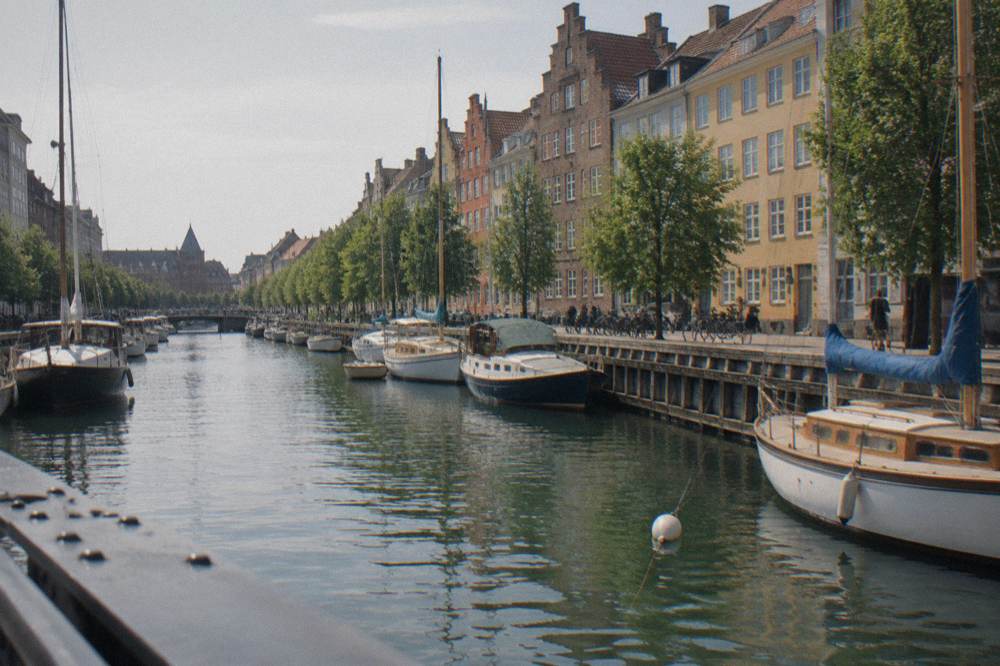
A sample free day built around the district looks like this, with every walking stop free.
| Time | Stop | Cost |
|---|---|---|
| Morning | Grand Tour or self-guided walk from Rådhuspladsen through the medieval core | Free, tip optional |
| Midday | Nyhavn canal and the harbour front | Free |
| Early afternoon | Christianshavn canals and Church of Our Saviour interior | Free |
| Afternoon | Freetown Christiania, entrance to ramparts | Free |
| Late afternoon | Islands Brygge harbour bath, in season | Free |
The harbour bath at Islands Brygge is the natural finish, a free-to-swim public bath in the harbour itself, and it is the point where a day of walking turns into a sit-down. Our free beaches and harbour baths guide lists the others if the weather holds.
If you would rather fold the freetown context into a guided morning elsewhere in the city, these three walks are the other featured picks worth a look, one English-language GuruWalk option and the two freetour.com exclusives.
The Nordic Freedom Tours city walk is a 2-hour English GuruWalk option from Kongens Nytorv, right on the route toward Christianshavn. The Renaissance Era City Walk and the Royal Highlights Walk are the two freetour.com listings, rated 9.5 out of 10 across 11,288 and 6,894 freetour.com reviews respectively, and both run in English and Spanish. All three are free to join, tip at the end, and none of them will hand you a bill before you have decided what the walk was worth to you.
Common Questions About Freetown Christiania
Is Christiania Still A Commune? What Freetown Christiania Is Actually Like Today
Christiania is not a commune in the strict historical sense, but it remains a self-managed district with its own community law, collective decision-making, and no conventional property market. Walking in is free, most of the territory is calm and residential, and the one street with the open hash trade has strict no-photography rules. It functions today as a permanent, legally negotiated community rather than a squat.
Do You Need A Ticket To Enter Christiania?
No. Entry is free and unconditional, with no gate, ticket, or booking. Nothing in Christiania requires a Copenhagen Card, which is itself a paid product at DKK 589 for 24 hours and DKK 859 for 48 hours for an adult.
Can You Take Photos In Christiania?
Not on Pusher Street, where photography is banned outright and the rule is enforced. Elsewhere in the district the community asks visitors to ask permission before photographing people and homes. The safest approach is to keep the camera away entirely until you are back outside the district.
Is It Safe To Walk Through Christiania As A Tourist?
Most of the district is a quiet residential area and feels safe during the day. The tension is concentrated on Pusher Street, where the rules are simple: no photos, no lingering, keep moving. Our full piece on Christiania safety covers the details.
Which Free Walking Tour Covers Christiania In English?
The Politically Incorrect Hippies Walk on GuruWalk, a 90-minute English tour rated 4.74 out of 5 across 393 GuruWalk reviews, is the featured English-language walk built around Christianshavn and the freetown's story. Spanish speakers have a dedicated Spanish-language Christiania walk on the roster as well.
How Long Should You Spend In Christiania?
Between one and two hours covers the commercial zone, Pusher Street, the residential lanes, and the ramparts. Longer visits usually mean stopping at a café or the music venues, which operate like any other business and charge normally.