Copenhagen Vs Stockholm: Which Is Better For A Budget Trip?
An honest budget comparison of Copenhagen and Stockholm: verified free attractions, walking tour ratings, museum free days, transit and food costs, and which city gives a low-budget traveller more.
Copenhagen Vs Stockholm: Which Is Better For A Budget Trip?
For a strictly low-budget trip, Copenhagen edges it, and the margin is wider than most travellers expect. Copenhagen has 25 unconditionally free attractions ranging from the Nyhavn waterfront to the Kastellet fortress, plus 21 pooled pay-what-you-want walking tours across the GuruWalk and freetour.com platforms. Stockholm is a wonderful city, but its highlights are spread across islands, and island-hopping means transit fares that Copenhagen's walkable centre simply does not charge you.
That is the short version. The longer version is that both capitals sit near the top of Europe's price rankings, so neither is a cheap city in absolute terms, and the real question is which one leaks money more slowly. This site researches Copenhagen attraction by attraction, with every figure on this page verified against official sources, so the Copenhagen side of the comparison is precise. Where Stockholm is concerned, the honest position is structural: the two cities organise themselves differently, and that structure is what decides the budget.
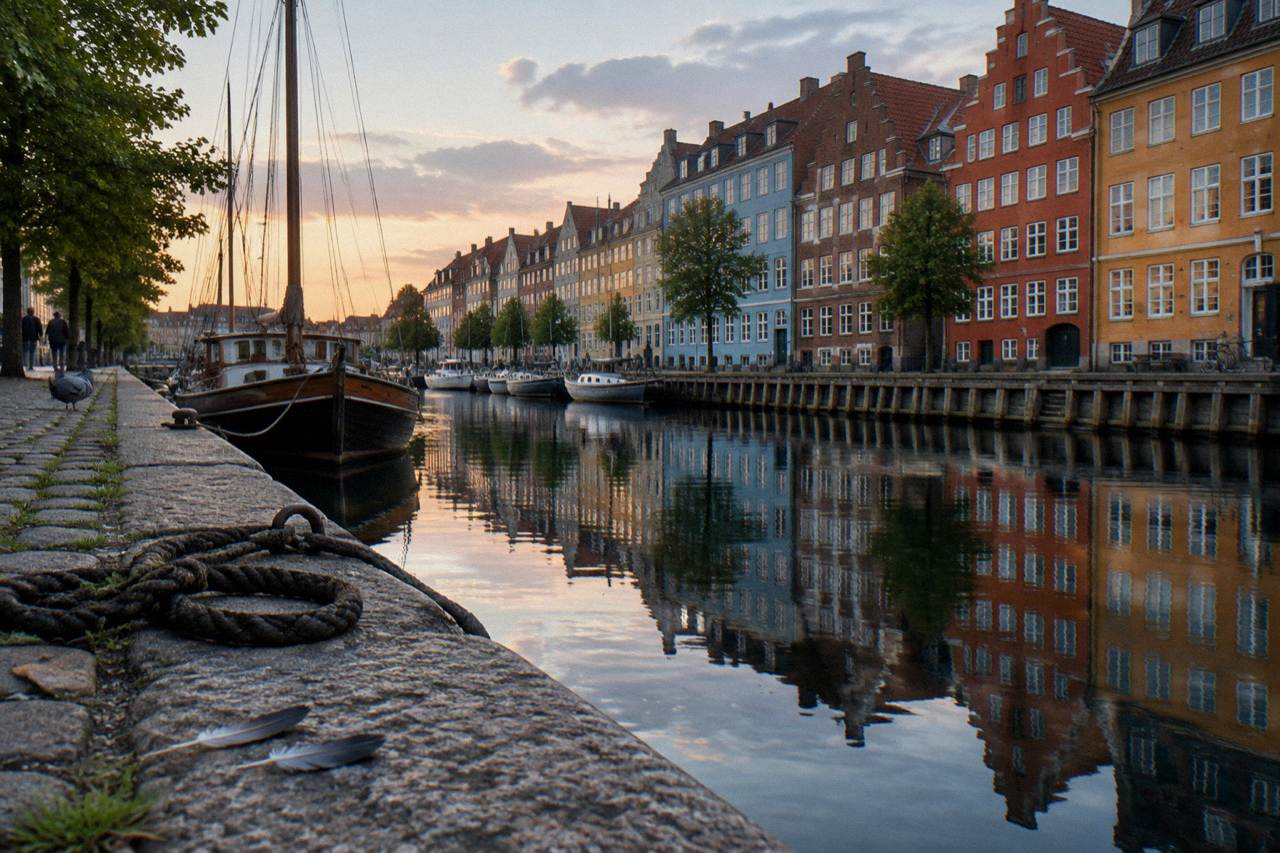
Stockholm spreads its old town, museums and viewpoints across fourteen islands, with Gamla Stan as the historic core. Copenhagen concentrates almost everything a first-time visitor wants inside one walkable strip between City Hall Square and the harbour, with the inner city, Christianshavn and Vesterbro all reachable on foot. When the core sightseeing loop costs nothing in transit, the daily burn rate drops fast.
The free-tour scene tilts the comparison further. Copenhagen currently ships 21 pooled pay-what-you-want walks across the two platforms this directory covers, 19 on GuruWalk and 2 on freetour.com, in English, Spanish, Italian and German. That depth of choice, in multiple languages and multiple neighbourhoods, is a genuine budget asset: it replaces paid guided sightseeing almost entirely. If you are weighing the two cities for a short, cheap trip, the pages on Free Things To Do In Copenhagen exist precisely because the free layer here is unusually thick.
If a guided introduction appeals before you decide anything else, these three walks cover the classic centre, the Danish-lifestyle angle and a map-included orientation, all on the pay-what-you-want model:
What Does A Budget Day In Each City Actually Cost?
A budget day in Copenhagen can run close to zero in attraction spend: the walking is free, the harbour baths are free, and a single 2-zone transit ticket is commonly cited at around DKK 24 when you do need one. In Stockholm, the equivalent day involves crossing water between islands, so transit enters the budget on day one and stays there. Neither city is cheap, but Copenhagen's compactness keeps the optional spending optional.
The key structural difference is distance. Copenhagen's headline free sights, Nyhavn, the Little Mermaid, Kastellet, Stroget, the Royal Library's Black Diamond building and Amalienborg's guard ceremony, form a rough loop you can walk end to end in under an hour. A Stockholm equivalent pulls you from Gamla Stan to Sodermalm to Djurgarden, and the museum island of Djurgarden in particular is where a budget starts to fray, because several of Stockholm's flagship attractions there are ticketed.
Copenhagen has its own ticketed layer too, and pretending otherwise would be dishonest. Tivoli Gardens charges from DKK 180 for entry, the Round Tower costs DKK 60 for an adult, Rosenborg Castle's interior is DKK 140 online or 150 at the door, and the National Museum of Denmark is DKK 150, or 135 online. The difference is that in Copenhagen those paid sights sit beside an unusually deep free layer, so skipping them costs you little. The full picture of which museums charge and which do not is covered in the free museums in Copenhagen guide.
One thing worth saying plainly: the Copenhagen Card is a paid product, not a free pass. A 24-hour adult card costs DKK 589 and a 48-hour card DKK 859, per the card's own pricing page. Whether that pays off depends on how many ticketed sights you plan to stack into a day, and for a traveller whose itinerary is built around free attractions, it usually does not. The is the Copenhagen Card worth it guide works through the arithmetic.
Here is how the two cities compare on the cost lines a budget traveller actually faces. Copenhagen figures are verified; the Stockholm column records the structural reality rather than invented numbers:
| Cost line | Copenhagen | Stockholm |
|---|---|---|
| Central sightseeing loop | Free on foot, inner city is compact | Island crossings add transit fares |
| Free walking tours | 21 pooled pay-what-you-want walks on GuruWalk and freetour.com | Tip-based tours exist, fewer neighbourhood options verified here |
| Single transit ticket | Around DKK 24 for 2 zones, commonly cited figure | Pay per ride across island crossings |
| 24-hour transit pass | DKK 100 City Pass | Check the local operator's current price |
| Entry-level paid attraction | Round Tower, DKK 60 | Museum island attractions are ticketed |
| Free museum days | Glyptotek free the last Wednesday of the month | Varies by museum, check each directly |
The pattern to take from that table is simple. In Copenhagen the paid items are mostly optional extras sitting on top of a free core. In Stockholm the structure of the city makes some spending structural, because the water between islands is not optional.
Which City Has More Genuinely Free Things To Do?
Copenhagen has 25 verified unconditionally free attractions, from the Nyhavn waterfront and the Little Mermaid to the Kastellet fortress, the Amalienborg guard ceremony and the harbour baths at Islands Brygge. It also has three conditionally free museums and a set of free-interior, paid-tower church pairs. Stockholm's free layer is real but thinner relative to its headline attractions, several of which sit behind ticket desks on the museum island.
The Copenhagen free list is long enough to fill several days without paying a single attraction fee. Walking into Freetown Christiania costs nothing, though the photo rules on Pusher Street are strict and worth reading first. Kongens Have, the gardens beside Rosenborg, the Botanical Garden grounds, Frederiksberg Gardens, Superkilen in Norrebro and Assistens Cemetery, where Hans Christian Andersen is buried, are all free green space. Dragor village, Amager Strandpark and Refshaleoen extend the free layer out of the centre entirely.
The conditional entries need their conditions stated in full, because a vague "free museum" claim is how bad travel advice spreads. The Ny Carlsberg Glyptotek charges around DKK 150 most days but opens the whole museum free on the last Wednesday of every month, per the museum's own site, and that is a Wednesday, not the Tuesday free-day pattern travellers assume from other cities. Thorvaldsens Museum is free on Wednesdays but its exact recurrence is contested between sources, so confirm the current schedule directly before planning around it. The Botanical Garden's outdoor grounds are free while the historic glasshouses may carry separate ticketing on some days.
The church pairs are worth understanding because they are the classic budget traveller's win. The Church of Our Saviour's interior is free with the spire climb at around DKK 70. Frederik's Church, the Marble Church, is free inside with the dome climb at around DKK 50. The same split applies at district level: CopenHill's rooftop hiking trail is free while the ski slope is ticketed, and Carlsberg Byen is free to walk while the Visit Carlsberg experience is paid.
| Copenhagen attraction | Free status | Condition to know |
|---|---|---|
| Nyhavn and the Little Mermaid | Free, unconditional | None |
| Christiansborg Palace Tower viewing platform | Free, unconditional | Queue at busy times |
| Ny Carlsberg Glyptotek | Conditional | Free the last Wednesday of the month, about DKK 150 otherwise |
| Thorvaldsens Museum | Conditional | Free Wednesdays, recurrence contested, confirm direct |
| Church of Our Saviour | Free interior | Spire climb about DKK 70 |
| Tivoli Gardens | Paid | Entry from DKK 180 |
Against that, Stockholm's genuinely free layer tends to concentrate in its public space: the old town's lanes, the viewpoints over the water, the parks. Those are lovely and cost nothing. But the attractions most Stockholm visitors come for, the Vasa Museum above all, are paid, and they are the reason many budget travellers end up spending more in Stockholm than they planned. Copenhagen's equivalents, the Mermaid, the guard ceremony, the harbour baths, are free.
If the free-first approach appeals, the free walking tours in Copenhagen guide maps out how the pay-what-you-want model works in practice, and the Copenhagen neighbourhood overview helps you pick a base that keeps everything walkable.
How Do The Free Walking Tours Compare?
Copenhagen's pay-what-you-want walking tour scene is deeper than Stockholm's on every measure this directory tracks: 21 pooled walks across GuruWalk and freetour.com, in four languages, covering the inner city, Christianshavn and Vesterbro. The strongest English options include the Grand Tour, rated 4.82 out of 5 across 2,538 GuruWalk reviews, and the Renaissance Era City Walk, rated 9.5 out of 10 across 11,288 freetour.com reviews.
Both cities run tours on the tip-based model, where the walk itself costs nothing upfront and you pay the guide what you think it was worth. The difference is depth and coverage. In Copenhagen the roster runs from a 2 hour 30 minute grand circuit of the inner city to a 1 hour 30 minute dive into Christianshavn's hippie history, plus specialist walks on the medieval city at nightfall, the bakery scene and the working-class industrial past of Vesterbro. That specialisation matters to a budget traveller because it means you can spend two or three days on guided walks and pay only tips.
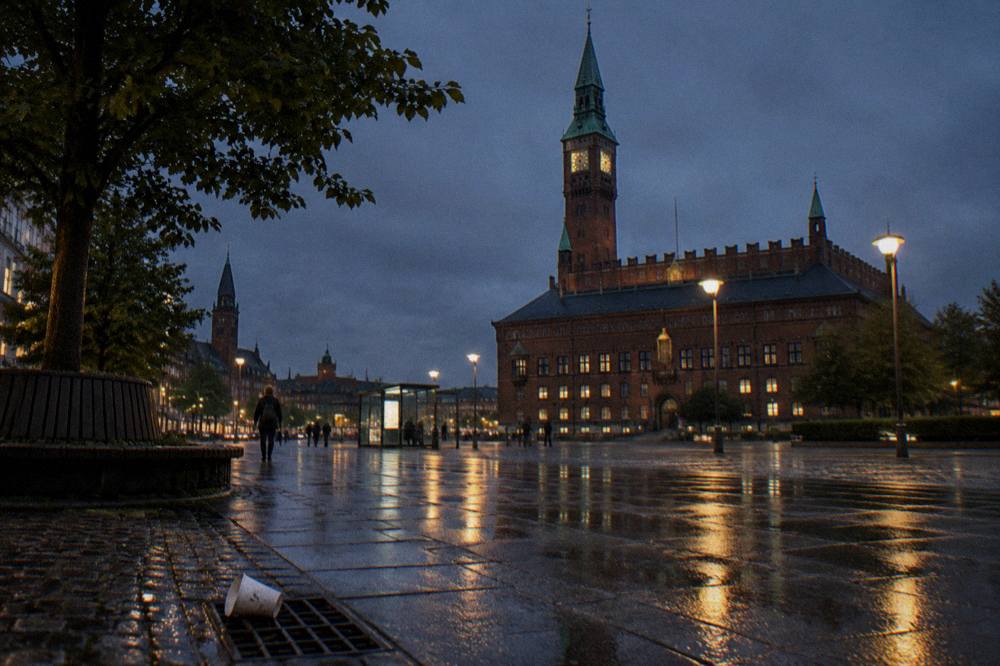
The Grand Tour, English and Spanish is the natural first walk. It meets at Copenhagen City Hall on Radhuspladsen, runs 2 hours and 30 minutes, and is rated 4.82 out of 5 across 2,538 GuruWalk reviews on GuruWalk, a genuinely large review pool for a free tour. It covers the inner city's core: the Town Hall, Stroget, the old centre and down toward the waterfront. For a first-time visitor deciding between Copenhagen and Stockholm, it is the cheapest possible way to test whether the city grabs you.
For a different register entirely, the Comedy Walk in English runs 2 hours from Gammel Strand and is rated 4.82 out of 5 across 1,863 GuruWalk reviews. It is the roster's English-language wildcard, delivering the history with jokes rather than solemnity, and reviewers on the GuruWalk listing consistently describe it as the funniest way to get oriented. It suits a traveller who wants the orientation content but not the lecture format.
Here is how the featured Copenhagen walks stack up. Note the two rating scales: GuruWalk rates out of 5, freetour.com rates out of 10, and the two are never interchangeable:
| Walk | Platform | Rating and reviews | Duration | Language |
|---|---|---|---|---|
| Renaissance Era City Walk | freetour.com | 9.5 out of 10, 11,288 reviews | On the freetour.com listing | English and Spanish |
| Royal Highlights Walk | freetour.com | 9.5 out of 10, 6,894 reviews | On the freetour.com listing | English and Spanish |
| Grand Tour, English and Spanish | GuruWalk | 4.82 out of 5, 2,538 reviews | 2 hours 30 minutes | English and Spanish |
| Historic Center Walk, Map Included | GuruWalk | 4.84 out of 5, 1,421 reviews | 2 hours | English, Spanish, Italian |
| Comedy Walk in English | GuruWalk | 4.82 out of 5, 1,863 reviews | 2 hours | English |
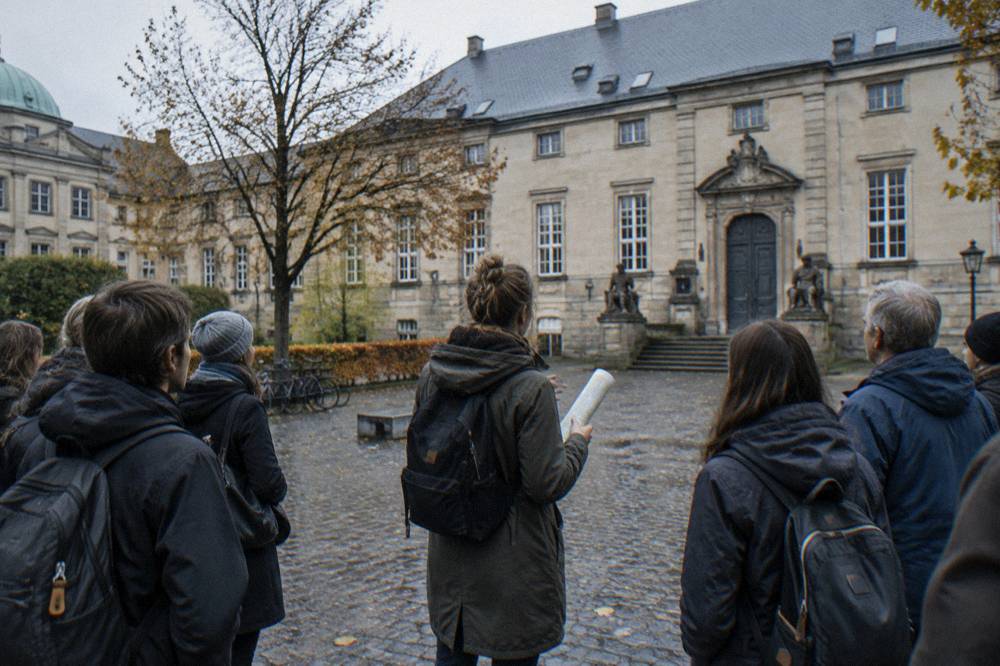
Stockholm has free tours too, and Gamla Stan's guides are well regarded. But the verified depth simply is not the same: Copenhagen's roster includes neighbourhood-specific walks in Vesterbro and Christianshavn, language-specific walks in Spanish, Italian and German, and themed walks on hygge, comedy and the industrial past. If guided walking is a core part of how you travel cheaply, Copenhagen is the stronger base.
Which City Is Cheaper For Food And Drink?
Neither city is a cheap-eats destination, but Copenhagen's food costs are survivable with the tactic that works across Scandinavia: supermarket breakfasts, bakery lunches and one proper meal a day. Copenhagen's bakery tradition is a genuine budget asset, and the harbour-front eating scene ranges from hot dog stands to fine dining. The honest advice is identical for both cities: eat like a local, not like a tourist.
Copenhagen's street food layer is the budget traveller's friend. The hot dog stalls, locally and affectionately regarded as a institution, sell a full sausage dinner for the price of a coffee in a sit-down restaurant. Bakeries across the inner city and Vesterbro sell the Danish pastry tradition at accessible prices, and the bakery walk on the roster, a Spanish-language pay-what-you-want walk, exists precisely because the bakery scene is deep enough to build a tour around. What this site can verify is the structure; specific bakery prices shift often enough that quoting them would be false precision.
Alcohol is the budget killer in both capitals. Nordic alcohol taxes hit hard, and a single beer in a central Copenhagen bar can cost what a budget traveller budgets for lunch. The same is true in Stockholm, and no honest comparison pretends otherwise. The difference between the two cities on food is marginal, a few percentage points either way on comparable meals, and small enough that it should not drive the decision. Structure, transit and the free-attraction layer matter far more.
One Copenhagen-specific note on eating free-adjacent: the typical Danish lunch guide covers what smorrebrod actually is and where you can sample elements of it without committing to a full restaurant spend. For a budget comparison, the relevant point is that Copenhagen's food culture rewards the casual end of the market more than Stockholm's, which leans harder into the sit-down restaurant tradition.
Where Should You Sleep On A Budget?
Accommodation is the line item where both cities hurt, and where Stockholm arguably hurts slightly more, because its hotel stock skews toward the mid-range and the island geography pushes budget options further from the centre. In Copenhagen, the budget-friendly zones are Vesterbro around the central station, Norrebro north of the centre, and the outer parts of the inner city, all of which keep you within walking or a single transit ride of the free sights.
Vesterbro is the practical budget base for Copenhagen. It sits directly behind the central station, so arrival costs nothing in transit, and its working-class industrial history, red-light past and current food-and-coffee scene make it a destination in its own right rather than a compromise. The Vesterbro free things guide covers what you can do there without spending, and the Norrebro guide does the same for the city's most distinctive outer neighbourhood.
The walkability point deserves emphasis because it is the single biggest structural saving. A hotel in central Copenhagen puts you within a 30 minute walk of essentially every headline free attraction on this site's verified list. That is not true of Stockholm in the same way: whichever island you sleep on, some of what you want to see will be across water. Water is beautiful and it is also a transit fare, twice a day, every day of the trip.
Hostels and budget hotels exist in both cities and prices move constantly, so this page does not quote nightly rates. The planning advice that holds regardless of the season: book early, stay one island or one district in from the most expensive postcard zone, and treat a 20 minute walk to the centre as a feature rather than a defect, since the walk itself passes free sights.
Which City Wins On Weather And Timing?
Copenhagen takes the weather edge for budget travellers because so much of its free appeal is outdoors: harbour baths, parks, walking tours, and district wanders all depend on daylight. Summer is the expensive season in both capitals, so the budget play is shoulder season, May to June or September, when the free layer is fully usable and the accommodation premium has softened. Timing matters more in Copenhagen than in Stockholm for exactly this reason.
The free-first itinerary is weather-sensitive in a way a museum-heavy itinerary is not. Copenhagen's harbour baths at Islands Brygge, the CopenHill rooftop trail, Amager Strandpark and the cemetery-park of Assistens are all outdoor pleasures. In winter they are still free, but the harbour swimming is for the hardy and the walking tours shorten. Stockholm faces the same seasonal logic with sharper light extremes further north.
The one timing trick that is Copenhagen-specific and verified: the Glyptotek's last-Wednesday free day means a month-end visit gets you a world-class sculpture museum for nothing. Pair that with the free tower view at Christiansborg, the guard ceremony at Amalienborg and an afternoon in Freetown Christiania, and a single well-timed day can carry an entire attraction budget of zero kroner.
Tivoli is the seasonal exception worth naming honestly. It is a paid attraction, from DKK 180 entry per the garden's official site, and its Christmas and Halloween seasons are genuinely magical. A budget traveller can admire the exterior, ride the free layer of the city all day, and make a considered call on whether one evening inside is worth it. The is Tivoli Gardens free guide answers the question in full.
The verdict, stated plainly: Stockholm is the more dramatic setting, the archipelago is stunning, and nobody should skip it if the heart says so. But for a budget trip, where every transit crossing, ticket desk and forced meal erodes the daily allowance, Copenhagen is the better-engineered city. Its free layer is deeper, its tour roster is broader, its core is walkable, and its conditional free days reward a planner. Before you commit, these three walks show the city at its cheapest and best, all pay-what-you-want:
Common Questions About Copenhagen Vs Stockholm
Copenhagen Vs Stockholm: Which Is Better For A Budget Trip?
Copenhagen, on the evidence this site can verify. Its 25 unconditional free attractions, 21 pooled pay-what-you-want walks and compact walkable core keep the daily spend lower, while Stockholm's island geography adds transit fares to almost every day.
Is Copenhagen More Expensive Than Stockholm?
Both sit at the expensive end of Europe and neither is cheap. On the specific lines this site verifies, Copenhagen's costs are survivable because the free layer is unusually deep, from the harbour baths to the guard ceremony at Amalienborg.
Which City Is More Walkable?
Copenhagen. The inner city, Christianshavn and Vesterbro form a compact strip where the headline free sights sit within an hour's walk of each other. Stockholm's attractions spread across islands, so water crossings enter the daily budget.
Do Both Cities Have Free Walking Tours?
Yes. Copenhagen's verified roster runs to 21 pooled pay-what-you-want walks across GuruWalk and freetour.com, in English, Spanish, Italian and German, covering the inner city, Christianshavn and Vesterbro, with the strongest walks rated above 4.8 out of 5 on GuruWalk and 9.5 out of 10 on freetour.com.
Are Museums Free In Copenhagen?
Some are. The David Collection and the Royal Danish Library's Black Diamond building are free, the Ny Carlsberg Glyptotek is free the last Wednesday of every month, and Thorvaldsens Museum is free on Wednesdays though its exact recurrence is contested. The National Museum and SMK are paid, at DKK 150 and DKK 140 respectively.
How Many Days Do You Need For A Budget Visit?
Three days covers Copenhagen's free layer comfortably: one for the inner city, one for Christianshavn and Christiania, and one for Vesterbro or Norrebro. The how many days guide breaks down the itinerary in detail.