Is Copenhagen Worth Visiting?
An honest, research-based answer to whether Copenhagen is worth visiting, covering free attractions, neighbourhoods, walking tours and real costs.
Is Copenhagen Worth Visiting?
Yes, for most travellers Copenhagen is worth visiting, and the reason is unusually concrete: 25 attractions in and around the city are free with no conditions attached, including the Christiansborg Palace Tower viewing platform, the David Collection, Kastellet and the Nyhavn waterfront. Add a pay-what-you-want walking tour culture spanning 21 walks across GuruWalk and freetour.com, and the city's reputation for expense stops matching the reality on the ground.
That is the short version. The longer version matters, because Copenhagen has a specific reputation, expensive, design-obsessed, a little reserved, and that reputation filters out travellers who would actually love the place while attracting some who will find it underwhelming. The city's real character is older and stranger than its reputation: a medieval street grid that survived fires and sieges, a harbour clean enough to swim in, a self-declared freetown inside the city limits, and a working-class meatpacking district that became one of the most interesting food neighbourhoods in Northern Europe.
The cost question is also more nuanced than the guidebook shorthand suggests. Yes, Tivoli Gardens charges from DKK 180 for entry, and yes, the big-name museums such as the National Museum of Denmark at DKK 150 or the SMK National Gallery at DKK 140 are paid. But the free list is not a list of leftovers. The viewing platform in the Christiansborg Palace Tower, the tallest accessible point in the city's central island, costs nothing. The David Collection, one of the finest collections of Islamic art in Europe, costs nothing. Walking into Freetown Christiania costs nothing, with photo rules that the community itself enforces.
For a first-time visitor who wants orientation before committing to anything, the pay-what-you-want walking tours are the natural starting point, and the strongest options cluster in the medieval centre.
Each of those three walks is a real listing on GuruWalk, run by an independent local guide, with the tip settled at the end rather than a fixed price. The Grand Tour, English and Spanish alone has accumulated 2,538 GuruWalk reviews at 4.82 out of 5, which is a serious body of evidence for a free tour in a city of this size.
What Makes Copenhagen Worth The Trip?
Copenhagen's core appeal is density: the medieval centre, the harbourfront, the royal quarter and two radically different outer neighbourhoods sit within about half an hour's walk of each other, and the free layer of the city, the waterfront, the palaces' exteriors, the changing of the guard at Amalienborg, is the part most visitors remember longest. Few European capitals let you see this much without a single admission ticket.
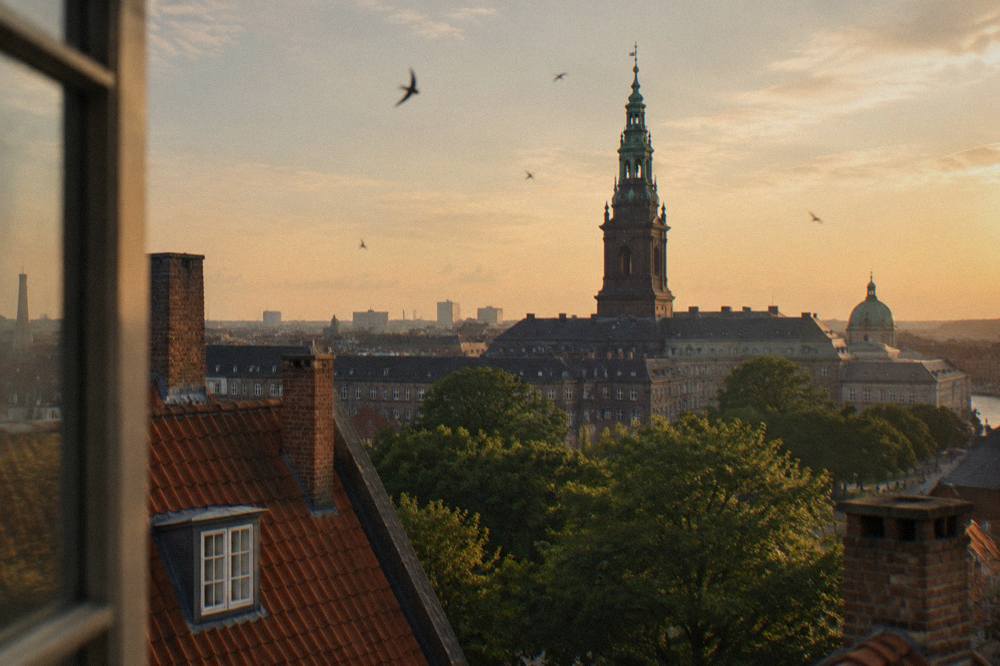
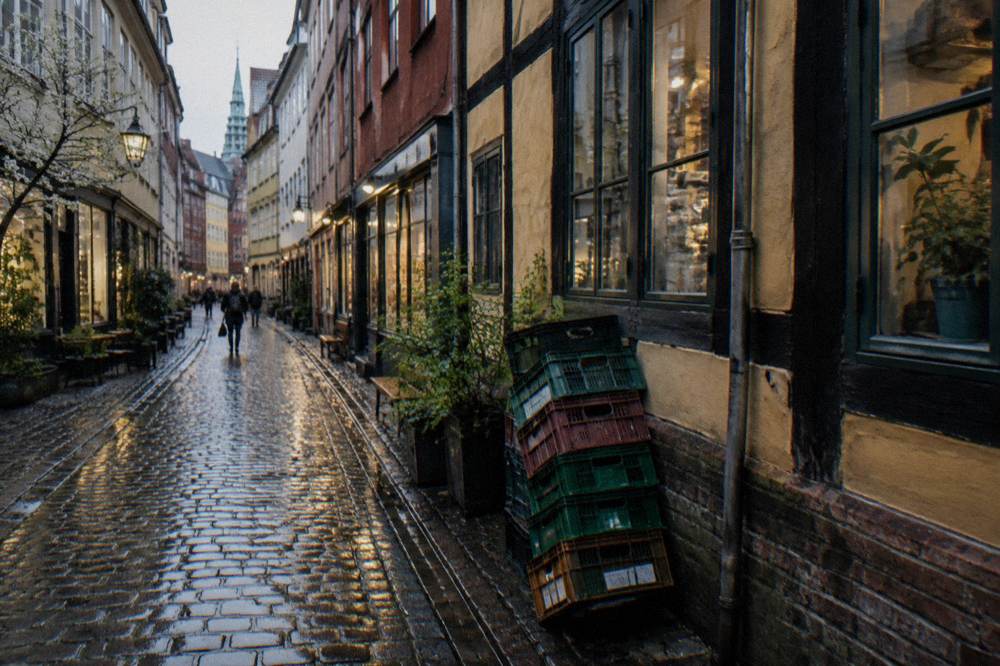
Start with the geometry. The historic centre, Indre By, occupies a compact island where the main sights chain together naturally: Radhuspladsen with its ornate city hall, the Stroget pedestrian street running east, the cathedral at Vor Frue Kirke, the Christiansborg palace complex, and finally the Nyhavn canal spilling out toward the harbour. A visitor with no plan and no budget can walk that entire spine in a morning. The Little Mermaid statue, the city's most famous single object, stands free on the harbour edge at Langelinie, a pleasant waterside stroll from the centre, and the star-shaped Kastellet fortress grounds beside it are free to wander.
Then there is the water. Copenhagen turned its back on its harbour for decades and then cleaned it, to the point that the harbour baths at Islands Brygge are a genuine swimming destination in summer, free to enter, with the city skyline behind you. The canal tours are paid, but the harbourfront walk from Nyhavn through Christianshavn to Refshaleoen costs nothing and passes under the old stock-exchange spire, through the Dutch-built canal district and out to a former industrial island now filled with food halls and studios.
The third pillar is the odd stuff. Freetown Christiania, the self-governing neighbourhood founded in a squatted military base, is free to walk into and unlike anywhere else in Scandinavia, though its rules, especially around photography on Pusher Street, are real and worth reading before you go. Superkilen in Norrebro is a public park whose furniture was imported from the home countries of the neighbourhood's residents. Assistens Cemetery is where Danes picnic among the graves of Hans Christian Andersen and Soren Kierkegaard. None of it costs a krone.
What Does A Copenhagen Trip Actually Cost?
Honest answer: Copenhagen is expensive at the margins but cheap at the core. A visitor can see the main sights entirely free, and the real budget decisions are accommodation, food and the handful of paid icons, Tivoli Gardens from DKK 180, the big museums at DKK 140 to 150, and the Copenhagen Card at DKK 589 for 24 hours, which only pays off if you plan to visit several paid attractions in a short window.
The free layer is deep enough to build an entire trip on. The paid layer is where the money goes, and the prices are real and verified rather than folklore.
| Item | Typical cost | Notes |
|---|---|---|
| Free walking tour | Tip only | 21 walks across GuruWalk and freetour.com, tip settled at the end |
| Ny Carlsberg Glyptotek | ~DKK 150 | Free entry to the whole museum on the last Wednesday of every month |
| Tivoli Gardens entry | From DKK 180 | Entry only; rides and food are extra |
| Christiansborg Palace Tower | Free | Viewing platform, the tallest accessible point on the central island |
| Round Tower (Rundetaarn) | DKK 60 | The observatory ramp and view are paid |
| National Museum of Denmark | DKK 150 | DKK 135 if bought online |
| 24-hour Copenhagen Card | DKK 589 | Only worthwhile with three or more paid visits planned |
Two things to be careful about. The Copenhagen Card is a paid product, and nothing in the city is "free with the Copenhagen Card", the card simply pre-pays attractions that would otherwise charge individually. Whether it saves money depends entirely on your pace; a slow traveller who does one paid museum a day will lose money on it, while someone compressing Tivoli, Rosenborg Castle and a canal tour into 48 hours might not. The card's own pricing page at copenhagencard.com lists the current tiers before you commit.
The second caution is transit. A single 2-zone ticket is commonly cited at around DKK 24, though that figure comes from a secondary information site rather than the transit authority's own page, so treat it as approximate and check the current fare before relying on it. A 24-hour City Pass at DKK 100, per the official dinoffentligetransport.dk fare site, covers the zones most visitors need. The honest counterpoint: central Copenhagen is walkable enough that many visitors never buy a transit ticket at all.
One way to keep the first day cheap is to let a pay-what-you-want walk handle the orientation, then spend the rest of the trip revisiting the corners that earned a second look.
Which Neighbourhoods Should You Not Miss?
Three neighbourhoods carry most of a Copenhagen visit: Indre By for the medieval core and royal architecture, Christianshavn for canals, houseboats and the entrance to Freetown Christiania, and Vesterbro for the former red-light and meatpacking district that is now the city's most interesting eating and drinking quarter. Each has free sights of its own and at least one pay-what-you-want walking tour covering it.
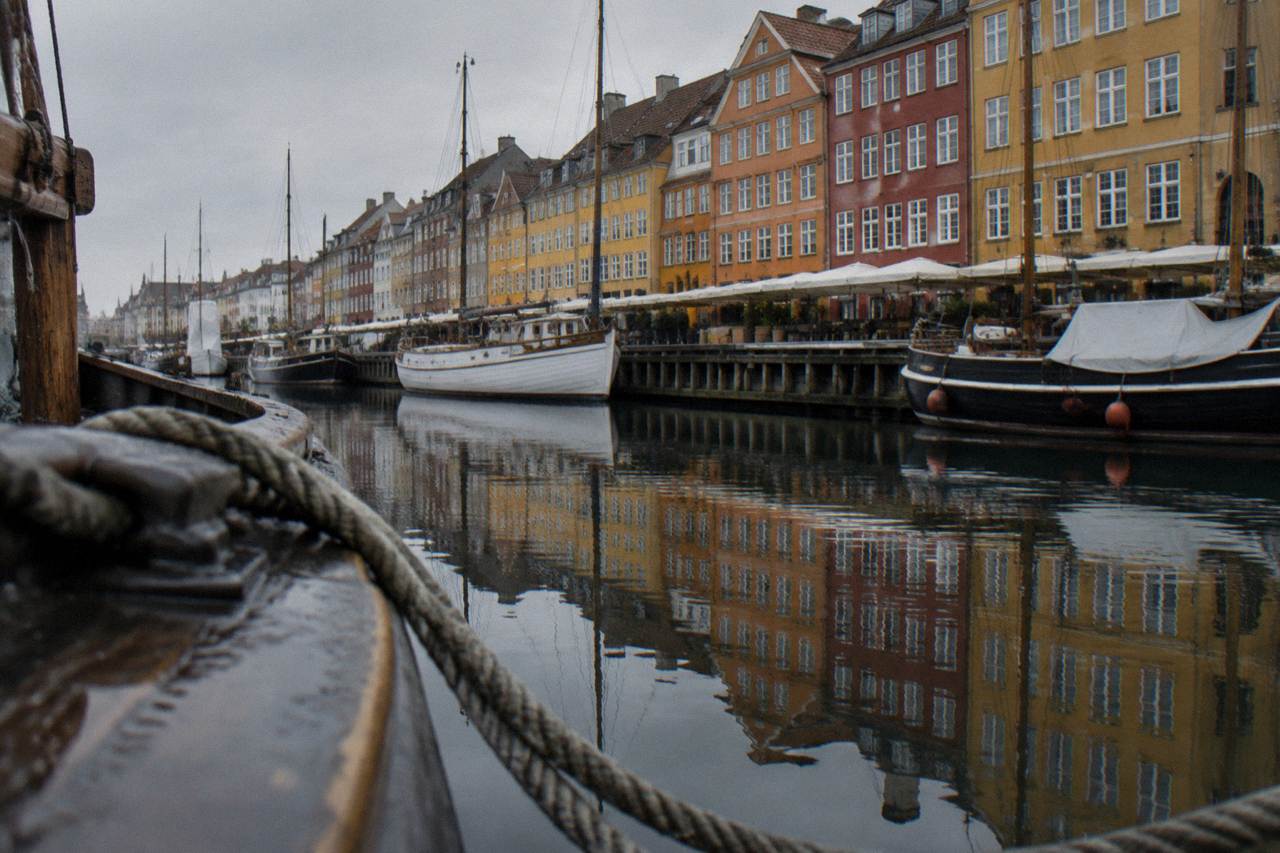
Indre By is the default and deservedly so. The city hall square, the cathedral, the university quarter and Nyhavn all sit within a fifteen-minute walk of each other, and the architecture rewards slow looking: the round tower of the old stock exchange with its spiral dragon-tail spire, the pastel facades of Nyhavn, the octagonal courtyard of Amalienborg where the changing of the guard takes place daily and costs nothing to watch. The free layer here is thick enough that a paid museum becomes a choice rather than a necessity.
The Grand Tour, English and Spanish is the natural companion to Indre By: a 2-hour-30-minute GuruWalk walk rated 4.82 out of 5 across 2,538 reviews, meeting at the city hall on Radhuspladsen and threading the medieval core. For a fuller picture of how these walks compare, the site's free walking tours in Copenhagen guide breaks down the whole roster by neighbourhood and language.
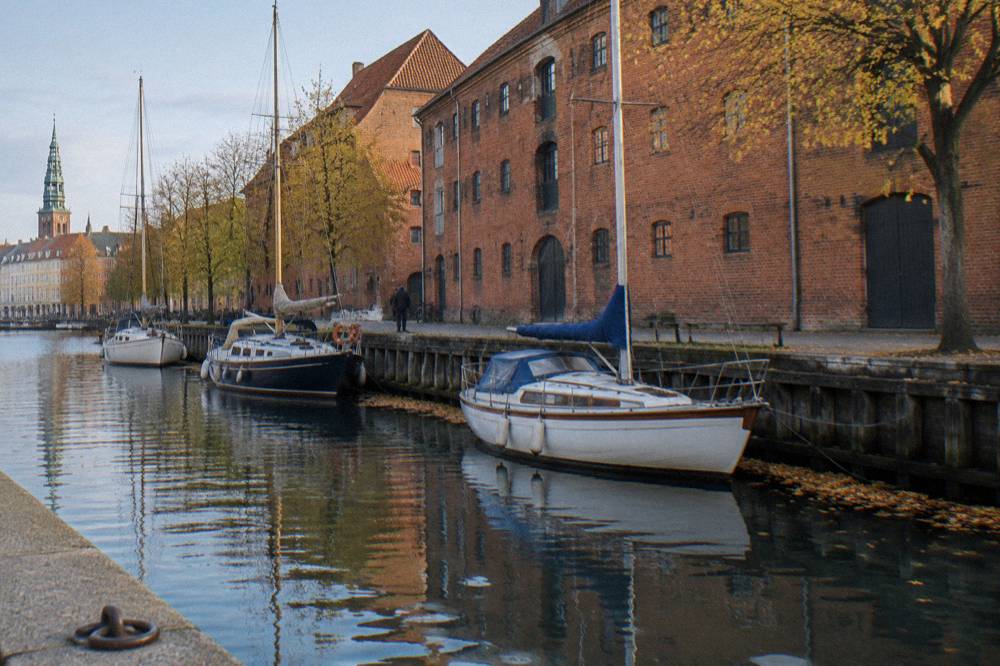
Christianshavn is the second act. Built by Christian IV in the image of Dutch canal cities, it has its own church, its own island rhythm and the Church of Our Saviour, whose interior is free while the famous exterior spiral staircase climb costs around DKK 70. The district's real draw, though, is the walk along the ramparts toward Freetown Christiania, whose entrance is free and whose internal rules, no photos on Pusher Street, are the community's own. The Christianshavn free things guide covers the district in detail.
Vesterbro is the third and the least touristy. A century ago it was the workers' district and the red-light strip around Istedgade; today it is where the food halls, natural wine bars and bakeries concentrate, with the old meatpacking buildings at its heart. Its industrial past and its reinvention are exactly what the Working-Class Vesterbro walk on GuruWalk unpacks, an English-language walk rated 4.81 out of 5 across 27 reviews, meeting at the central station. The Vesterbro free things guide lists what to see between the station and the meatpacking district.
| Neighbourhood | Free highlights | A walk that covers it |
|---|---|---|
| Indre By | Nyhavn, Stroget, Christiansborg Tower, Amalienborg guard change | Grand Tour, English and Spanish (GuruWalk) |
| Christianshavn | Canals, ramparts, Christiania entrance, Church of Our Saviour interior | Politically Incorrect Hippies Walk (GuruWalk) |
| Vesterbro | Istedgade street life, meatpacking district exteriors | Working-Class Vesterbro (GuruWalk) |
What Can You Do In Copenhagen For Free?
The verified free list runs to 25 attractions with no strings attached, and it includes serious sights: the Christiansborg Palace Tower viewing platform, the David Collection art museum, the Royal Danish Library's Black Diamond building and foyer, Kastellet fortress, the Botanical Garden grounds, Frederiksberg Gardens, the harbour baths and Amager Strandpark beach. Three more, the Glyptotek, Thorvaldsens Museum and the Botanical Garden glasshouses, are free only under specific conditions.
The conditional ones deserve precision, because they are where sloppy guidebooks go wrong. Ny Carlsberg Glyptotek is paid most days at around DKK 150, but per the museum's own site, glyptoteket.dk, entry to the entire museum is free on the last Wednesday of every month, not a Tuesday, despite what the free-day pattern from other European cities might suggest. Thorvaldsens Museum is also free on Wednesdays, but sources conflict on whether that is every Wednesday or only the last Wednesday of the month after a reported council funding change, so check the museum's own page before planning around it. The Botanical Garden's outdoor grounds are free; the historic Palm House glasshouses may carry separate ticketing on some days, and the exact current rule is not settled. The full index of guides sits on Free Things To Do In Copenhagen.
| Attraction | Free status |
|---|---|
| Christiansborg Palace Tower | Free, unconditional |
| David Collection (Davids Samling) | Free, unconditional |
| Amalienborg changing of the guard | Free to watch |
| Freetown Christiania | Free to walk in, photo rules apply |
| Nyhavn and the Little Mermaid | Free, unconditional |
| Kastellet fortress grounds | Free, unconditional |
| CopenHill rooftop hiking trail | Free, the ski slope is paid |
| Copenhagen harbour baths | Free, seasonal swimming |
| Ny Carlsberg Glyptotek | ~DKK 150, free the last Wednesday of every month |
| Thorvaldsens Museum | ~DKK 110, free on Wednesdays, recurrence contested |
The pairs matter too. Church of Our Saviour has a free interior and a paid spire climb at around DKK 70; Frederik's Church, the Marmorkirken, has a free interior and a paid dome climb at around DKK 50; CopenHill's rooftop hiking trail is free while its ski slope is ticketed; Carlsberg Byen is free to walk while the Visit Carlsberg brewery experience is paid. Treating any of these as simply "free" or simply "paid" gets the answer half wrong.
The paid icons are still worth knowing honestly, because sometimes they are worth it. Tivoli Gardens, whose entry starts at DKK 180 per the official tivoli.dk site, is a historic pleasure garden between the city hall and the central station, and its nightly illuminations are visible even from outside the fences. The Round Tower's DKK 60 ticket buys the spiral ramp and the view. None of these are traps; they are just choices, and the free layer is rich enough that skipping all of them still leaves a full trip.
Are The Free Walking Tours In Copenhagen Any Good?
Yes, and the review pools prove it rather than assert it. The strongest English-language walks carry ratings of 4.82 out of 5 across 2,538 GuruWalk reviews for the Grand Tour, 4.82 out of 5 across 1,863 GuruWalk reviews for the Comedy Walk and 9.5 out of 10 across 11,288 freetour.com reviews for the Renaissance Era City Walk, figures that would satisfy many paid tours.
The two platforms rate on different scales, so the numbers need their scales attached. GuruWalk walks rate out of 5; freetour.com walks rate out of 10. A 4.82 out of 5 and a 9.5 out of 10 are both excellent, but they cannot be compared as bare figures, and this site states the scale every time for exactly that reason.
The variety is the real story. The roster spans 21 walks pooled across both platforms, from the 2-hour-30-minute Grand Tour through the medieval core to a 3-hour hygge experience rated 4.66 out of 5 across 2,132 GuruWalk reviews, from a comedy walk that frames the city's history as jokes to a politically incorrect tour of the hippie era in Christianshavn rated 4.74 out of 5 across 393 GuruWalk reviews. There are also dedicated walks in Spanish, Italian and German, which is why the site keeps language columns on every walk page.
The Comedy Walk in English is the format contrast: a 2-hour GuruWalk walk rated 4.82 out of 5 across 1,863 reviews, meeting at Gammel Strand, that trades the solemn timeline for jokes about the kings who made the timeline. Reviewers on the GuruWalk listing repeatedly describe it as the funniest two hours they spent in the city.
For readers weighing the practical side, the site's how much to tip a free walking tour guide piece covers the tipping norms, and the what happens on a Copenhagen free walking tour walkthrough explains the format from meeting point to farewell.
| Walk | Platform | Rating and reviews | Duration |
|---|---|---|---|
| Grand Tour, English and Spanish | GuruWalk | 4.82 out of 5, 2,538 reviews | 2 hours 30 minutes |
| Comedy Walk in English | GuruWalk | 4.82 out of 5, 1,863 reviews | 2 hours |
| Renaissance Era City Walk | freetour.com | 9.5 out of 10, 11,288 reviews | Listing shows duration |
| Royal Highlights Walk | freetour.com | 9.5 out of 10, 6,894 reviews | Listing shows duration |
| Politically Incorrect Hippies Walk | GuruWalk | 4.74 out of 5, 393 reviews | 1 hour 30 minutes |
Who Should Skip Copenhagen?
Honest answer: travellers chasing warm weather, cheap nightlife or a big-city pace will be disappointed. Copenhagen is compact rather than vast, expensive at the dinner table even when the sights are free, and its summer season is short, so a visitor whose holiday idea is beaches and all-night energy, or whose budget cannot absorb DKK 150 museum tickets and Nordic restaurant prices, may get more from another destination.
The weather point deserves plain speech. This is a Baltic-latitude city; summer days are long and the harbour baths fill up, but the swimming season is short and the shoulder months are grey. The site's own best time to visit Copenhagen for good weather guide works through the trade-offs, but no month makes Copenhagen a warm-weather destination.
The pace point is real too. Visitors who want the scale of London or the nightlife density of Berlin sometimes find Copenhagen quiet, even dull, by late evening. The Danes cocoon, the concept of hygge is essentially domestic, and the city's charm is a daytime, street-level charm. If a trip is measured in evening hours, this is the wrong city.
The cost point is the most misjudged. The sights are largely free, but the food is not, and the restaurants that made the city famous are priced accordingly. A visitor who tips a walking guide, eats from a bakery and a food hall, and sleeps in a hostel or a suburban apartment can do Copenhagen affordably. A visitor who wants the tasting menus will pay for them. The is Copenhagen expensive to visit breakdown runs the numbers in detail.
How Many Days Do You Need In Copenhagen?
Three days is the honest minimum for a first visit that feels complete: day one for Indre By and the harbour, day two for Christianshavn and Christiania, day three for Vesterbro or a beach such as Amager Strandpark. Two days work if the trip is a city break with a tight plan; four or five let you add Dragor village, Frederiksberg Gardens and the museums you skipped, but a week risks running out of city.
The pacing logic follows the neighbourhood map. Because the three core districts sit so close together, a visitor gains more from lingering than from sprinting. A morning walking tour, an afternoon in one museum or one park, and an evening in one neighbourhood is a sustainable daily rhythm, and the free layer means the slow days are not the expensive days.
The day-trip question changes the math. Louisiana Museum of Modern Art in Humlebaek, outside the city, is paid, and its exact current price is unresolved in this site's research, so check before travelling. Dragor's village streets on Amager are free and reachable on the same transit system. Kronborg Castle in Helsingor is a further train ride. A traveller with a week can fill it, but the city itself is a three-to-four-day proposition, which is also why the free walking tours matter: they compress orientation into a single morning.
For the final orientation, three walks cover the city's three faces, the old centre, the royal quarter and the hippie-era canal district, and all three are pay-what-you-want listings on their respective platforms.
The Renaissance Era City Walk and the Royal Highlights Walk are freetour.com listings, rated 9.5 out of 10 across 11,288 and 6,894 reviews respectively, while the Politically Incorrect Hippies Walk is a GuruWalk listing rated 4.74 out of 5 across 393 reviews. Between them they touch every neighbourhood this article has argued is worth the trip.
Common Questions About Visiting Copenhagen
Is Copenhagen Worth Visiting?
Yes, for most travellers. The city pairs a walkable medieval core with 25 verified free attractions, including the Christiansborg Palace Tower viewing platform and the David Collection, plus 21 pay-what-you-want walking walks across GuruWalk and freetour.com. The main costs are accommodation and food, not sightseeing.
Is Copenhagen too expensive for a budget trip?
The sights are largely free; the restaurants are not. A visitor who uses the free attractions, the pay-what-you-want tours and bakery or food-hall eating can keep costs low, while the famous tasting menus and the paid museums at DKK 140 to 150 add up quickly.
How many days are enough in Copenhagen?
Three days covers the core: Indre By and the harbour, Christianshavn and Christiania, then Vesterbro or Amager Strandpark. Two days work for a tight city break, and four or five allow day trips such as Dragor or Humlebaek.
Do you need the Copenhagen Card?
Only if you plan several paid attractions in a short window. The card costs DKK 589 for 24 hours and DKK 859 for 48 hours for an adult, so a slow pace of one paid museum a day loses money on it.
Can you visit Copenhagen without spending on attractions?
Yes. The free list includes Nyhavn, the Little Mermaid, Kastellet, the Botanical Garden grounds, the harbour baths, the Amalienborg guard change and the Christiansborg Palace Tower, and every walking tour on this site's roster is pay-what-you-want.
What is the best month to visit?
Summer gives long days, harbour swimming and the fullest street life, but it is also peak season. Late spring and early autumn are quieter and cheaper. No month makes Copenhagen a warm-weather destination, so plan around daylight and crowds rather than heat.