How Many Days Do You Need In Copenhagen?
A day-count answer for Copenhagen built around free walking tours, free museums and the neighbourhoods of Indre By, Christianshavn and Vesterbro.
How Many Days Do You Need In Copenhagen?
Two days is the honest minimum for Copenhagen, while three is the sweet spot for most visitors. Two days cover Indre By, Nyhavn, the harbour front and a couple of free museums, with a free walking tour anchoring each morning. A third day adds Christianshavn, Freetown Christiania and Vesterbro, plus the parks and harbour baths. Only plan four or five days if you want day trips or a slower, neighbourhood-by-neighbourhood pace.
That answer assumes you actually want to see Copenhagen rather than tick it off. The city is compact, flat and walks well, which is why the free walking tour scene here is unusually strong: 21 pooled walks now run across GuruWalk and freetour.com, spanning English, Spanish, Italian and German language options. The catch is that compactness tempts people into one-day plans, and one day in Copenhagen is a sprint through Indre By with everything east of the harbour left unseen.
The neighbourhoods matter to the day count more than the individual sights do. Indre By, the medieval core, holds most of the postcard Copenhagen: Stroget, Nyhavn, the cathedral, the Round Tower, Christiansborg. Christianshavn sits across the inner harbour and carries the canal-side atmosphere plus Freetown Christiania, which deserves two unhurried hours on its own. Vesterbro, west of the central station, is the former red-light and workers' district turned food-and-coffee quarter, and it is where the city stops feeling like a museum.
A useful way to think about the trip is to give each day one neighbourhood and one free walk. The free walking tours in Copenhagen run daily in several formats, and slotting one into each morning does two jobs at once: it orients you in a new district and it front-loads the history so the afternoon wandering has context. The three strongest English-language options for a first visit are below.
The Grand Tour, English and Spanish runs two hours and thirty minutes from City Hall and is rated 4.82 out of 5 across 2,538 GuruWalk reviews, which makes it the most-reviewed English walk on the GuruWalk side of the roster. The 3-Hour Hygge Experience stretches the same central ground over three hours with a lifestyle angle, rated 4.66 out of 5 across 2,132 GuruWalk reviews. The Historic Center Walk, Map Included is the two-hour option that hands you a recommendations map at the end, rated 4.84 out of 5 across 1,421 GuruWalk reviews. Any one of the three covers the first-day job.
What Can You See In Copenhagen In One Day?
One day in Copenhagen gets you Indre By and the harbour edge, and nothing else, done properly. Realistically that means a morning free walking tour from City Hall or Gammel Strand, Nyhavn and the Little Mermaid at midday, and one free museum in the afternoon. The Christiansborg Palace Tower, the David Collection and the Royal Danish Library building are all free and all sit inside that arc. It is a full, good day, but it is a single-neighbourhood day.
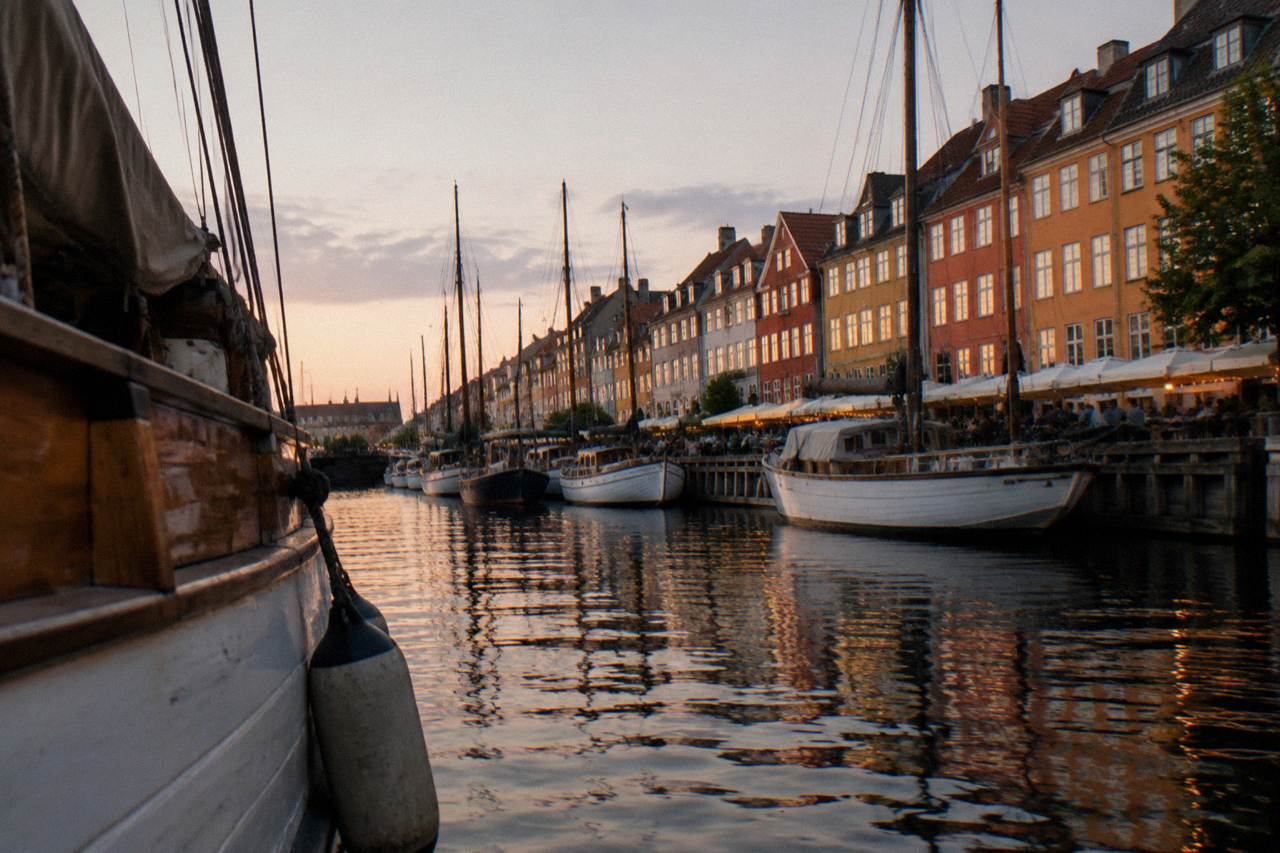
Start at Radhuspladsen, the City Hall Square, which is the meeting point for several of the pooled walks including the Grand Tour. From there the pedestrian spine of Stroget runs east toward Kongens Nytorv, and almost everything a one-day visitor wants sits within ten minutes of that line. Nyhavn is free to walk, photograph and linger in, and the Little Mermaid statue is free to see from the Langelinie promenade, a pleasant twenty-minute walk up the harbour or a short hop on the harbour bus.
The free sights inside this arc are dense. The Christiansborg Palace Tower viewing platform is free, which is remarkable given that the palace's state rooms below it cost DKK 150 at the door. The David Collection, a quiet museum of Danish and Islamic art in a Frederiksstaden townhouse, is free unconditionally. The Royal Danish Library's Black Diamond building is free to enter and worth ten minutes for the harbour view alone. If you time it right, the changing of the guard at Amalienborg is free to watch.
One day also means choosing between the two classic church interiors. The Church of Our Saviour in Christianshavn has a free interior with a paid spire climb at around DKK 70, and Frederik's Church, the Marmorkirken, has a free interior with a paid dome climb at around DKK 50. On a strict one-day plan you will likely only reach the Marmorkirken, since it sits on the Amalienborg axis. The full picture of what costs money and what does not is worth knowing before you commit, because a few famous names surprise people.
Is Two Days In Copenhagen Enough?
Yes, two days is enough for a solid first visit to Copenhagen, and it is the number most first-time visitors should book. Follow the plan above on day one for Indre By and the harbour, then cross the water to Christianshavn and Freetown Christiania on day two before ending in Vesterbro or the parks. Two days still forces a choice between Rosenborg, the National Museum and the Glyptotek, so it works best if museums are a low priority.
The second day is where Copenhagen stops being a checklist. Take the harbour bus or the bridge from Nyhavn over to Christianshavn, where the canals, the church spire and the converted warehouses feel closer to Amsterdam than to the royal core. Freetown Christiania is free to walk into, with photo rules that matter: photograph people only with permission and never on Pusher Street, where cameras should stay in your pocket entirely. The Christianshavn and Christiania free things guide covers the district's walks, including the Politically Incorrect Hippies Walk, rated 4.74 out of 5 across 393 GuruWalk reviews on GuruWalk, a 1 hour and 30 minute English walk that is the only cardable Christianshavn tour on the roster.
For the afternoon, pick a personality. Vesterbro, behind the central station, is the meatpacking-district-and-coffee option, and the Working-Class Vesterbro walk covers its red-light past in 1 hour and 30 minutes in English. Alternatively, the Frederiksberg Gardens and the Carlsberg Byen district, both free to walk, sit on the metro line and give you a Danish-suburb afternoon. The Vesterbro free things to do guide maps the district in detail.
Two days also happens to be the duration where the Copenhagen Card question gets sharp. The card costs DKK 589 for 24 hours and DKK 859 for 48 hours per adult, per the card's own price page, and since so much of the best of Copenhagen is genuinely free, the card only pays back if your plan is dense with the paid heavyweights: Tivoli Gardens from DKK 180 entry, the Rosenborg Castle interior at DKK 140 online, the National Museum at DKK 150. A free-walk-first itinerary rarely clears that bar. The Copenhagen Card worth-it breakdown runs the numbers against a free-heavy plan.
The comedy option deserves a slot on a two-day plan, because it is the one evening-friendly walk in the core. The Comedy Walk in English meets at Gammel Strand, runs two hours, and is rated 4.82 out of 5 across 1,863 GuruWalk reviews, the second-largest English review pool on the GuruWalk side of the roster. Reviewers describe it as history delivered with a stand-up delivery rather than a gag reel, and it is a good day-two bookend after a museum-heavy afternoon.
What Does A Three Day Itinerary Add?
A third day adds the parks, the harbour baths and the outer neighbourhoods, which is when Copenhagen starts feeling like a place rather than a route. Day three typically means Norrebro and Assistens Cemetery, the Superkilen park, the Islands Brygge harbour bath, and either CopenHill or Refshaleoen. Three days is the first count at which you are not choosing between neighbourhoods, and for most travellers it is the best value in the whole trip.
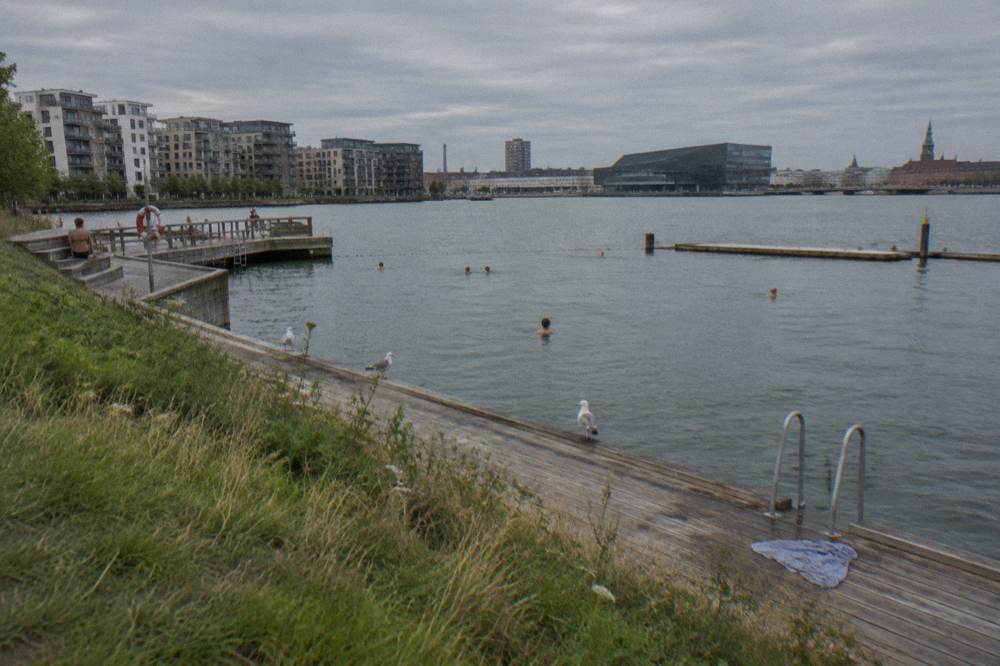
The free inventory on day three is almost absurd. Assistens Cemetery, the park-graveyard where Hans Christian Andersen and Soren Kierkegaard are buried, is free to walk and doubles as a picnic ground for the whole of Norrebro. Superkilen, the neighbourhood park with the pink and green surfaces, is free and five minutes away. The Copenhagen harbour baths, including the Islands Brygge one, are free to swim in during the season, which is a genuine swim in the inner harbour rather than a token dip. Amager Strandpark, a sandy beach reached on the metro, is free as well. The wider set of guides lives on Free Things To Do In Copenhagen.
CopenHill is the day-three wildcard. The rooftop hiking trail on top of the waste-to-energy plant is free to walk, with the ski slope beside it as a separate paid ticket. Refshaleoen, the old shipyard island, is free to wander and has become the street-food-and-climbing-wall end of the harbour. Neither of these is on a one-day or even a comfortable two-day plan, and both are the kind of thing people remember longer than a fourth royal reception room.
The table below is a realistic allocation of what each day count actually buys you, using only the verified free and paid facts from the city's attractions.
| Day | Neighbourhood anchor | Free highlights | Free walk that fits | Paid add-ons worth considering |
|---|---|---|---|---|
| 1 | Indre By | Stroget, Nyhavn, Little Mermaid, Christiansborg Tower, David Collection | Grand Tour or Historic Center Walk | Round Tower DKK 60, Tivoli from DKK 180 |
| 2 | Christianshavn and Vesterbro | Christiania walking in, Church of Our Saviour interior, harbour bus ride | Politically Incorrect Hippies Walk or Comedy Walk | Our Saviour spire ~DKK 70 |
| 3 | Norrebro and the harbour | Assistens Cemetery, Superkilen, Islands Brygge harbour bath, CopenHill trail | Bakery or neighbourhood walks, mostly non-English | CopenHill ski slope, ticketed |
| 4 | Day trip or deep museums | Dragor village streets, Louisiana grounds at Humlebaek | None needed | Louisiana interior, paid, price on the door |
Which Copenhagen Sights Are Free And Which Ones Cost Money?
Twenty-five of Copenhagen's major attractions are free unconditionally, three are conditionally free, and fourteen are paid, per the verified attraction-by-attraction count. The free list includes the tower at Christiansborg, the David Collection, Kastellet, the Botanical Garden grounds and every harbour bath. The paid list includes Tivoli Gardens, the Round Tower, the Rosenborg interior and the National Museum. The conditional three are the Glyptotek, Thorvaldsens Museum and the Botanical Garden glasshouses.
The conditional cases deserve their own sentences, because they are where itineraries go wrong. The Ny Carlsberg Glyptotek charges around DKK 150 most days but opens the whole museum free on the last Wednesday of every month, per the museum's own site, and it is not a Tuesday, despite the pattern other cities have trained visitors to expect. Thorvaldsens Museum is free on Wednesdays but the exact recurrence, weekly versus last-of-month, is contested between sources after a reported funding change, so check the museum's own page before planning around it. The Botanical Garden grounds are free; the historic Palm House glasshouses may carry separate ticketing on some days.
| Attraction | Status | Cost detail |
|---|---|---|
| Christiansborg Palace Tower | Free | Viewing platform free; state rooms DKK 150 at door, DKK 140 online |
| David Collection | Free | Unconditional |
| Nyhavn and the Little Mermaid | Free | Always |
| Round Tower | Paid | DKK 60 adult |
| Tivoli Gardens | Paid | From DKK 180 entry |
| Rosenborg Castle interior | Paid | DKK 140 online, DKK 150 at door |
| Ny Carlsberg Glyptotek | Conditional | ~DKK 150, free on the last Wednesday of each month |
| Church of Our Saviour | Split | Interior free, spire climb ~DKK 70 |
| Frederik's Church | Split | Interior free, dome climb ~DKK 50 |
| CopenHill | Split | Rooftop trail free, ski slope ticketed |
The practical reading of that table is that a free-heavy Copenhagen trip is not a compromise itinerary. The paid items cluster into two groups: the royal interiors, which are genuinely excellent, and Tivoli, which is as much an atmosphere purchase as an attraction. If you take one paid interior, take Rosenborg, where the crown jewels live; if you take two, add the National Museum. Everything else on a three-day plan can be free without anyone feeling shortchanged.
When Is More Time In Copenhagen Worth It?
Four or five days is worth it for day trips and for a slower pace, not for more central sights. The city core is comfortably exhausted in three days, and a fourth day is best spent in Dragor, at Louisiana, or looping back to whatever the first three days crowded out. Travellers who want beach time at Amager Strandpark or a proper CopenHill morning should budget four days. Beyond five, you are living in Copenhagen rather than visiting it.
The day-trip case is real. Dragor, the old fishing village on Amager with free village streets and yellow cottages, is a short bus ride and pairs well with the beach. Louisiana Museum of Modern Art in Humlebaek is outside the city, paid to enter, and a half-day commitment with the coastal train, but the grounds and the view over the Oresund are part of the experience. Kronborg Castle in Helsingor, the Hamlet castle, is a further commitment and a paid one. None of these fit a three-day plan without cutting something central.
The slower-pace case is just as valid. Copenhagen rewards the second visit to a neighbourhood: the coffee in Vesterbro, the second lap of Christiania, the afternoon you spend in Kongens Have rather than the twenty minutes you spend taking a photo of it. A four-day plan can give Norrebro its own full day, with Assistens Cemetery, Superkilen and the Norrebro food halls, and still leave a buffer morning for the Glyptotek's last-Wednesday free day if the calendar cooperates.
Transit barely constrains any of this. The city is walkable within the core, the metro links the outer anchors, and a 24-hour City Pass at DKK 100 covers the zones a visitor needs, per the official transport information at dinoffentligetransport.dk. A single two-zone ticket is commonly cited at around DKK 24, though that figure comes from a secondary source rather than the transit authority's own page, so treat it as approximate. The public transport basics guide covers the passes in detail.
One honest caveat about stretching the trip: the walks on the roster are concentrated in the core, and the further out you go, the more you are on your own. The pooled 21 walks cover Indre By, Christianshavn and Vesterbro thoroughly, with a few specialist options like the bakery walk and the medieval nightfall walk, but the outer neighbourhoods and day-trip towns have no free-walk coverage. That is fine, those areas are self-guiding, but do not plan a fourth day around a walk that does not exist.
How The Free Walks Map Onto Each Day Count
Each day of a Copenhagen plan can carry its own free walk. Day one is the Grand Tour or the Historic Center Walk, day two is a Christianshavn or comedy walk, and day three is a specialist option if you want one. The cardable pool is nine walks strong, so a three-day plan never repeats a walk, and below four days the constraint is time, not supply.
The mapping matters because walks are the cheapest orientation tool in the city and they cluster by neighbourhood. The neighbourhood-by-neighbourhood walk guide lays out which walks start where, and the meeting points tell the story: City Hall for the central history walks, Gammel Strand for the comedy walk, Havnegade for the Christianshavn hippies walk, the central station for the Vesterbro working-class walk. You can build an entire three-day plan from meeting points alone.
| Walk | Platform | Neighbourhood | Rating and reviews | Duration |
|---|---|---|---|---|
| Grand Tour, English and Spanish | GuruWalk | Indre By | 4.82 out of 5, 2,538 reviews | 2 hours 30 minutes |
| Historic Center Walk, Map Included | GuruWalk | Indre By | 4.84 out of 5, 1,421 reviews | 2 hours |
| Comedy Walk in English | GuruWalk | Indre By | 4.82 out of 5, 1,863 reviews | 2 hours |
| Politically Incorrect Hippies Walk | GuruWalk | Christianshavn | 4.74 out of 5, 393 reviews | 1 hour 30 minutes |
| Working-Class Vesterbro, Red-Light Past | GuruWalk | Vesterbro | 4.81 out of 5, 27 reviews | 1 hour 30 minutes |
| Renaissance Era City Walk | freetour.com | Indre By | 9.5 out of 10, 11,288 reviews | On the freetour.com listing |
| Royal Highlights Walk | freetour.com | Indre By | 9.5 out of 10, 6,894 reviews | On the freetour.com listing |
Note the two rating scales in that table, because they are not comparable at a glance. GuruWalk rates out of 5 and freetour.com rates out of 10, so a 4.82 out of 5 is a stronger score than a 9.5 out of 10 on a common scale, not a weaker one. The two freetour.com walks, the Renaissance Era City Walk and the Royal Highlights Walk, carry the largest review pools on the entire roster at 11,288 and 6,894 reviews respectively, and both run in English and Spanish. The smaller-pool walks, like the Vesterbro one at 27 reviews, are honest about being newer; the rating is real but the pool is small, and the site prints both rather than dressing either up.
If you are building the plan now, the three walks below are the natural anchors for a first or second day, and the trio after them covers the alternative formats and neighbourhoods for the rest of a two- or three-day stay.
Common Questions About Days In Copenhagen
How Many Days Do You Need In Copenhagen?
Two days is the minimum for a satisfying visit and three is the sweet spot. Two covers Indre By, the harbour and one cross-water day in Christianshavn and Vesterbro; a third day adds the parks, harbour baths and Norrebro. Four or five days only pays off for day trips or a deliberately slow pace.
Can You See Copenhagen In One Day?
You can see Indre By in one day: a morning free walking tour, Nyhavn, the Little Mermaid, the free Christiansborg Tower and one free museum. You cannot meaningfully reach Christianshavn, Christiania or Vesterbro on the same day without reducing everything to a checklist.
Is Copenhagen Expensive For A Short Trip?
It can be, but the free layer is unusually deep: 25 of 42 verified major attractions are free unconditionally. A plan built on free walking tours, free museums like the David Collection and free outdoor sights keeps daily costs to food and transit.
Is The Copenhagen Card Worth It On A Two Day Trip?
Usually not on a free-heavy plan. The card costs DKK 589 for 24 hours and DKK 859 for 48 hours per adult, and it only pays back if you are stacking paid entries like Tivoli Gardens, Rosenborg and the National Museum into both days.
Which Neighbourhood Should You Stay In To Save Time?
Indre By or Vesterbro for a one or two day trip, since both sit on the central transport knot and the walks cluster there. Norrebro suits a three day or longer stay, when its parks and food scene justify the extra ride into the core.
Do Free Walking Tours Run Every Day In Copenhagen?
Yes, across the pooled GuruWalk and freetour.com roster the central walks run daily, with language-specific options concentrated on certain days. The English walks in Indre By have the most frequent departures; check the individual listing for exact times.