What Is Copenhagen Known For?
Copenhagen is known for its harbour, Nyhavn, the Little Mermaid, hygge, design, Freetown Christiania and free museums. Here is what the city is famous for, and what is free.
Copenhagen has a way of exporting its ideas. The city gave the world the word hygge, a bronze statue of a mermaid that is smaller than almost everyone expects, an amusement park that inspired one in another hemisphere, and a self-governing commune that has been arguing with the Danish state for decades. It is a compact capital that shows up on more "most liveable" lists than almost any other European city, and its famous things are strangely concentrated: most of them sit within a half-hour walk of the City Hall square. That walkability matters, because a large share of what Copenhagen is known for costs nothing to see. The colourful houses of Nyhavn, the Little Mermaid, the changing of the guard at Amalienborg, the grounds of Kastellet, the streets of Freetown Christiania: all free, all unmissable, all within the same compact loop of harbour and medieval streets.
What Is Copenhagen Known For?
Copenhagen is known for its harbour and canals, the Nyhavn waterfront, the Little Mermaid statue, hygge and Danish design, Freetown Christiania, historic amusement parks, bicycles, and a food scene that runs from Michelin stars to hot dog stands. Most of the iconic sights, including Nyhavn, the Mermaid, the changing of the guard and Christiania's public streets, are free to see.
That list has a shape to it. The harbour is the spine: Nyhavn, the Mermaid, Langelinie, the Opera House across the water and the islands of Christianshavn all sit on or near it. The rest of the city's fame radiates outward from that spine, through the medieval streets of Indre By, into the freewheeling district of Christianshavn, and out to the working-class-turned-trendy neighbourhoods of Vesterbro and Nørrebro. The table below is the short version of what people picture when they picture Copenhagen.
| What Copenhagen is known for | What it actually is | Cost to see it |
|---|---|---|
| Nyhavn | The old canal district with coloured gabled houses | Free |
| The Little Mermaid | A bronze statue on a rock at Langelinie | Free |
| Hygge | The Danish idea of cosiness and contentment | Free to practise |
| Freetown Christiania | A self-declared autonomous district | Free to walk in |
| The changing of the guard | The daily ceremony at Amalienborg Palace | Free to watch |
| Tivoli Gardens | The historic pleasure garden and amusement park | Paid entry, from DKK 180 |
| Danish design | Furniture, architecture and homeware traditions | Museums paid, streets free |
| Smørrebrød | Open-faced rye sandwiches | Paid, from street stalls |
If you want to see the famous core of the city with a local explaining it, the free walking tour scene here is one of the strongest in Europe. This directory tracks 21 pooled walks across GuruWalk and freetour.com, and nine of them are strong enough to feature with cards. Three of the best-known English walks cover exactly the ground on that table, and they cost nothing up front: you tip the guide at the end.
The Grand Tour, English and Spanish is the classic option: 2 hours and 30 minutes from City Hall, rated 4.82 out of 5 across 2,538 GuruWalk reviews, covering the medieval centre and the harbourfront. The 3-Hour Hygge Experience goes further, using the Danish concept itself as the thread, and the Historic Center Walk, Map Included hands you a map of recommendations at the end. All three run on the pay-what-you-want model, which in Copenhagen is not a gimmick but a genuine institution.
The Harbour, Nyhavn And The Little Mermaid
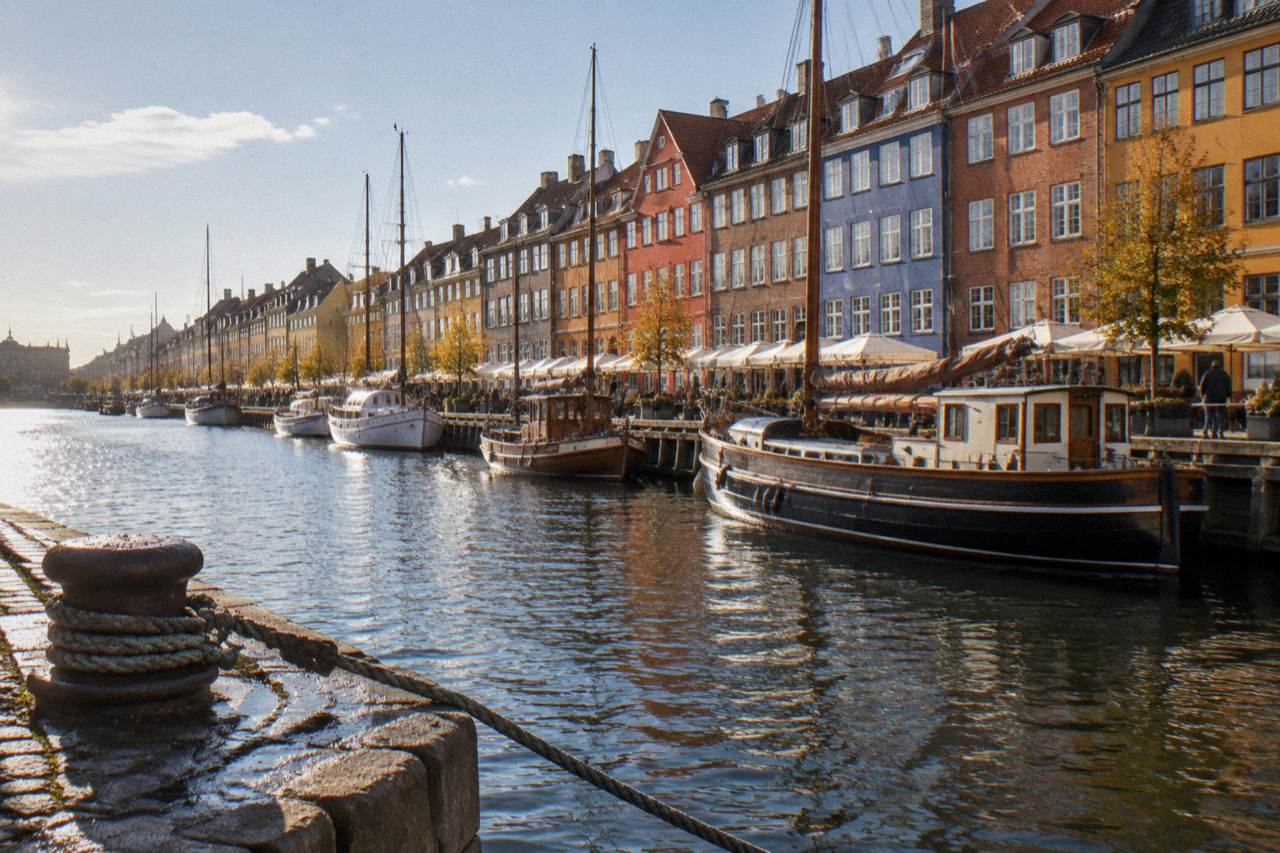
Nyhavn and the Little Mermaid are the two images of Copenhagen the world knows best, and both are completely free. Nyhavn is an old canal lined with coloured townhouses, and the Mermaid is a small bronze statue on a harbour rock. Together with the changing of the guard at Amalienborg, they form the famous free loop along the water.
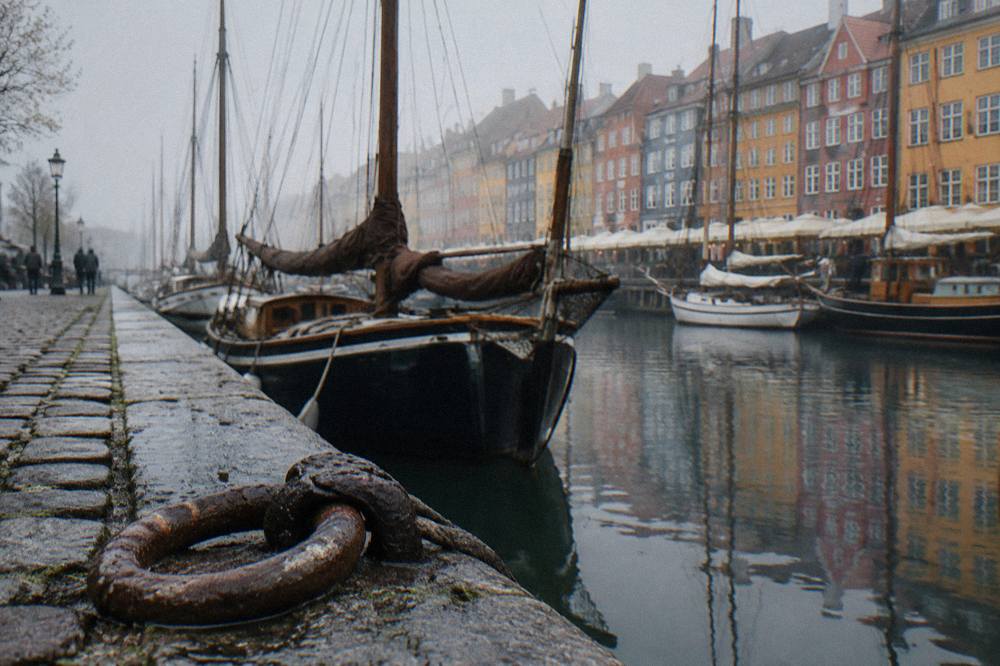
Start with Nyhavn, because everyone does. The canal district was built as a working harbour, and for a long stretch of its history it was a rough sailor's quarter of taverns and brothels. Hans Christian Andersen lived in several different houses on this one street. Today the gabled facades in ochre, red and blue are the single most photographed stretch in Denmark, and walking it costs nothing; the only paid part is the restaurant terraces, which are priced for the view. Our Nyhavn free things to do guide covers the free angles in detail, including where the postcard shot is actually taken from.
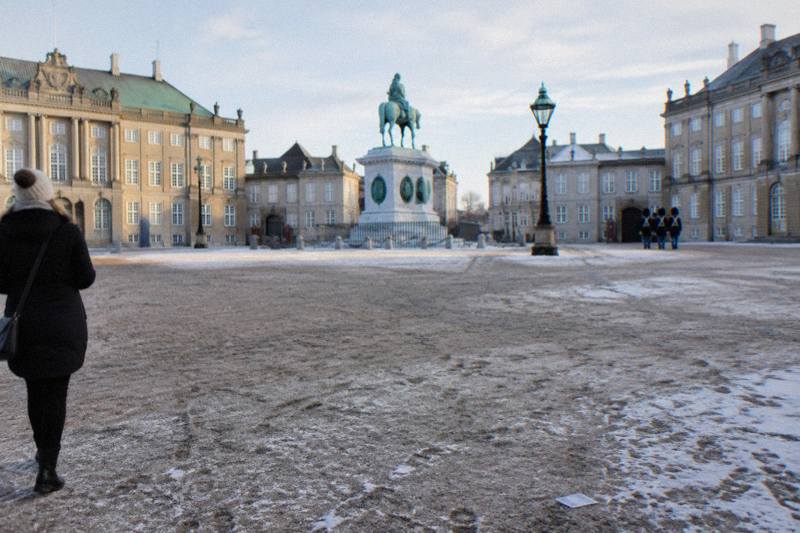
From Nyhavn it is about a 25-minute walk along the water to the Little Mermaid. She sits on a granite rock at Langelinie, a bronze figure inspired by Hans Christian Andersen's fairy tale, and she has become the city's single most famous sight. She is famously small, and famously used to being climbed on, and she is free to see at any hour. On the way you pass Kastellet, one of the best-preserved star fortresses in Northern Europe, whose grass ramparts are free to walk. Heading back inland you reach Amalienborg Palace, where the changing of the guard takes place daily at noon and costs nothing to watch from the square.
This whole loop is exactly what the Grand Tour, English and Spanish strings together. It runs 2 hours and 30 minutes, meets at City Hall on Rådhuspladsen, and is rated 4.82 out of 5 across 2,538 GuruWalk reviews, which makes it one of the most-reviewed walks on the site. It is free to join, with the tip at the end.
Hygge, Design And The Danish Good Life
Hygge is the Danish concept of cosiness, warmth and contentment that Copenhagen exported to the rest of the world, and it is the city's most famous cultural export. Danish design, from chairs to lamps to buildings, is the second. Neither is an attraction you buy a ticket for; both are visible everywhere in the city's daily life, and the best free way to understand them is a walk built around them.
Hygge has no exact English translation, which is precisely why English borrowed it. It is candlelight, it is a long table with friends, it is the Danish answer to a dark winter. You can see it in the way every café has blankets on its outdoor chairs, in the harbour baths where locals swim in summer, in the fact that Danes burn more candles per capita than almost anyone. The word became a global marketing category in recent years, but in Copenhagen it remains an ordinary practice rather than a product.
Danish design is the built version of the same instinct. The tradition runs from Arne Jacobsen's Egg chair to the clean lines of the Royal Danish Library's Black Diamond, whose foyer and building are free to enter and are worth seeing as architecture alone. The city's most famous design objects live in paid museums, but the streets give you the argument for free: the radial layout of the old fortifications, the four townhouses of Amalienborg arranged as a palace, the quiet confidence of the metro stations.
The 3-Hour Hygge Experience, on GuruWalk, is the walk that takes this seriously as a subject rather than a slogan. It runs 3 hours in English, Spanish and Italian, is rated 4.66 out of 5 across 2,132 GuruWalk reviews, and treats the Danish lifestyle as something you walk through rather than read about. If the question is what Copenhagen is known for, this walk is the closest thing to an answer on two feet.
Freetown Christiania And The Christianshavn Contrast
Freetown Christiania is a self-governing district in the Christianshavn area, founded when squatters took over an old military base and declared their own community. It is one of the things Copenhagen is most known for internationally. Walking its public streets is free, with photography rules around Pusher Street that every visitor should know in advance.
Christiania is the part of Copenhagen's fame that divides Danes themselves. The commune declared itself independent of the Danish state, minted its own currency at one point, and has spent decades negotiating its existence with governments that alternately tolerated and raided it. The painted houses, the workshops, the music venues and the famous sign reading "You are now leaving the EU" are all part of the public face. Pusher Street, the central hash market, was partially demolished and closed in a major recent change that altered the district's character, and the photo rules on that street are strictly enforced. A free walk covers this ground: Politically Incorrect Hippies Walk.
The contrast is the point of the neighbourhood. Christianshavn was built as a Dutch-style canal town, and its quiet cobbled streets and church spires sit directly beside the commune's self-built architecture. Our Christiania what to know guide covers the rules, and the Christianshavn free things to do guide covers the rest of the district. The Politically Incorrect Hippies Walk, an English-language GuruWalk tour rated 4.74 out of 5 across 393 reviews, takes on exactly this history with a guide who pulls no punches about either side of it.
Free Museums And The Last-Wednesday Rule
Copenhagen's museum scene is known for two things: the David Collection, which is free unconditionally, and a pattern of free days at the major museums. The Ny Carlsberg Glyptotek, the city's most famous art museum, is free on the last Wednesday of every month, a rule that catches out visitors who assume the free day is Tuesday.
The David Collection, or Davids Samling, is the standout: a museum of Danish and Islamic art near the King's Garden that charges nothing at all, every day it is open. It is genuinely one of the best free museums in Europe, and most visitors have never heard of it. The Glyptotek, with its palm-filled winter garden and its French Impressionist collection, normally costs around DKK 150 but opens its whole museum free on the last Wednesday of every month, per the museum's own site, glyptoteket.dk. Thorvaldsens Museum, normally around DKK 110, has a free-Wednesday policy too, though sources conflict on whether it is every Wednesday or the last of the month after a funding change, so check its own page before planning around it.
| Museum | Normal adult entry | Free rule |
|---|---|---|
| David Collection (Davids Samling) | Free | Free every day |
| Ny Carlsberg Glyptotek | ~DKK 150 | Free on the last Wednesday of each month |
| Thorvaldsens Museum | ~DKK 110 | Free Wednesdays, recurrence contested; confirm with the museum |
| National Museum of Denmark | DKK 150 (135 online) | No free day confirmed |
| SMK, National Gallery of Denmark | DKK 140 | No free day confirmed |
| Royal Danish Library, Black Diamond | Free | Building and foyer free to enter |
The churches deserve their own mention, because in Copenhagen the interiors are the free part and the views are the paid part. The Church of Our Saviour in Christianshavn has a free interior and a paid spire climb at around DKK 70. Frederik's Church, the Marble Church, works the same way: free interior, dome climb around DKK 50. Grundtvig's Church in the northwest of the city is one of the most striking modern religious buildings in the country and is free to enter. Our free museums guide goes deeper on all of these.
A Green Capital: Parks, Harbour Baths And CopenHill
Copenhagen is known for being a green city in both senses: parks and clean water. Locals swim in the harbour at the Islands Brygge harbour baths, CopenHill turns a waste-to-energy plant into a free rooftop hiking slope, and the parks, from Kongens Have to Frederiksberg Gardens, cost nothing.
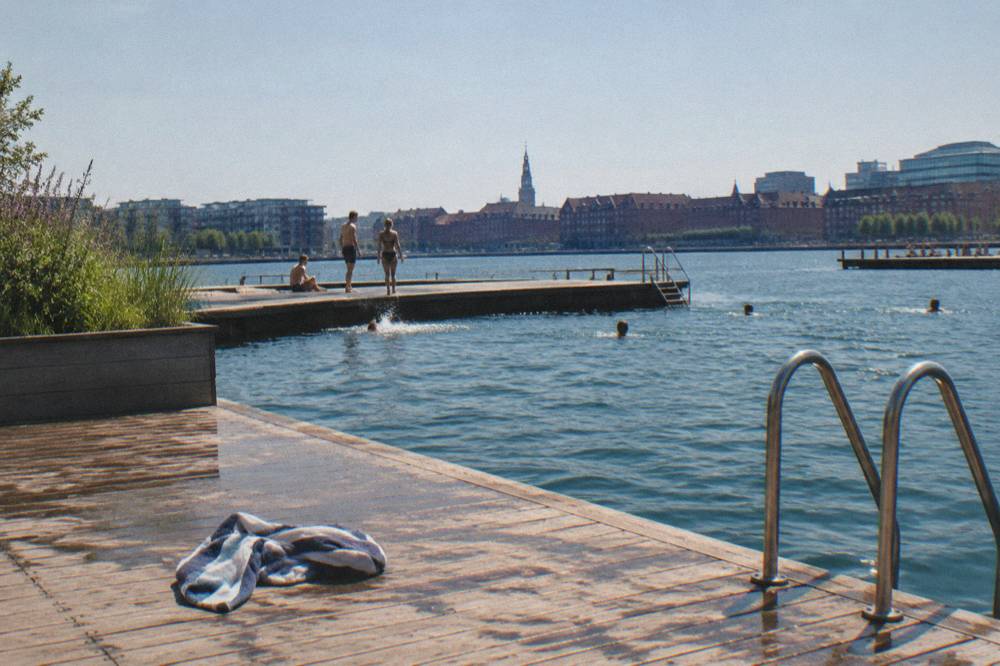
The harbour is clean enough to swim in. That sentence still surprises people, and it is one of the things the city is proudest of: the water quality programme that made the inner harbour swimmable turned a former industrial waterway into a public bath. The harbour baths at Islands Brygge are free, and in summer they are where the city goes after work. Further out, Amager Strandpark offers a free beach a metro ride from the centre, and the village streets of Dragør to the south are free to wander.
CopenHill is the stranger and more famous one. The ski slope on the roof of a waste incineration plant is visible from the harbour, and it has become one of the most-photographed symbols of the city's environmental ambitions. The rooftop hiking trail is free; the ski and snowboard slope is ticketed, with the current price best checked before you go. The parks are the quieter half of the story: Kongens Have beside Rosenborg Castle, the Botanical Garden's free outdoor grounds, the wild Superkilen park in Nørrebro, and the vast Frederiksberg Gardens with its free-roaming landscape. Assistens Cemetery, the burial place of Hans Christian Andersen and Søren Kierkegaard, doubles as a park and is free to visit.
Food And Drink: Smørrebrød, Bakeries And Beer
Copenhagen is known for a food scene that spans Michelin-starred restaurants and street hot dogs, for smørrebrød open sandwiches, for the cardamom bun, and for Carlsberg. The famous end of the spectrum is expensive; the everyday version, from bakery windows and hot dog stands, is where most locals actually eat.
The New Nordic movement started here, and the restaurant Noma became the most influential restaurant of its era before closing in its original form. That fame is real, but it is the top of a pyramid whose base is cheaper and better than most capitals manage. Smørrebrød, the open-faced rye sandwich with herring, egg, or roast beef, is the national dish and the thing to try once. Pølser, the Danish hot dogs from street wagons, are the other classic, and a pølse is one of the cheapest hot meals in the city. The bakery culture is the current obsession: the cardamom and cinnamon buns of the city's bakeries have their own international following, and a Spanish-language Bakery Walk, Among Doughs, Cinnamon and Cardamom, exists on GuruWalk for exactly this reason, though it has no reviews yet.
Carlsberg is the beer side of the story. The Carlsberg Byen district, the old brewery grounds, is free to walk around, and the beer itself was born there; the Visit Carlsberg brewery experience is ticketed, with the current price best checked on its own page. Our typical Danish lunch guide covers what the food actually is and where the free samples are.
What Copenhagen Is Known For That Costs Money
Tivoli Gardens, the castles and the big museums are the famous things that are not free. Tivoli entry starts at DKK 180, Christiansborg's state rooms cost DKK 150 at the door, Rosenborg Castle is DKK 140 online, and the Copenhagen Card, at DKK 589 for 24 hours, is a paid product that only pays off with heavy museum use.
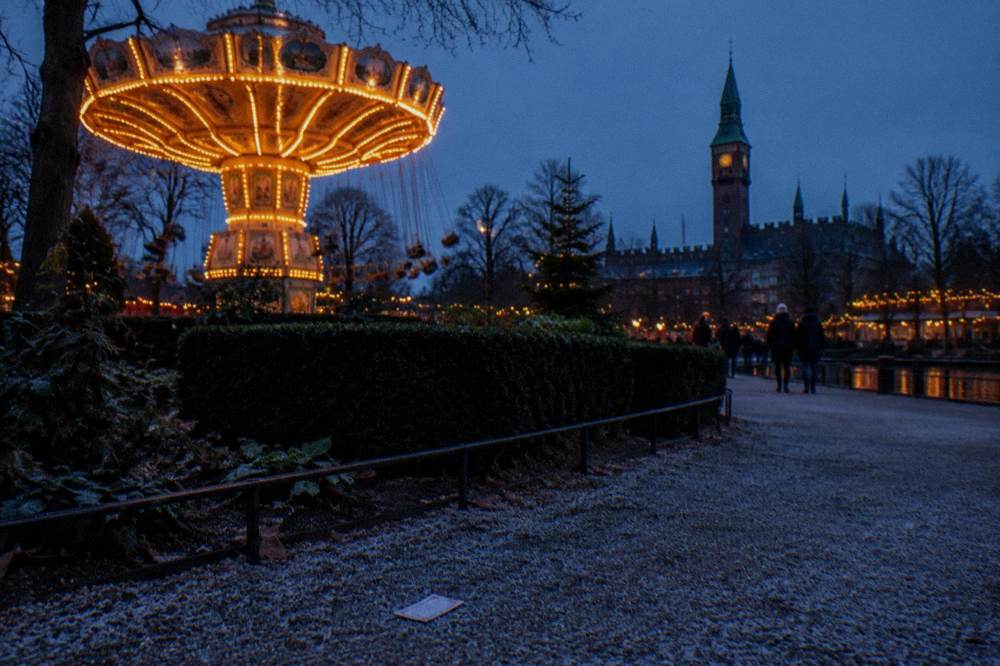
Tivoli Gardens is the one non-free item that belongs on any "what is Copenhagen known for" list. One of the oldest amusement parks in the world, it sits directly across from City Hall, and it is often credited as Walt Disney's inspiration for his own park. Entry starts at DKK 180, per the official Tivoli site, and rides cost extra. The park's fame is earned: its gardens, its Pantomime Theatre and its fireworks are a genuine Copenhagen institution, and it is the reason the question "is Tivoli free?" is asked so often that we answer it separately in our Tivoli Gardens guide.
| Famous paid attraction | Adult price | What you get |
|---|---|---|
| Tivoli Gardens | From DKK 180 entry | Historic pleasure garden and rides |
| Christiansborg Palace state rooms | DKK 150 at door, 140 online | Royal reception rooms |
| Rosenborg Castle interior | DKK 140 online, 150 at door | Crown jewels and castle rooms |
| National Museum of Denmark | DKK 150, 135 online | Danish history collections |
| SMK, National Gallery | DKK 140 | Danish and international art |
| Round Tower (Rundetaarn) | DKK 60 | Observatory tower and view |
The Copenhagen Card deserves a flag here because it is often misunderstood. It is a paid pass, DKK 589 for 24 hours and DKK 859 for 48 hours per adult, per copenhagencard.com/view/prices, and it covers paid attractions and transit. Nothing in the city is "free with the Copenhagen Card"; the genuinely free things, the harbour, the parks, the guard ceremony, Christiania's streets, cost nothing with or without it. Whether the card is worth it depends entirely on how many paid museums you plan to cram in, which is exactly what our Copenhagen Card guide works through.
The Neighbourhood Version: Indre By, Christianshavn, Vesterbro
Copenhagen's fame sorts neatly into three neighbourhoods. Indre By holds the medieval centre, Nyhavn and most of the famous sights. Christianshavn holds the canals and Freetown Christiania. Vesterbro holds the meatpacking district, the breweries and the former red-light quarter that became the city's trendiest streets. Free walks cover all three.
Indre By is where the postcard Copenhagen lives: Strøget, one of Europe's longest pedestrian streets, the cathedral, the university quarter and the route down to the harbour. Christianshavn is the canal district with the commune at its heart. Vesterbro is the success story: a working-class district behind the central station, once the city's red-light area, now its food and nightlife centre. The neighbourhood overview guide compares them for basing yourself, and our free walking tours by neighbourhood guide matches walks to districts.
| Neighbourhood | Known for | Free walk covering it |
|---|---|---|
| Indre By | Nyhavn, Strøget, the medieval centre, City Hall | Grand Tour, English and Spanish, GuruWalk |
| Indre By | Historic centre with a recommendations map | Historic Center Walk, Map Included, GuruWalk |
| Christianshavn | Canals, Church of Our Saviour, Freetown Christiania | Politically Incorrect Hippies Walk, GuruWalk |
| Vesterbro | Meatpacking district, former red-light quarter, Carlsberg Byen edge | Working-Class Vesterbro, Red-Light Past, GuruWalk |
Two more walks deserve a mention by name. The Renaissance Era City Walk, on freetour.com, is rated 9.5 out of 10 across 11,288 freetour.com reviews, which makes it the most-reviewed walk this directory tracks, and it covers the oldest core of the city in English and Spanish. The Royal Highlights Walk, also on freetour.com, rated 9.5 out of 10 across 6,894 reviews, focuses on the royal end of the story: the palaces, the guard and the Marble Church. Both are free with tips, and both are Indre By walks.
The English-language walks on GuruWalk include one that takes the city's reputation for not taking itself too seriously and runs with it. The Comedy Walk in English meets at Gammel Strand, runs for 2 hours, and is rated 4.82 out of 5 across 1,863 GuruWalk reviews. It covers the historic centre's landmarks with jokes instead of solemnity, which suits a city whose most famous statue is a mermaid people climb.
For a fuller comparison of the featured walks, the best free walking tour comparison guide breaks down all nine picks by language, length and rating. If you are working out how the pay-what-you-want system functions before committing, the how a free tour works guide explains the mechanics, and Free Things To Do In Copenhagen covers the rest of the city's no-cost sights in detail.
Common Questions About What Is Copenhagen Known For?
What Is Copenhagen Known For?
Copenhagen is known for Nyhavn's coloured harbourfront, the Little Mermaid statue, hygge, Danish design, Freetown Christiania, Tivoli Gardens, clean harbour water you can swim in, and a food scene running from Michelin stars to cardamom buns. Most of the iconic sights, including Nyhavn, the Mermaid, the changing of the guard and Christiania's public streets, are free to see.
Is the Little Mermaid free to see?
Yes. The statue sits on a rock at Langelinie on the harbour and is free to visit at any hour. It is about a 25-minute walk from Nyhavn, past the free Kastellet fortress ramparts.
What is hygge and where do I see it in Copenhagen?
Hygge is the Danish concept of cosiness, warmth and contentment, and it is the city's most famous cultural export. You see it in candlelit cafés, blankets on outdoor chairs and the harbour baths in summer. The 3-Hour Hygge Experience, a free GuruWalk walk rated 4.66 out of 5 across 2,132 reviews, is built around explaining it.
Can you walk around Freetown Christiania for free?
Yes, walking into Christiania is free. The district is a self-governing commune on former military grounds. Photography rules apply on and around Pusher Street, and they are strictly enforced, so read the rules before you go.
Are Copenhagen's museums free?
Some are. The David Collection is free every day, and the Ny Carlsberg Glyptotek is free on the last Wednesday of every month. The National Museum and the National Gallery charge DKK 150 and DKK 140 respectively for adults.
Is Tivoli Gardens free?
No. Tivoli, the historic amusement park opposite City Hall, charges from DKK 180 for entry, with rides priced separately. It is one of the famous Copenhagen sights that is not free, though it is free simply to look at from the City Hall square.