What Souvenirs To Buy In Copenhagen?
A practical guide to Copenhagen souvenirs: what to buy, where to find it in Indre By, Christianshavn and Vesterbro, what to skip, and how the free walking tours double as a shopping orientation.
What Souvenirs To Buy In Copenhagen?
The souvenirs worth buying in Copenhagen are Danish design pieces, Royal Copenhagen porcelain, liquorice and chocolate from local makers, Christiania and Nyhavn artwork, and Carlsberg memorabilia from Vesterbro. Indre By carries the design and porcelain shops, Christianshavn and Christiania sell the counterculture pieces, and Vesterbro mixes vintage with brewery heritage. The free walking tours double as a first-day orientation for all of it.
Copenhagen is a small capital where the souvenir question and the neighbourhood question are really the same question. The city centre, Indre By, holds the classic design stores and the porcelain houses. Cross the water to Christianshavn and the tone changes completely: Freetown Christiania sells its own art, its own postcards and its own story. Head west to Vesterbro and you find vintage shops, record stores and the Carlsberg district, where the brewery's memorabilia outlasts the beer in your suitcase.
The honest framing matters here. Nobody connected to this site has taken these walks or visited these shops, so everything below comes from research into what the walks cover, what the shops are known for, and what the verified free-attraction record says about the districts themselves. What the record shows is a city unusually generous with free experiences, which shapes the souvenir logic: when the walking, the harbour baths and the palace tower cost nothing, more of the budget can go to things worth carrying home.
The 21 pooled free walking tours shipped across this site's roster, 19 on GuruWalk and 2 on freetour.com, are themselves a useful shopping tool. A two-hour walk through Indre By or Christianshavn passes more shopfronts in an afternoon than most visitors would find in two days of aimless wandering, and the guides, who work on a pay-what-you-want basis, tend to know which streets reward a second visit.
Among those walks, the Grand Tour, English and Spanish stands out for souvenir planning because of where it starts. It meets at Københavns Rådhus on Rådhuspladsen, the City Hall square that sits at the western mouth of Strøget, the long pedestrian street that threads the whole shopping core together. Rated 4.82 out of 5 across 2,538 GuruWalk reviews and running 2 hours and 30 minutes, it is the walk most likely to deposit you back into the middle of the shopping district with a mental map of what you passed. The 3-Hour Hygge Experience, rated 4.66 out of 5 across 2,132 GuruWalk reviews, leans into Danish lifestyle and culture, which is the theme half the souvenir shops in this city are selling. The Historic Center Walk, Map Included, rated 4.84 out of 5 across 1,421 GuruWalk reviews, hands you a map with recommendations, a genuinely useful artifact when the question is where to come back and spend money.
Where To Buy Souvenirs In Indre By?
Indre By is Copenhagen's souvenir heartland: Strøget and its side streets hold the design stores, the porcelain houses, the flagship chocolate and liquorice shops, and the densest concentration of postcard-and-magnet retailers in the city. The district is compact, walkable and free to wander, and every major free walking tour in the roster either starts inside it or passes through it.
Strøget is the spine. It is one of Europe's longest pedestrian streets, running from Rådhuspladsen down to Kongens Nytorv, and the souvenir gradient along it is predictable in a useful way: the western end near City Hall carries the highest density of classic tourist shops, while the stretches closer to Kongens Nytorv and the side streets off it hold the more considered stores, the Danish design names and the smaller homeware shops. The side streets are where the better buys live. Købmagergade, which branches off mid-route, and the lanes around the Round Tower mix independent retailers with the chains.
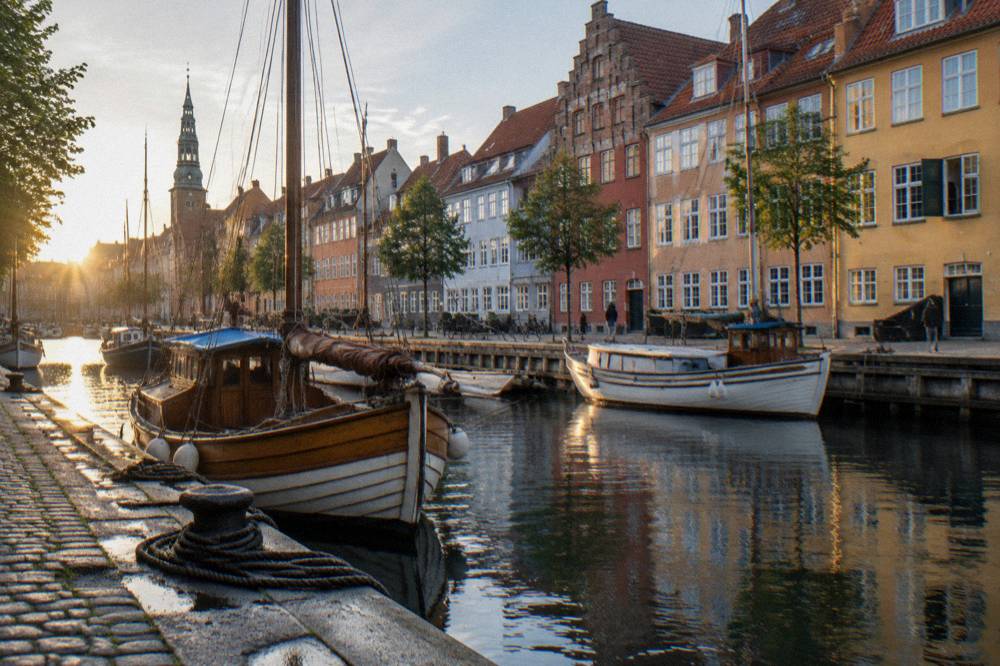
The Indre By free walking guide on this site covers the district's free landmarks in detail, and the landmarks double as shopping landmarks. The Round Tower itself is a paid visit, DKK 60 for an adult, but the spiral ramp inside is one of the more atmospheric approaches to a gift shop anywhere in the city. Nyhavn, the painted-harbour postcard view that costs nothing to see, sits at the eastern edge of the district, and its souvenir stalls trade almost entirely on that view. The Nyhavn free things to do guide separates what the harbour genuinely offers for free from what the stalls are selling.
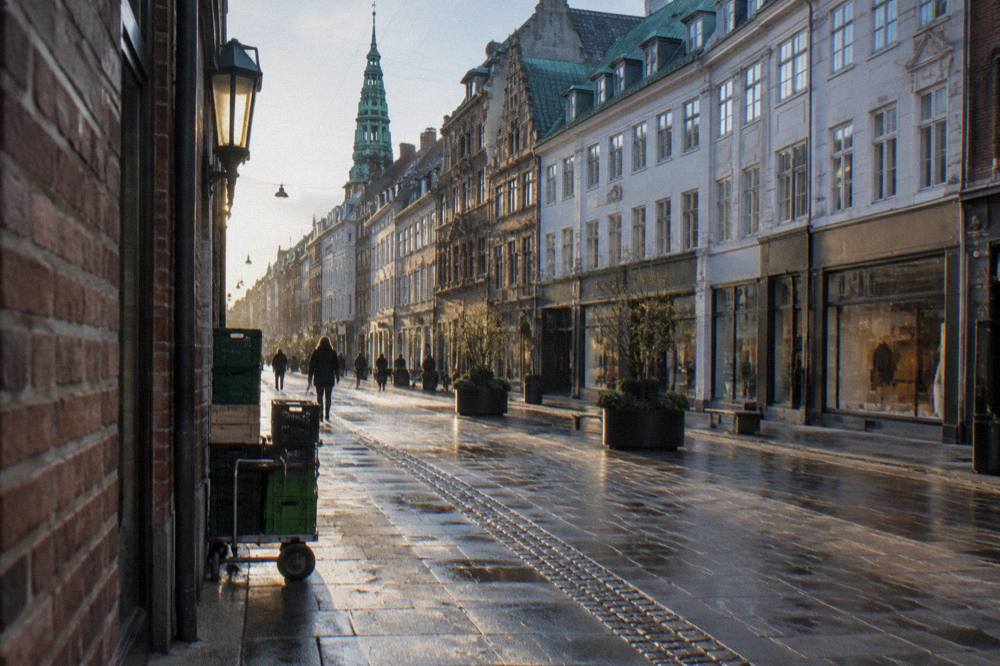
For orientation before spending anything, the free walks are hard to beat. The Grand Tour, English and Spanish, meeting at the City Hall on Rådhuspladsen, covers the historic core in 2 hours and 30 minutes, and its starting square is the exact point where Strøget's shopping begins. GuruWalk reviewers frequently describe the route as a dense introduction to the city centre, which is precisely what a first-day shopper needs.
The Comedy Walk in English takes a different angle on the same district. It meets at Gammel Strand 26, a short street between the canal and the cathedral quarter, runs 2 hours, and is rated 4.82 out of 5 across 1,863 GuruWalk reviews, one of the largest English-language review pools on the GuruWalk side of the roster. Its meeting point sits inside one of the denser clusters of small independent shops in Indre By, the kind of streets where a souvenir stop is more likely to be something you actually keep.
Between the two walks, a shopper gets the full width of the district. The Grand Tour anchors the western end at City Hall, the comedy route starts nearer the canal-side lanes, and the ground between them is the ground worth browsing. If you only have time for one orientation walk before you buy anything, the Grand Tour's starting position on Strøget makes it the practical pick, and its free, pay-what-you-want format means the only fixed cost is the tip you choose to leave.
What Are The Classic Danish Souvenirs Worth Taking Home?
The classic Danish souvenirs are design-led: Royal Copenhagen porcelain and Christmas plates, Kay Bojesen-style wooden monkeys, Georg Jensen stainless steel, Arne Jacobsen-era furniture miniatures, and Danish wool knitwear. They cost more than postcards, but they are the pieces that still read as Danish twenty years later, and Indre By's flagship stores carry all of them within a ten-minute walk of each other.
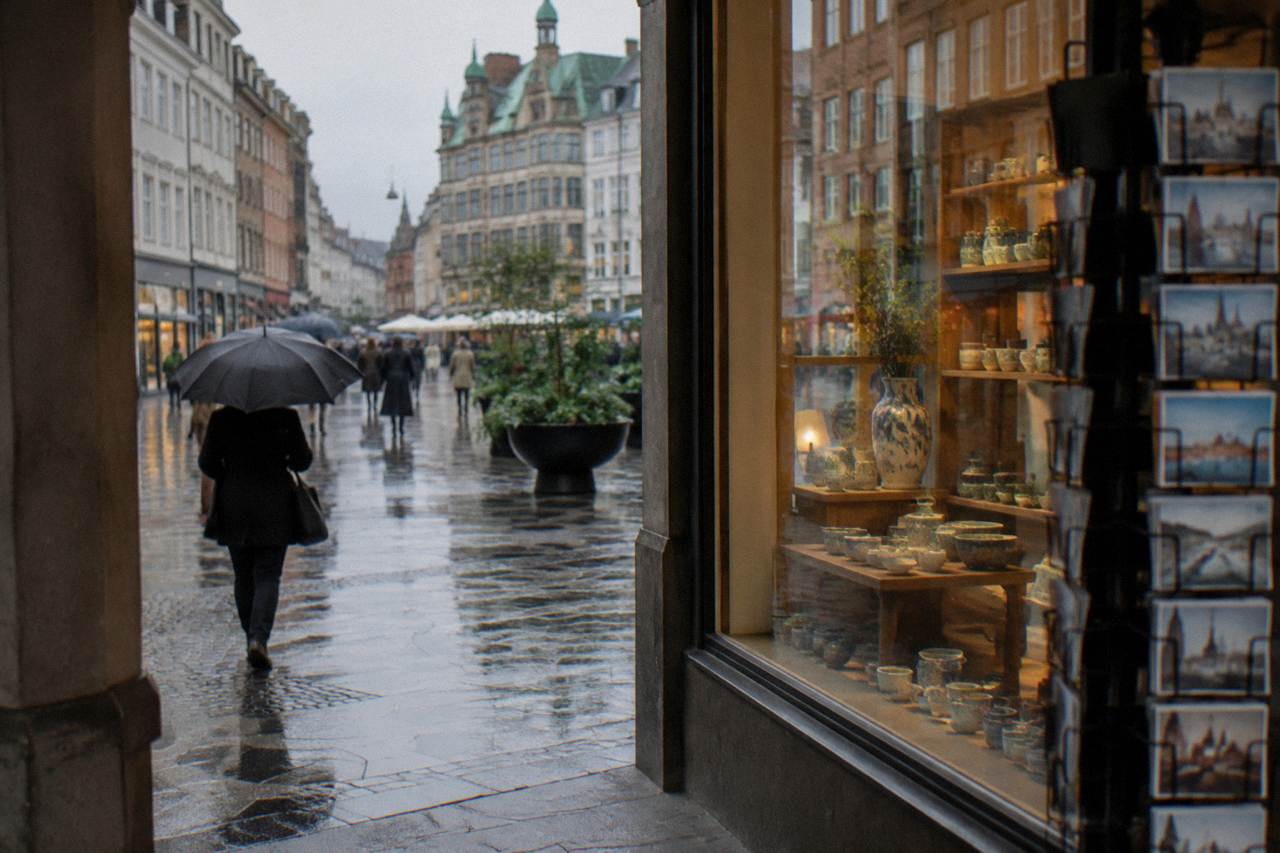
The porcelain tradition is the deepest. Royal Copenhagen's hand-painted blue fluted pattern is a long-running house classic, and its annual Christmas plates are the archetypal Danish keepsake, small, flat, packable and dated, which makes them a souvenir that carries its own provenance. The flagship store sits in the heart of the shopping district. The related tradition is Bing & Grøndahl, whose lines merged into the same house, and vintage pieces from both names circulate in the second-hand shops further out from the centre.
The wooden monkey is the other icon. Kay Bojesen's smiling teak monkey is the single most recognisable piece of Danish wooden design, sold in sizes from keyring to full-figure, and it survives a suitcase better than porcelain. Georg Jensen's steel candleholders and cutlery carry the same national-design weight in metal. None of these are cheap, and no honest guide should pretend otherwise, but they are the category where Copenhagen genuinely outclasses most European capitals, because the design shops here are selling the country's actual industrial heritage rather than an import.
| Souvenir | What it is | Why it travels well | Where to find it |
|---|---|---|---|
| Royal Copenhagen Christmas plate | Dated annual porcelain plate | Flat, light, boxed | Royal Copenhagen flagship, Indre By |
| Kay Bojesen wooden monkey | Teak monkey figure, classic design | Solid wood, near-indestructible | Design stores on Strøget's side streets |
| Georg Jensen steel piece | Candleholder or small steel object | Durable metal, timeless form | Georg Jensen flagship, Indre By |
| Danish wool knitwear | Sweaters and accessories from local mills | Wearable on the flight home | Design and fashion stores, Indre By |
| Design poster or print | Danish Golden Age or modernist prints | Rolls into a tube | Galleries and print shops, Indre By |
A practical note on the porcelain: check the boxes before buying. Royal Copenhagen seconds and outlet pieces circulate in some shops at lower prices, and a dated plate should come with its original packaging if you want it to hold value as a collectible. The stores themselves are under no obligation to flag a second, so ask.
Which Copenhagen Food Souvenirs Actually Travel?
The food souvenirs that survive a journey are liquorice, chocolate, Danish salt and liquor, cardamom and cinnamon baking goods, and Carlsberg merchandise rather than Carlsberg bottles. Fresh pastries do not travel, and the honest advice is to eat those on the spot. Copenhagen's food shops cluster in Indre By and Vesterbro, and the bakery tradition explains half the spice rack.
Liquorice is the most Danish food souvenir there is. The Danish version is salty, aggressively so by the standards of visitors who grew up on sweet liquorice, and it comes in every form from hard coins to soft, coated pieces. The specialist shops in the city centre sell it by weight, which lets you build a small mixed bag as a gift rather than committing to a kilo of something your recipient may or may not forgive you for. Chocolate is the safer bet, and Copenhagen's chocolatiers work at a high level, with single-origin bars that pack flat and survive anything short of a summer car boot.
The spice angle is less obvious and more interesting. Danish baking runs on cardamom and cinnamon, the two spices that define the kanelsnegl, the cinnamon snail that is the country's default pastry. A bag of good cardamom, or a jar of the cinnamon sugar mixes the bakeries use, is a souvenir that recreates the trip every time the recipient bakes. The Bakery Tour Copenhagen: Among Doughs, Cinnamon and Cardamom, a Spanish-language GuruWalk walk in the roster, is built entirely around this tradition, though it carries no reviews yet, so there is no rating to report.
| Food souvenir | Form | Travel quality | Notes |
|---|---|---|---|
| Salty liquorice | Sold by weight | Excellent, shelf-stable | Strongly flavoured, sample before bulk-buying |
| Craft chocolate bars | Flat bars | Excellent | Choose single-origin for a gift |
| Cardamom | Whole pods or ground | Excellent | The defining spice of Danish baking |
| Cinnamon sugar mix | Jar or packet | Good | Recreates the kanelsnegl at home |
| Danish aquavit | Bottle | Good if padded | Check airline liquid rules first |
| Fresh pastries | None | Do not travel | Eat them standing at the counter |
Alcohol deserves a caution. Danish aquavit and Carlsberg's special releases are legitimate souvenirs, but airline liquid limits make bottles a checked-luggage problem, and a bottle of beer is a poor traveller. The Carlsberg memorabilia route, covered below in the Vesterbro section, is the more durable way to take the brewery home.
Where To Find Souvenirs In Christianshavn And Christiania?
Christianshavn sells two kinds of souvenirs: canal-side boutiques with ceramics and design, and Freetown Christiania's own art, posters and postcards, which are unlike anything sold in the rest of the city. Christiania has photography rules that matter before you buy anything with imagery on it, and the district's art is the one souvenir category that genuinely cannot be bought anywhere else.
Christianshavn sits across the harbour from Indre By, and its shopping is smaller, quieter and more locally aimed. The streets around the canals hold ceramics studios, small fashion labels and second-hand shops. The Politically Incorrect Hippies Walk, an English-language GuruWalk tour rated 4.74 out of 5 across 393 reviews, meets at Havnegade 54 and spends 1 hour and 30 minutes in exactly this territory, the hippie history and counterculture side of Christianshavn that explains what Christiania is and why its art looks the way it does. Other pages covering the same trip are gathered on Free Things To Do In Copenhagen.
Christiania itself is the souvenir story. Walking into Freetown Christiania is free, and the verified facts record it as one of the city's 25 unconditionally free attractions, with the standing caveat that photo rules apply inside. Those rules matter for a souvenir article in a direct way: the district's own posters, postcards and paintings are the sanctioned way to take its imagery home, rather than photographs taken in areas where cameras are not welcome. Buy the art from the district's own stalls and workshops and you are buying from the community that makes it, which is the entire point of the place.
The Christianshavn and Christiania free things guide and the Christiania rules guide on this site cover the district's etiquette in full. The short version for a shopper: respect the photo rules, buy inside the district rather than resold outside it, and treat Pusher Street, covered in detail in the Pusher Street rules guide, as an area to pass through, not to linger and shop in.
What is actually for sale: screen-printed posters, paintings of the district's own architecture, hand-thrown ceramics from the workshops, and postcards that no other city could produce. Prices are set by the makers, and haggling, a normal reflex in many markets, reads differently here. The district operates as a self-governing community, and its stalls are not a tourist bazaar.
What Souvenirs Come From Vesterbro And Carlsberg Byen?
Vesterbro's souvenirs are vintage clothing, records and Carlsberg heritage pieces, and the Carlsberg Byen district is free to walk while the Visit Carlsberg brewery experience inside it is ticketed. The neighbourhood's industrial and red-light past is the story its shops sell, and its free walking tour, the Working-Class Vesterbro walk, covers that history in English.
Vesterbro, west of the central station, is the district where Copenhagen shops for its own past. The streets around Istedgade hold vintage clothing stores, second-hand furniture shops and record stores, the kind of places where a souvenir is something with a history rather than something with a logo. The Working-Class Vesterbro, Red-Light Past walk, rated 4.81 out of 5 across 27 GuruWalk reviews, meets at Hovedbanegården, the central station, and spends 1 hour and 30 minutes on exactly this narrative: the industrial era, the working-class housing, and the district's former red-light streets. Its review pool is small, 27 reviews, so the rating carries less weight than the big Indre By walks' figures, but the territory it covers is the territory a vintage shopper wants explained.
Carlsberg Byen is the district's other face. The verified facts are precise about the split: walking the district is free, the Visit Carlsberg brewery experience inside it is ticketed, and the exact current price of that experience is unresolved in the research record, so this article will not print a number for it. The souvenir logic is unaffected. The brewery's heritage pieces, glasses, signs, retro advertising reproductions, are sold in the district and make a more durable keepsake than anything you could drink there. The Vesterbro free things guide covers the neighbourhood's free side in full.
The honest pairing, modelled in the verified facts as two separate records, is worth restating because souvenir articles usually blur it: the district costs nothing, the brewery attraction costs money, and neither fact implies the other. Budget for one and not the other, or for both, but know which you are doing.
Are Museum Shops And Design Stores Worth The Price?
Copenhagen's museum shops are among the best souvenir venues in the city, and several sit inside museums you can enter for free or nearly free: the David Collection and the Royal Danish Library's Black Diamond building cost nothing, the Glyptotek is free on the last Wednesday of every month, and Thorvaldsens Museum runs free Wednesdays on a contested schedule. The shops are the cheapest way to own a piece of Danish design culture.
The David Collection, the verified facts record as unconditionally free, holds one of the stronger Islamic art collections in Europe, and its shop reflects it. The Royal Danish Library's Black Diamond building, free to enter for the building and foyer, sells design books and prints that draw on the national collections. These are souvenir stops that cost nothing to reach, which changes the value calculation entirely: a museum you paid nothing to enter sells you something you chose inside it, not something you bought to justify the ticket.
The Glyptotek is the conditional case, and the condition is specific. The museum charges roughly DKK 150 most days, but per its own official site, glyptoteket.dk, entry to the whole museum is free on the last Wednesday of every month. Not Tuesday, which is the free-day pattern visitors assume from other cities. Wednesday. Thorvaldsens Museum, roughly DKK 110 most days, also runs free Wednesdays, but the research record flags the exact recurrence as contested between sources, weekly versus last-of-month after a reported council funding change, so confirm its current schedule directly rather than planning around a specific Wednesday.
The design stores are the paid counterpart. Designmuseum Danmark, roughly DKK 140 to enter, anchors the design-retail scene, but the shops around it sell the same tradition without a ticket. The honest advice for a souvenir shopper with a fixed budget: spend the design money in the shops, and use the free-entry museums as the cultural freebies that the rest of this site's free museums guide maps out.
What Souvenirs Should You Skip In Copenhagen?
Skip the mass-produced mermaid figurines, the generic "Copenhagen" hoodies sold at airport markups, anything branded with the Nyhavn view that was printed far from Denmark, and any Christiania imagery sold outside Christiania itself. The Little Mermaid statue is free to see, which makes a cheap replica of it a strange purchase, and the harbour's real value is the view, not the trinkets sold beside it.
The mermaid deserves its own paragraph because she is the city's most visited free attraction and its most disappointing souvenir. The statue on the Langelinie waterfront costs nothing to visit, and the verified record lists it among the 25 unconditionally free things in the city. The figurines sold at tourist markups are, in almost every case, generic resin castings with no connection to the sculptor or the foundry. If the mermaid matters to you, the honest souvenir is a print or a book, or the memory of the walk out to her, which the Little Mermaid blog piece on this site covers.
The same logic applies to Nyhavn. The harbour itself is free, unconditionally, and the is Nyhavn free question is answered plainly elsewhere on this site. The stalls around it sell the view back to you at prices the view does not need, because the view is free and the photograph is yours. Buy a drink at the canal edge instead and let the postcard be one you took.
A caution on lookalike merchandise: the research record for this site found several unofficial domains squatting on Copenhagen landmark names, and the same pattern exists in physical retail, merchandise printed with landmark names but licensed by nobody. The test is simple. If a shop can tell you who made the thing and where, it is probably real. If the answer is a shrug, it is a printed logo on an import.
How Much Should You Budget For Souvenirs?
Budget by category rather than a single number: postcards and prints cost little, food souvenirs scale by weight, design and porcelain are the serious spending, and vintage in Vesterbro is unpredictable by nature. The verified figures that matter around the edges are the 24-hour City Pass at DKK 100 and Tivoli Gardens entry from DKK 180, both of which compete with souvenir spending for the same wallet.
No verified source fixes the price of a Danish wooden monkey or a Royal Copenhagen plate, and this article will not invent one. What the verified record does fix is the spending context. A 24-hour City Pass for the transit system costs DKK 100, per dinoffentligetransport.dk, the official Danish public transport portal. Entry to Tivoli Gardens starts from DKK 180, per the official tivoli.dk, and the is Tivoli Gardens free guide covers what that entry does and does not include. Every krone not spent on those is a krone available for the shops.
The single 2-zone transit ticket is commonly cited at around DKK 24, though that figure comes from a secondary source rather than the transit authority's own page, so treat it as approximate. The Copenhagen Card, DKK 589 for 24 hours adult, is a paid product and the Copenhagen Card value guide on this site works through whether it earns its price on a free-first itinerary.
| Spending category | What it covers | Budget character |
|---|---|---|
| Postcards, prints, small paper goods | Paper souvenirs, posters | Light on the wallet and the suitcase |
| Food souvenirs | Liquorice, chocolate, spices | Scales with weight, easy to control |
| Design and porcelain | Royal Copenhagen, Georg Jensen, Bojesen | The serious spending, plan for it |
| Vintage and records | Vesterbro second-hand | Unpredictable, occasionally a bargain |
| Experiences competing for the same money | Tivoli entry from DKK 180, transit pass DKK 100 | Decide before you shop, not after |
The free-first strategy this site is built around has a direct souvenir consequence. When the walking tours, the harbour baths, the palace tower, the parks and the free-entry museums cost nothing, the souvenir budget is the discretionary budget. A traveller who spends two days on the free attractions and the free walks, tipping the guides what the walks were worth, arrives at the design store with more to spend than a traveller who paid for every attraction along the way.
The walks themselves are part of that arithmetic. Every tour in this site's roster is free or pay-what-you-want, and the tipping guide covers the etiquette. A fair tip is a real cost, but it buys a two-hour orientation that ends within walking distance of the shops, delivered by a guide who works those streets daily.
Common Questions About Souvenirs In Copenhagen
What Souvenirs To Buy In Copenhagen?
The strongest Copenhagen souvenirs are Danish design pieces, Royal Copenhagen porcelain, liquorice and baking spices, Christiania art bought inside Christiania, and Carlsberg heritage pieces from Vesterbro. Indre By carries the design and porcelain, Christianshavn the counterculture art, and Vesterbro the vintage and brewery memorabilia.
Where Is The Best Place To Buy Souvenirs In Copenhagen?
Indre By, the city centre, has the densest shopping: Strøget and its side streets hold the design flagships, the porcelain houses and the specialist food shops. For something the rest of the city does not sell, cross to Christianshavn and buy inside Freetown Christiania, respecting its photography rules.
Is Danish Design Cheaper In Copenhagen Than Abroad?
Flagship-store prices in Copenhagen are not discount prices, but the selection is far wider than abroad, and some pieces, annual Christmas plates and shop-exclusive runs, are only sold through the official stores. The saving is in the range, not the price tag.
Can You Buy Christiania Souvenirs?
Yes, and Christiania is the only honest place to buy them. The district's own stalls and workshops sell posters, paintings and postcards made by the community. Photography rules apply inside the district, so buying the art locally is both the sanctioned and the more authentic way to take the imagery home.
What Food Souvenirs Survive The Trip Home?
Liquorice, chocolate bars, whole cardamom and cinnamon sugar mixes all travel well and pack flat or light. Fresh Danish pastries do not travel at all; the honest move is to eat them at the counter and take the spices home instead.
Are Museum Shops A Good Place To Buy Souvenirs?
They are among the best. The David Collection and the Royal Danish Library's Black Diamond foyer are free to enter, and the Glyptotek is free on the last Wednesday of every month, so you can reach a good shop without paying admission first.