Self-Guided Walking Tour Of Copenhagen: Indre By, Christianshavn And Vesterbro
Copenhagen's medieval core, its harbour district and its former working-class west end sit close enough together to walk in a single day, and almost everything worth stopping for along the way costs nothing to see.
Short answer
A self-guided walking day works best as three neighbourhoods: Indre By's medieval core and Strøget, the canals and Christiania of Christianshavn, and Vesterbro's Carlsberg district and Assistens Cemetery. Entry to the streets, squares, harbourside and most churches is free; the two big art museums run free days, the last Wednesday of the month at the Glyptotek.
Copenhagen's medieval core is small enough that a walker leaving City Hall Square can reach the harbour in under fifteen minutes, cross to the island of Christianshavn on a bridge, and still have daylight left for the old working-class streets of Vesterbro. That compactness is the reason a self-guided walking tour of Copenhagen works so well: the three neighbourhoods that define the city sit in a rough triangle, and the connective tissue between them, canals, squares, harbour fronts and church spires, is free to look at every step of the way.
This route is built from verified free attractions, not guesswork. The streets and squares cost nothing, the harbour baths cost nothing, and the two big art museums in the centre run free days that reward a little planning. Where something is paid, this guide says so plainly, because a walking route that quietly drops you at a DKK 150 ticket desk is not a free route at all.
What Does A Self-Guided Walking Tour Of Copenhagen Cover?
A realistic walking day covers three neighbourhoods in sequence: Indre By for the medieval core, Strøget and the harbour-side squares; Christianshavn for the canals, the Church of Our Saviour and the edge of Freetown Christiania; and Vesterbro for the Carlsberg district, the Meatpacking quarter and Assistens Cemetery. Each stretch is walkable, each has free stops throughout, and the whole loop can be done without a single transit ticket.
Indre By is the oldest part of the city, the grid of streets laid out in medieval times between the old west gate and the harbour. Strøget, the long pedestrian street that runs from City Hall Square to Kongens Nytorv, cuts straight through it, and the streets either side hold the Cathedral, the Round Tower, the Latin Quarter and the small squares where Copenhagen feels oldest. The Round Tower itself is paid, DKK 60 for an adult, but the street it stands on and the view of its spiral ramp from the doorway cost nothing.
Christianshavn sits across the Inner Harbour, a canal district built on the Dutch model and still the most photogenic stretch of water in the city. Freetown Christiania occupies its eastern edge, and walking in is free, though the photo rules inside, especially on and around Pusher Street, are real and worth knowing before you go. Our Christiania rules and etiquette guide covers exactly what is and is not allowed.
Vesterbro is the third leg, west of the central station, where the old red-light district around Istedgade has become one of the city's most interesting streets. The Carlsberg Byen district, the old brewery site, is free to walk, though the Visit Carlsberg brewery experience inside it is ticketed. Assistens Cemetery, technically just north in Nørrebro but on any sensible walking extension, is a park as much as a cemetery and costs nothing.
How Do You Walk Indre By On Foot, Stop By Stop?
Start at City Hall Square, walk Strøget east to Kongens Nytorv, then loop back through the Latin Quarter and the Cathedral. The core stops are City Hall Square, Strøget, Storkespringvandet, Kongens Nytorv, the Nyhavn mouth of the harbour, Vor Frue Kirke and Gammel Strand, and all of them are free to see. Allow two to three hours at a relaxed pace, longer if you detour to the Glyptotek.
City Hall Square, Rådhuspladsen, is the natural start because it is the transport hub of the centre and the meeting point for several guided walks. Strøget runs east from here, and the first stretch is the busiest, but the side streets peel off quickly into the Latin Quarter, where the crowds thin and the buildings get older. The Storkespringvandet, the stork fountain on the Amagertorv stretch of Strøget, is the classic halfway marker.
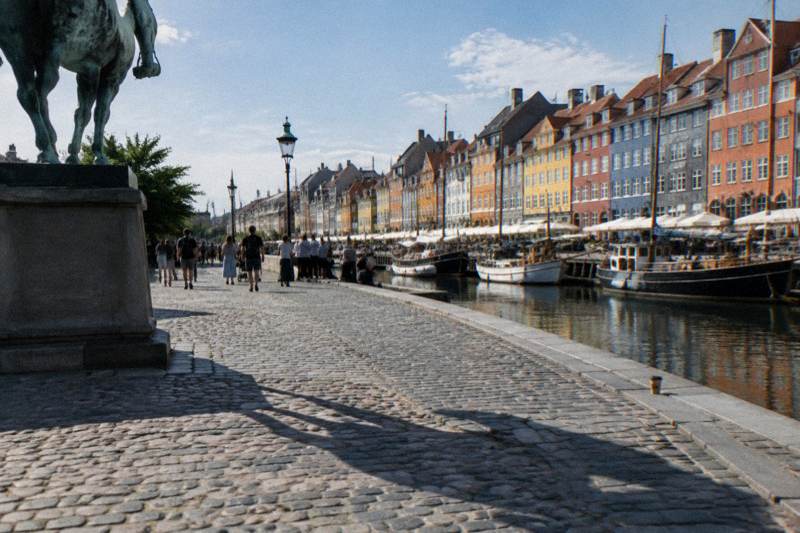
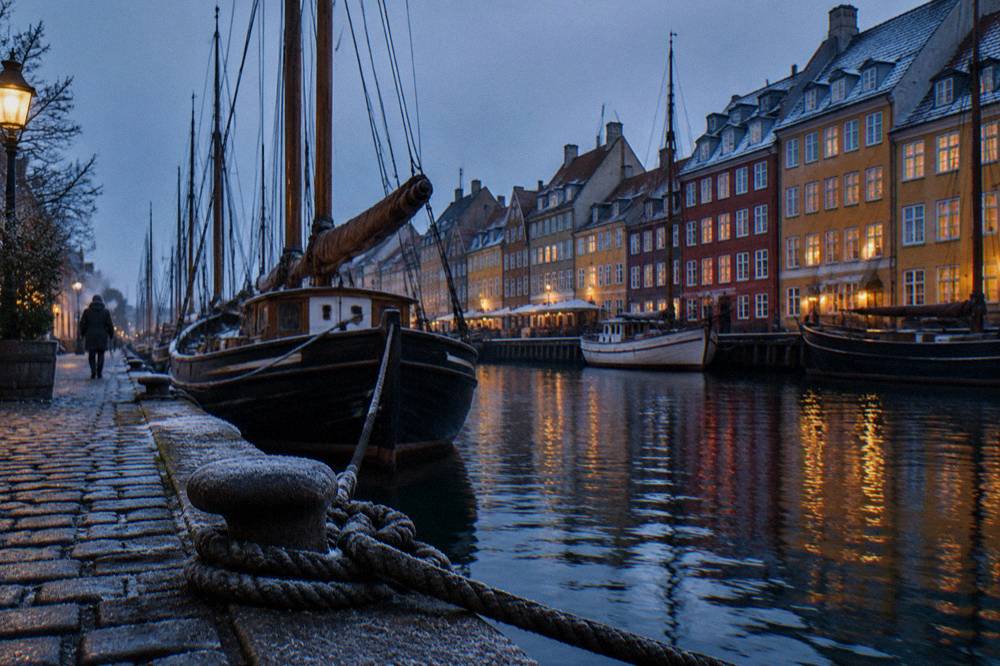
Kongens Nytorv is the grand square at the far end, home to the Royal Theatre and the entrance to Nyhavn. Nyhavn itself, the old harbour channel lined with townhouses, is free to visit, and the water-side benches fill up on any dry day. The Little Mermaid sits a fifteen-minute walk north along the Langelinie promenade, and she is free to see, though she is a modest statue rather than a destination in her own right.
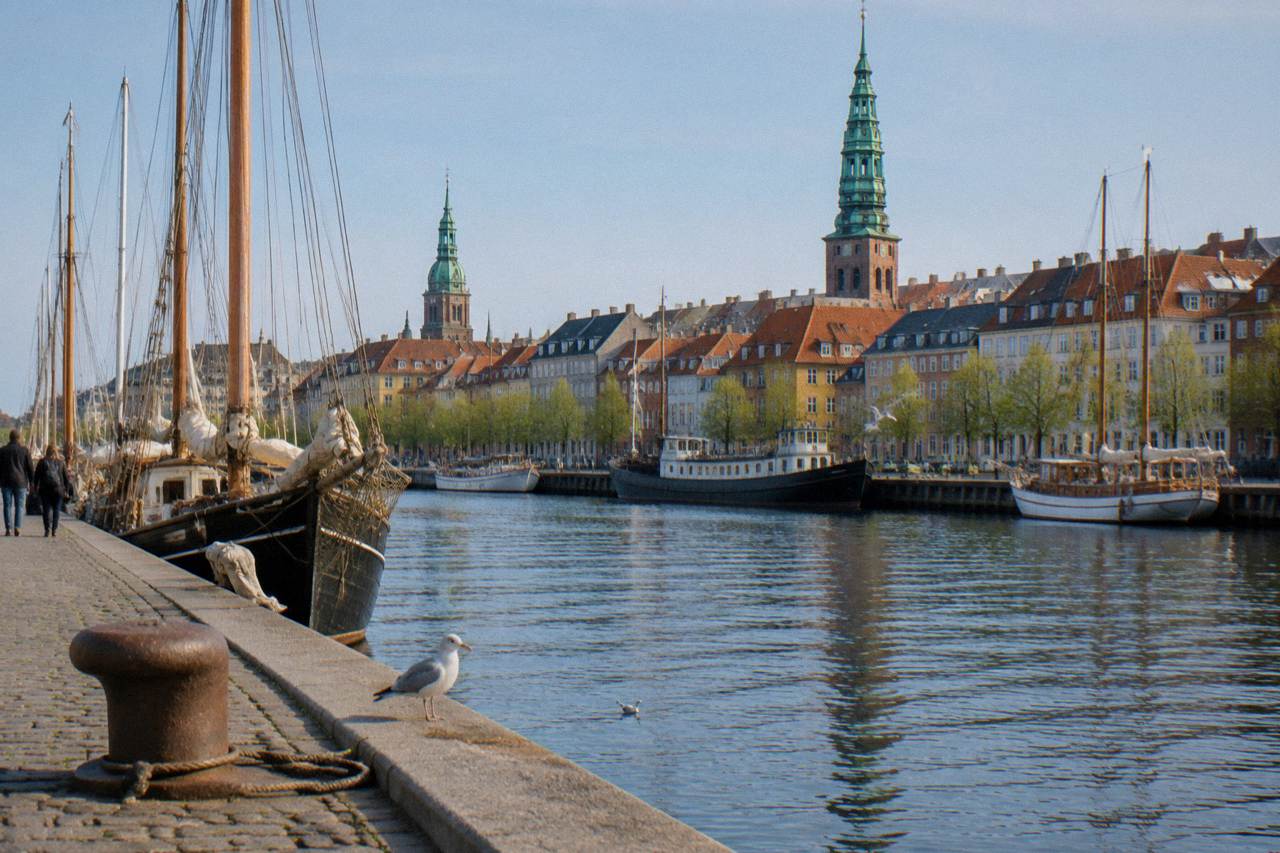
The loop back runs through the medieval streets north of Strøget. Vor Frue Kirke, Copenhagen Cathedral, is free to enter, and its interior holds Bertel Thorvaldsen's statues of the apostles. Gammel Strand, the old fish market street on the canal, is one of the prettiest single blocks in the city. The National Museum sits just behind it, and while its interior is paid, DKK 150 at the door, the Prince's Palace courtyard it occupies is a free detour.
This is also the ground that the city's guided walks cover, and the comparison is worth knowing even for a self-guided walker. The Grand Tour, English and Spanish, rated 4.82 out of 5 across 2,538 GuruWalk reviews, meets right here at City Hall and runs two hours and thirty minutes through the medieval core on a pay-what-you-want basis. It is a strong option for the first day of a trip, with the self-guided route saved for the neighbourhoods after it.
If you would rather have a map in hand and walk alone, the Historic Center Walk, Map Included, rated 4.84 out of 5 across 1,421 GuruWalk reviews, hands out a recommendations map as part of its two-hour route, which many walkers then use for their own wandering afterwards. The Comedy Walk in English, rated 4.82 out of 5 across 1,863 GuruWalk reviews, takes a very different tone through the same streets, meeting at Gammel Strand for a two-hour run of jokes and history. Both are pay-what-you-want, both are on GuruWalk, and neither needs to be booked far ahead.
Should You Cross To Christianshavn On The Same Day?
Yes, Christianshavn is a twenty-minute walk from the centre and pairs naturally with Indre By. The free stops are the canals themselves, the Christianshavn harbour front, the Church of Our Saviour's interior, and the walk through Freetown Christiania's public streets. The spire climb inside the Church of Our Saviour is paid, around DKK 70, but the ground floor of the church is free.
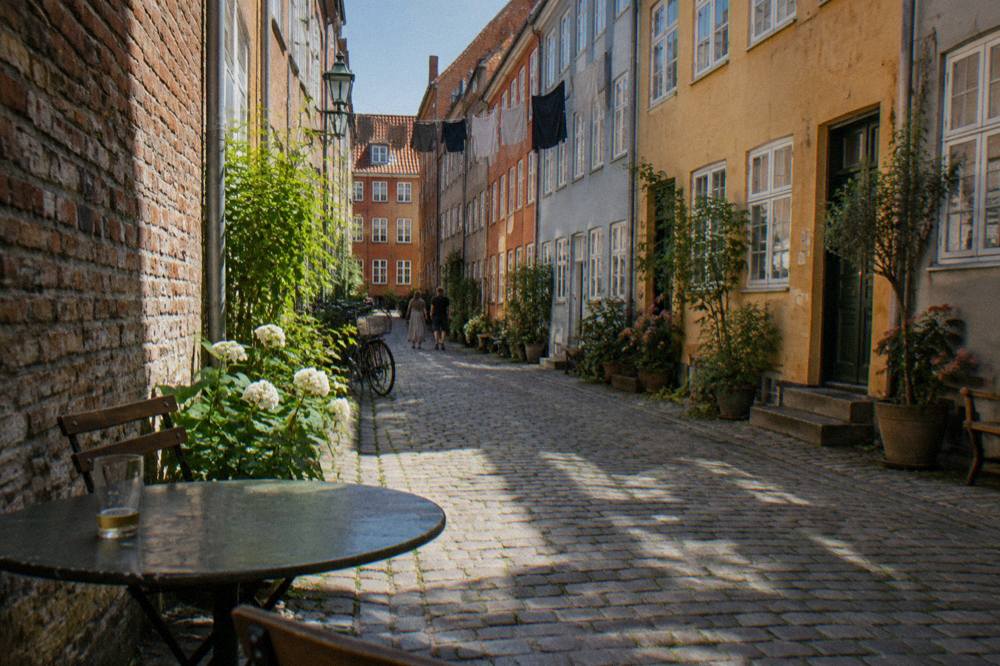
The crossing from Kongens Nytorv or the Nyhavn mouth is over the Inner Harbour bridge, and the change in atmosphere is immediate. Christianshavn was built as a canal district on the Dutch model, and the best-preserved stretch runs along the main canal, where houseboats, footbridges and hollyhock-filled gardens line the water. Walking the whole canal grid takes about an hour.
The Church of Our Saviour stands at the district's heart, and its black-and-gold spire with an external winding staircase is the most recognisable silhouette in Copenhagen after the mermaid. The interior is free; the climb to the top of the spire is a paid ticket at around DKK 70. Frederik's Church, the Marmorkirken back in Indre By, follows the same pattern: free interior, paid dome climb at around DKK 50. Neither climb is required to enjoy either building.
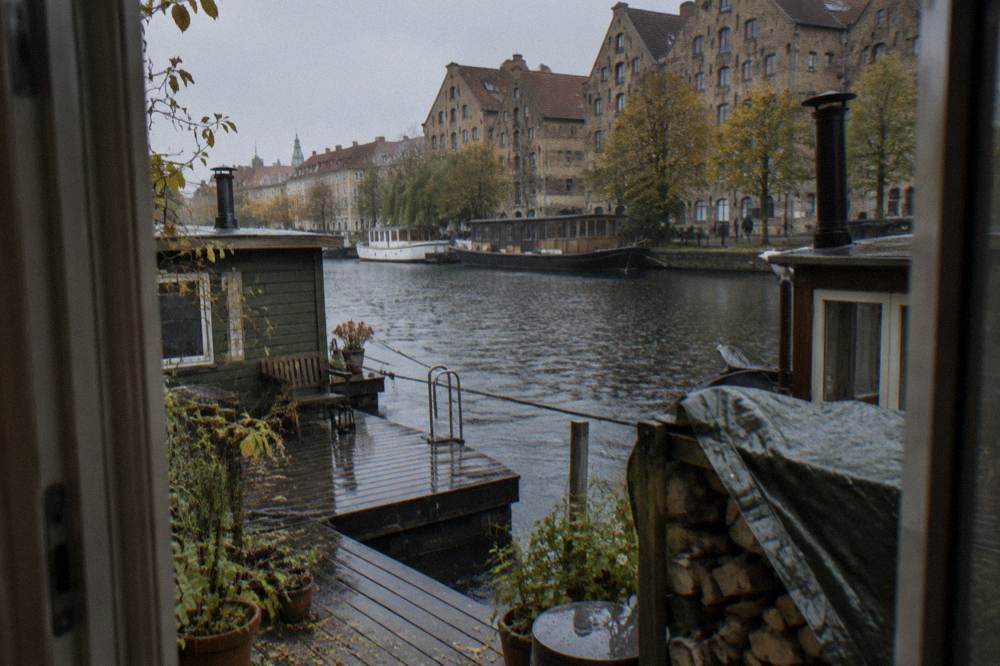
Freetown Christiania occupies the old military barracks on the eastern side of the island. Walking in is free, and the public streets, the lake, and the colourful handmade houses of the built-up areas are open to visitors who follow the local rules. The main rule that matters is photography: no photos on and around Pusher Street, and respect for the signs elsewhere. The Christianshavn free things guide covers the district stop by stop, and the Politically Incorrect Hippies Walk, rated 4.74 out of 5 across 393 GuruWalk reviews, covers it with a guide in ninety minutes for those who want the history told rather than read.
What About Vesterbro And The Carlsberg District?
Vesterbro starts at the central station and runs west along Istedgade, the old red-light street that is now the city's most layered walk. The free stops are Istedgade itself, the Meatpacking District, the Carlsberg Byen streets, and, on the extension north, Assistens Cemetery. The Visit Carlsberg brewery experience inside Carlsberg Byen is paid, but walking the district costs nothing.
Istedgade was for decades the street Copenhagen did not put on postcards. It sits behind the central station, and its history as the city's red-light district has left a street of dive bars, kebab shops, vintage stores and some of the best cheap eating in the city. The transformation is real but incomplete, which is exactly what makes it worth walking rather than skipping. A free walk covers this ground: Working-Class Vesterbro, Red-Light Past.
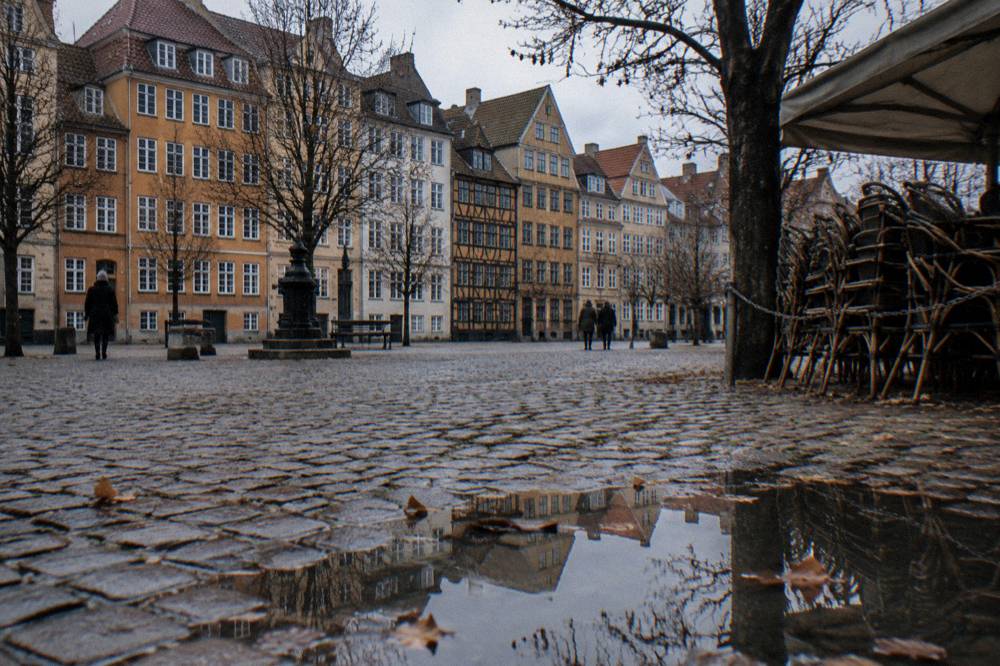
The Meatpacking District, a few blocks south, is the old slaughterhouse complex, now restaurants and galleries in low industrial buildings. It is free to walk and photograph. Further west, Carlsberg Byen, the old brewery site, has been converted into a neighbourhood of the original brewery architecture, gates and courtyards. Walking the district is free, and the buildings carry the company's elephant statues and painted lettering. The Visit Carlsberg brewery experience inside is a ticketed attraction, and its exact current price is not something we publish without confirming it live, so check the operator's own page if you want the full tour.
The Working-Class Vesterbro walk, rated 4.81 out of 5 across 27 GuruWalk reviews, is the guided version of this stretch, ninety minutes from the central station through the industrial era and the former red-light district. Its review pool is small, twenty-seven reviews, so treat the rating as a promising early signal rather than a settled verdict. The review count is printed here precisely so you can judge it yourself.
Assistens Cemetery, the final free stop on the Vesterbro extension, is a ten-minute walk north into Nørrebro. It is the burial place of Hans Christian Andersen and Søren Kierkegaard, and it functions as a public park, with locals sunbathing and reading between the graves. Entry is free. The Nørrebro free things guide picks up the neighbourhood from there, including Superkilen, the free linear park a few streets east.
Which Museums On The Route Are Free, And When?
Two central museums run free days. The Ny Carlsberg Glyptotek, normally around DKK 150, is free on the last Wednesday of every month, and its own site states this plainly for the whole museum. Thorvaldsens Museum, normally around DKK 110, has a free Wednesday arrangement, but the exact recurrence is disputed between sources, so confirm directly with the museum before planning around it.
The Glyptotek's rule is unusually generous and unusually specific. It is the last Wednesday of the month, not a fixed weekday pattern imported from other cities, and the free entry covers the entire museum, the French Impressionist wing, the Egyptian galleries and the winter garden under its glass dome. The museum's own wording, in Danish, is unambiguous on this, and the Glyptotek's official site carries the current details.
Thorvaldsens Museum, the neoclassical temple on the Christiansborg side of the centre, is murkier. Sources disagree on whether its free Wednesday is weekly or monthly after a reported city council funding change, so the honest position is: there is a free Wednesday arrangement, and you should verify the recurrence on the museum's own page before you plan a day around it. The building alone, with its frescoed entrance hall, is worth the walk even when the ticket desk is open. Everything else covered here is indexed on Free Things To Do In Copenhagen.
Beyond those two, the free entries on the route are the churches and the streets. Vor Frue Kirke, the Church of Our Saviour's interior, Frederik's Church's interior, and Grundtvig's Church in the northwest all cost nothing to enter. The David Collection, a small museum of Danish Golden Age painting and Islamic art in a Frederiksstaden townhouse, is free unconditionally, and it is one of the best free interiors in the city. The paid institutions, the National Museum, SMK, Rosenborg Castle, Christiansborg's state rooms, all charge between DKK 140 and DKK 150 for adults, and none of them should be described as free stops.
| Stop on the route | Free status | Condition to know |
|---|---|---|
| Ny Carlsberg Glyptotek | Conditional | Free the last Wednesday of every month, whole museum |
| Thorvaldsens Museum | Conditional | Free Wednesday arrangement, recurrence disputed, confirm first |
| David Collection | Free | No conditions |
| Vor Frue Kirke (Cathedral) | Free | No conditions |
| Church of Our Saviour | Split | Interior free, spire climb around DKK 70 |
| Frederik's Church (Marmorkirken) | Split | Interior free, dome climb around DKK 50 |
| Round Tower | Paid | DKK 60 adult |
| National Museum | Paid | DKK 150 at door, DKK 135 online |
| SMK, National Gallery | Paid | DKK 140 |
How Long Should Each Neighbourhood Take?
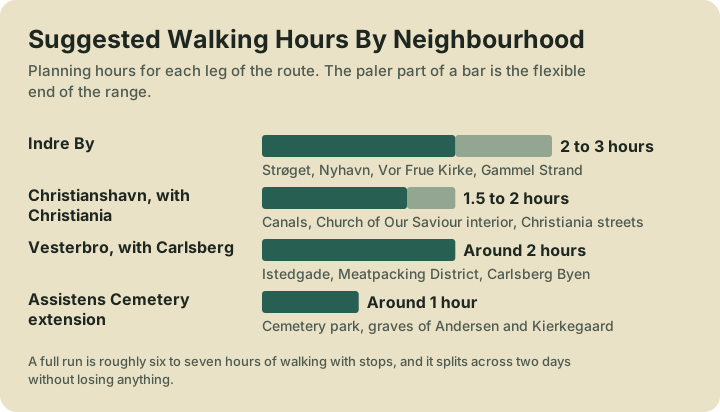
Plan two to three hours for Indre By, one and a half to two hours for Christianshavn including Christiania, and two hours for Vesterbro with the Carlsberg district. That is a full but comfortable day on foot, roughly six to seven hours of walking with stops, and it can be split across two days without losing anything.
The honest answer depends on pace more than distance. Indre By rewards slow walking, because the interest is in the side streets, and a walker who only does Strøget end to end sees the least interesting part of the district. Christianshavn is more compact, but Christiania can absorb an hour on its own if you take the lake path and the quiet streets seriously. Vesterbro is the most spread out of the three, and the Carlsberg district adds real distance to the west.
| Neighbourhood | Suggested hours | Free stops | Best light |
|---|---|---|---|
| Indre By | 2 to 3 | Strøget, Nyhavn, Vor Frue Kirke, Gammel Strand | Morning |
| Christianshavn | 1.5 to 2 | Canals, Church of Our Saviour interior, Christiania streets | Midday |
| Vesterbro | Around 2 | Istedgade, Meatpacking District, Carlsberg Byen | Late afternoon |
| Assistens Cemetery extension | Around 1 | Cemetery park, graves of Andersen and Kierkegaard | Late afternoon |
A two-day split works better than one for most visitors. Day one: Indre By in the morning, the Glyptotek on a last Wednesday if the timing lines up, then Christianshavn in the afternoon light, when the canals photograph best. Day two: Vesterbro and the Carlsberg district, finishing at Assistens Cemetery. The best time to visit guide covers the seasonal angle, and the short version is that Copenhagen's walking season runs long because the city is built for it.
Do You Need Public Transport For This Route?
No, the whole route is walkable, and that is the point of doing it self-guided. If you do want transit for a tired-legs shortcut, a single two-zone ticket is commonly cited at around DKK 24, and a 24-hour city pass runs DKK 100. Neither is needed for the three-neighbourhood loop itself.
The three neighbourhoods connect on foot at every point. Indre By to Christianshavn is a bridge crossing at the harbour. Christianshavn back to the centre is the same bridge in reverse. Vesterbro begins literally across the street from the central station, so the only walking decision is the order. The one stretch where transit genuinely helps is the return from Assistens Cemetery, which is a long walk or a short ride from the centre.
For riders, the fare picture is simple but worth stating carefully. The single two-zone ticket figure of DKK 24 comes from a secondary information site rather than the transit authority's own page, so treat it as a commonly cited figure and check the current fare before buying. The 24-hour City Pass at DKK 100 is documented on the official Danish public transport site, and it covers the zones a visitor is likely to use.
The Copenhagen Card is a separate question, and it is a paid product: DKK 589 for a 24-hour adult pass, DKK 859 for 48 hours, per the card's own price page. Nothing on this walking route is free because of the card, because nothing on this route charges entry in the first place. The card only starts to make sense when the paid museums are stacked into the same days, and the Copenhagen Card assessment runs that math properly.
How Does A Self-Guided Route Compare With A Free Guided Walk?
A self-guided walk gives you the pace, the detours and the free schedule; a pay-what-you-want guided walk gives you the stories, the context and a local to ask. They are not rivals. Many visitors take one guided walk on day one to get oriented, then reuse the same ground self-guided on day two with the stops a group tour skips.
The economics are identical, which is the interesting part. Both cost nothing up front. The guided walks on this site's roster, 21 of them across GuruWalk and freetour.com, run on tips, and the tipping norms are covered in the tipping and money basics guide. A self-guided day costs the transit you choose not to use and the coffee you choose to buy.
| Guided walk on this route's ground | Platform | Rating and reviews | Duration | Language |
|---|---|---|---|---|
| Grand Tour, English and Spanish | GuruWalk | 4.82 out of 5, 2,538 reviews | 2 hours 30 minutes | English, Spanish |
| Historic Center Walk, Map Included | GuruWalk | 4.84 out of 5, 1,421 reviews | 2 hours | English, Spanish, Italian |
| Comedy Walk in English | GuruWalk | 4.82 out of 5, 1,863 reviews | 2 hours | English |
| 3-Hour Hygge Experience | GuruWalk | 4.66 out of 5, 2,132 reviews | 3 hours | English, Spanish, Italian |
| Politically Incorrect Hippies Walk | GuruWalk | 4.74 out of 5, 393 reviews | 1 hour 30 minutes | English |
| Working-Class Vesterbro | GuruWalk | 4.81 out of 5, 27 reviews | 1 hour 30 minutes | English |
The choice really comes down to what kind of walker you are. If you like stopping for twenty minutes in one square to read a plaque, go self-guided. If you like asking a resident where the good bakery is, take a walk. The free walking tours overview compares the main options, and the how it works guide explains the pay-what-you-want mechanics end to end.
For the hygge angle specifically, the 3-Hour Hygge Experience, rated 4.66 out of 5 across 2,132 GuruWalk reviews, is the longest of the featured English walks and the one that leans hardest into Danish daily life rather than royal history. It meets at City Hall, runs three hours, and covers the concept of hygge as a lived practice, which is context a self-guided walker will not pick up from street signs alone.
What Should You Skip Or Save For Another Day?
Skip the Little Mermaid if your day is short, she is a fifteen-minute walk off the route and takes minutes to see. Save Rosenborg Castle, Tivoli Gardens and the Christiansborg state rooms for a paid-attractions day, since all three charge entry and none belongs on a free walking route. The harbour baths and Amager Strandpark are free but sit outside the loop, so pair them with a summer day.
Tivoli Gardens is the classic case. Entry starts at DKK 180, and while the gardens are lovely, a free walking day that ends at a ticket gate has gone off plan. The Tivoli free-entry question is answered fully elsewhere, but the short version for route planning is: look at it from City Hall Square side or through the Vesterbrogade fence, and go in on a day you have budgeted for it.
Rosenborg Castle and the Christiansborg state rooms are the same story. Both interiors are paid, DKK 140 online for Rosenborg and DKK 150 at the door for the state rooms, and both are worth their price, just not on this route. The Christiansborg Tower viewing platform, by contrast, is free, and it is the one royal building in the city you can enter for nothing.
The harbour baths at Islands Brygge and the beach at Amager Strandpark are free and excellent, but they are south and east of the loop respectively, and both are swimming stops rather than walking stops. The free beaches and harbour baths guide covers them, and summer walkers who want a swim should treat the harbour bath as the fourth neighbourhood of the day.
What Is The Best Order For The Route In One Day?
Walk Indre By first in the morning when Strøget is quietest, cross to Christianshavn around midday when the canals are in full light, and finish in Vesterbro in the late afternoon, when Istedgade's bars and bakery windows are at their best. The order is west to east to west, and it puts the longest stretch, Vesterbro, at the end when tired legs get the flattest ground.
Morning in Indre By is a real advantage, not a platitude. Strøget fills with shoppers by early afternoon, and the side streets that make the district worth walking are easiest to photograph before eleven. The churches open in the morning too, and Vor Frue Kirke's interior is best seen in daylight.
Midday in Christianshavn lines up with the sun on the main canal, and the Christiania streets are busy enough by early afternoon that the photo rules are clearly signposted and easy to follow. The Church of Our Saviour's interior is free whenever it is open.
Late afternoon in Vesterbro is the natural finish because the district is at its most itself at that hour, and because the central station is right there for the ride back to wherever you are staying. The comedy walk option, for walkers who want the day to end laughing rather than limping, is the Comedy Walk in English, rated 4.82 out of 5 across 1,863 GuruWalk reviews, meeting at Gammel Strand for two hours of the city's history delivered as a stand-up set. It is a GuruWalk listing, pay what you want at the end, and it doubles as an evening's entertainment.
If a single guided walk has to stand in for the whole first day, the Grand Tour remains the strongest all-round pick: 4.82 out of 5 across 2,538 GuruWalk reviews is a large, consistent pool, the route is the medieval core this guide starts with, and the English and Spanish departures cover most visitors. For walkers who want the same ground with a recommendations map to take away, the Historic Center Walk is the alternative, and the Nordic Freedom Tours City Walk, rated 4.46 out of 5 across just 24 GuruWalk reviews, is the budget-format option with a small review pool worth knowing about before you commit.
Common Questions About A Self-Guided Walking Tour Of Copenhagen
Is Copenhagen walkable enough for a self-guided tour?
Yes. The medieval core, Christianshavn and Vesterbro connect on foot, the harbour crossings are bridges rather than ferries, and the whole three-neighbourhood loop can be done in a day without a transit ticket.
How long does a self-guided walking tour of Copenhagen take?
Plan six to seven hours of walking with stops for the full three-neighbourhood route: two to three hours in Indre By, one and a half to two in Christianshavn, and around two in Vesterbro. Splitting it across two days loses nothing and tires you out less.
What is free on the route, and what is paid?
The streets, squares, canals, harbour fronts, the David Collection and the main churches are free. The Glyptotek is free the last Wednesday of the month, and Thorvaldsens Museum has a free Wednesday arrangement whose recurrence you should confirm with the museum. The Round Tower, the castle interiors, the state rooms and Tivoli Gardens are paid.
Can you walk through Freetown Christiania on a self-guided route?
Yes, walking in is free. Follow the posted photo rules, which are strictest on and around Pusher Street, and read the local signage as you go. A guided walk of the district is also available if you want the history explained.
Do you need a paid tour or guide for this route?
No, but many walkers take one pay-what-you-want walk on their first day for orientation and stories, then walk the same ground self-guided afterwards. The guided options on this route's ground run on tips, so the up-front cost is the same either way.
What is the best time of day to walk each neighbourhood?
Indre By in the morning before Strøget fills, Christianshavn around midday when the canals are in full sun, and Vesterbro in the late afternoon when Istedgade is at its most alive. The order is flexible, but the light is not.