What Is A Typical Danish Lunch, And Is Any Of It Free To Sample?
A practical guide to the typical Danish lunch, from smørrebrød to rye bread and lunch-pack culture, plus an honest answer on where free samples exist in Copenhagen and which free walking tours pair well with a midday meal.
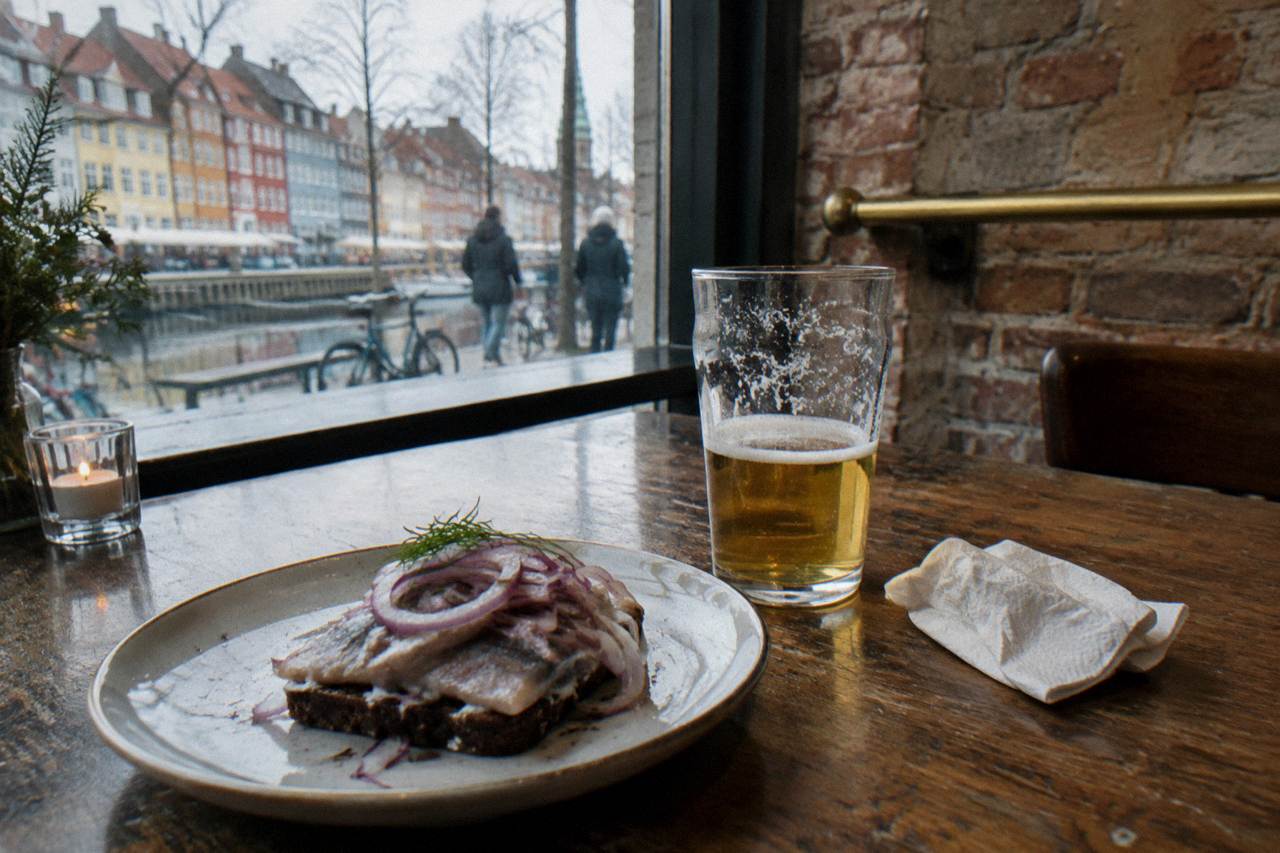
Copenhagen eats lunch the way most cities eat dinner: slowly, socially and with real conviction. The midday meal in Denmark is not an afterthought grabbed between meetings, it is a cultural institution built on dense rye bread, pickled herring, remoulade and cold beer, and visitors who plan for it tend to leave with a far better impression of Danish food than those who only ever buy a hot dog from a pølsevogn. The honest answer on the free part is that genuine free food samples are scarce, but the surroundings, the walks and several of the city's best lunch-adjacent experiences cost nothing at all.
What Is A Typical Danish Lunch, And Is Any Of It Free To Sample?
A typical Danish lunch centres on smørrebrød, single slices of dark rye bread topped with herring, cold cuts, egg, fried fish or cheese, eaten with a fork and knife and often followed by a small beer. Around it sits the madpakke, the packed lunch most Danes still eat at work or school. Free samples are genuinely rare in Copenhagen, but free walking tours, free museum days and free harbourside picnic space keep a full Danish lunch day cheap.
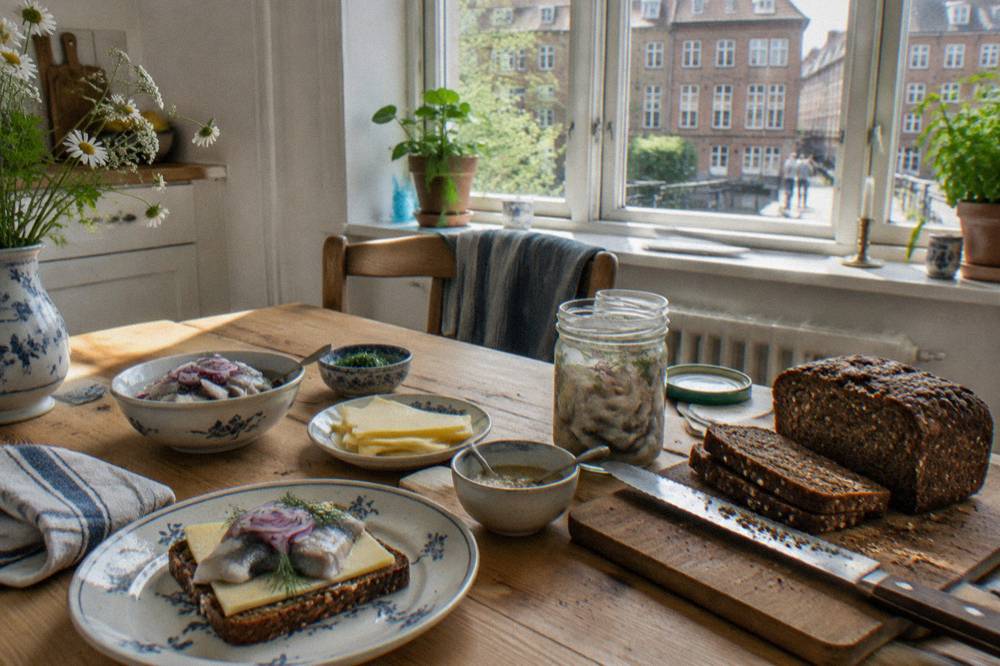
The single most important thing to understand about Danish lunch is the bread. Rugbrød, the dark, dense, sourdough-fermented rye bread that anchors nearly every Danish lunch table, is a national institution in its own right. It is heavy, slightly sour, seeded and sliced thin, and it exists to be topped rather than sandwiched. Danes distinguish sharply between the everyday madpakke version, a modest slice with cheese or leverpostej, a soft pork liver pâté, and the festive version, where the table fills with herring in curry dressing, smoked salmon, fried plaice, roast pork with crackling and pickled red cabbage.
The second thing to understand is the ritual. Smørrebrød is eaten in a loose order that most Danes absorb without ever being taught it: herring first, then other fish, then meat, then cheese. Each slice is composed, eaten with cutlery rather than hands, and treated as a course in itself. A table of shared toppings and a stack of rye slices is how families mark birthdays, confirmations and Friday afternoons. This is also why a sit-down smørrebrød lunch in a Copenhagen restaurant can feel expensive: you are paying for composition and tradition, not just bread.
That question of cost is exactly where the free part comes in, and the honest answer is more nuanced than most visitors hope. Copenhagen is not a city of costermonger-style free tastings. Cheese shops and bakery counters will occasionally offer a nibble, but nothing in the city's verified free-attraction record involves food handouts. What is free is everything around the meal: the harbourside benches at Nyhavn, the picnic lawns of Kongens Have, the free walking tours that end a short walk from the best lunch streets, and the museums that open their doors free on set days. A smart plan pairs those free experiences with one paid, worthwhile plate of smørrebrød, and the day starts to feel generous without feeling expensive.
One of the best pairings is a free walking tour through the medieval core, which finishes near the lunch streets of Indre By. Here are three of the strongest English-capable walks on the roster for exactly that plan.
All three of those walks run on the pay-what-you-want model, where you tip the guide at the end according to what the walk was worth to you, and all three are listed on GuruWalk. The tipping conventions are worth reading before you go, and our guide to how much to tip a free walking tour guide covers the local expectations in detail.
Smørrebrød: The Open Sandwich That Defines Danish Lunch
Smørrebrød is the classic Danish lunch dish: a single slice of dark rye bread, buttered and topped with anything from pickled herring to roast beef to fried plaice, then eaten with a fork and knife. It grew out of the packed-lunch tradition and evolved into a restaurant art form in Copenhagen. The toppings follow a traditional order of herring, then fish, then meat, then cheese, and it is the best thing to order on a first visit.
The word itself is disarmingly literal: smør means butter and brød means bread, so a smørrebrød begins life as nothing more than buttered bread. What turned buttered bread into a national dish was the topping culture that grew on top of it, and Copenhagen restaurants have long competed on the elaborateness of their open sandwiches. The old hotel and restaurant tradition lives on in the classic lunch rooms of Indre By, where a composed plate of three or four slices is still a full meal, while the everyday version survives in every Danish kitchen and lunch box in the country.
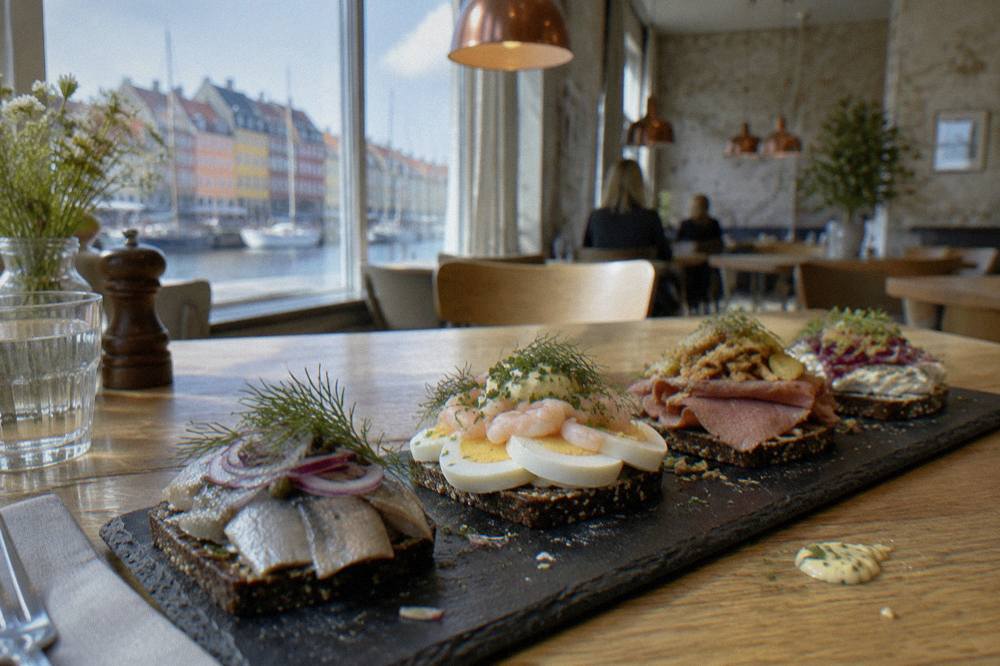
The toppings are where the character lives. Herring is the anchor of the tradition, served pickled, curried or fried, and Danes will argue happily about which preparation belongs first at the table. Fried plaice with remoulade and a squeeze of lemon is the great summer version. Roast pork with crackling, red cabbage and prunes is the festive winter one. Leverpostej with bacon and mushroom is the everyday comfort option, and egg and shrimp is the crowd-pleaser that appears on nearly every menu. The table below is a starting map, not a rulebook.
| Topping | What it is | When it appears |
|---|---|---|
| Pickled or curried herring | Marinated herring with onion, curry dressing or sour cream | First course, the traditional opener |
| Fried plaice | Crispy flatfish fillets with remoulade and lemon | The classic summer choice |
| Roast pork with crackling | Flæskesteg with red cabbage and prunes | Winter and festive lunches |
| Leverpostej | Warm pork liver pâté with bacon and mushroom | Everyday, the madpakke staple |
| Egg and shrimp | Hard-boiled egg halves with mayonnaise and coldwater shrimp | A safe, mild option for first-timers |
| Smoked salmon | With dill, mustard or horseradish | Lighter modern menus |
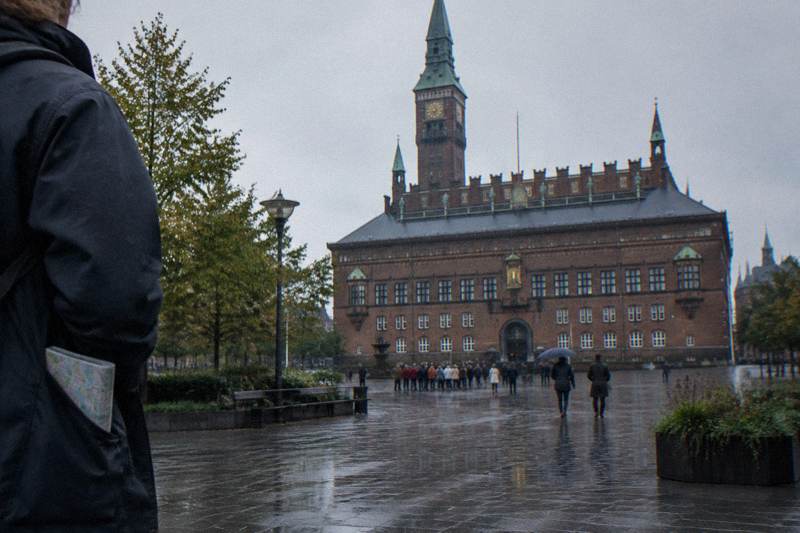
A few practical notes make the first smørrebrød lunch go smoothly. Order two to three slices for a full meal, and expect to eat them in the traditional sequence rather than all at once. A small beer, often a pale lager, or a snaps, the caraway-flavoured aquavit, is the traditional accompaniment at a festive table, though nobody will look twice at a glass of water. And if you want to understand the culture rather than just taste it, a guided walk through the historic centre before lunch gives you the stories behind the guild halls and market squares where the lunch tradition grew up. The Historic Center Walk, Map Included, rated 4.84 out of 5 across 1,421 GuruWalk reviews and running 2 hours from City Hall, hands you a recommendations map at the end, which is a genuinely useful thing to be holding when you are hungry.
Where To Eat A Danish Lunch In Copenhagen Without Overspending
The best-value Danish lunches cluster in three areas: Indre By, the medieval centre, which has the classic lunch rooms; the harbourside around Nyhavn and Christianshavn, where picnic spots are free and the fish tradition is strongest; and Vesterbro, the old workers' district turned foodie quarter. None of these places hands out free samples as a matter of course, so the saving comes from choosing one good plate and pairing it with the free surroundings.
Start in Indre By, the district around Strøget and the cathedral, where the old lunch restaurants are concentrated. This is where smørrebrød is treated as a composed restaurant dish, and where a midday table on a weekday feels most authentically Danish. The trade-off is price: a composed plate in the classic rooms is the expensive end of the lunch spectrum, so many visitors treat it as the one big meal of the day and eat lightly in the evening. Our Indre By free walking guide maps the district's no-cost sights so you can build the walk around the meal.
The harbourside is the free half of the equation. Nyhavn itself costs nothing to walk, the benches along the coloured townhouses are public, and a bakery-bought sandwich eaten on the quayside is the cheapest genuinely Danish lunch in the city. Further east, Christianshavn and the free walking access through the canals and Freetown Christiania add a longer, stranger stroll before or after you eat. Our Christianshavn free things to do guide covers the district's no-cost corners, including the photo rules that apply inside Christiania itself.
Vesterbro is the third option, and the most interesting one for anyone curious about the everyday Danish lunch rather than the ceremonial version. This was the workers' district where the madpakke culture was lived rather than romanticised, and its bakeries, butcher counters and casual dining rooms still reflect that. The Working-Class Vesterbro, Red-Light Past walk on GuruWalk, rated 4.81 out of 5 across 27 GuruWalk reviews and running 1 hour and 30 minutes from the central station, tells the district's industrial and red-light history in English, a small review pool but a distinctive angle no other walk covers. Our Vesterbro free things to do guide rounds out the free side of the neighbourhood.
The Grand Tour, English and Spanish, is the natural anchor for the Indre By half of this plan. It runs 2 hours and 30 minutes from Copenhagen City Hall on Rådhuspladsen, is rated 4.82 out of 5 across 2,538 GuruWalk reviews on GuruWalk, and covers the medieval core that surrounds the classic lunch rooms, so you step off the walk with your bearings and your appetite in the same place.
If you would rather have the lunch culture explained while you walk, the Comedy Walk in English takes a lighter route through the same city. It runs 2 hours from Gammel Strand 26, is rated 4.82 out of 5 across 1,863 GuruWalk reviews on GuruWalk, and its English-only format suits visitors who want jokes and history in equal measure before they sit down to eat.
One pairing that deserves a special mention is the museum day. The Ny Carlsberg Glyptotek, the art museum built on the Carlsberg brewing fortune, charges on most days, roughly DKK 150, but opens its whole collection free on the last Wednesday of every month, a schedule confirmed on the museum's own site. Its palm-filled winter garden is one of the most pleasant places in the city to sit and digest, and the last-Wednesday rule means a free museum morning and a paid smørrebrød lunch is a near-perfect Wednesday in Copenhagen.
Can You Actually Get Free Food Samples In Copenhagen?
Honestly, not many. Copenhagen has no verified tradition of free food tastings, and nothing in the city's checked free-attraction record involves complimentary food. The realistic free wins are the surrounding experiences: free walking tours, free museum days, free harbourside picnic space and free historic districts, which together let you spend your budget on one proper Danish lunch instead of scattering it. Bakery and market counters occasionally offer a taste, but no visitor should plan a day around it.
This is worth stating plainly because the internet is full of vague claims on the subject. The verified research behind this site recorded 42 Copenhagen attractions and experiences, and the free ones are walks, views, parks, harbours, churches and museums on their free days, not food. Supermarkets sometimes run sample stands, bakeries sometimes let you taste a slice, and Christmas markets in December sometimes hand out samples, but none of that is a dependable Copenhagen institution the way the free walking tour scene is. Everything else covered here is indexed on Free Things To Do In Copenhagen.
What you can do for free, reliably, is everything that makes the lunch taste better. The table below lists the verified no-cost experiences that pair most naturally with a midday meal.
| Free experience | What it is | How it pairs with lunch |
|---|---|---|
| Nyhavn | The iconic coloured harbourside, free to walk and sit | Quayside picnic spot for a bakery lunch |
| Kongens Have | The King's Garden around Rosenborg Castle | Lawns for a madpakke-style picnic |
| Strøget and Rådhuspladsen | The pedestrian street and City Hall square | The walk to and from the lunch rooms of Indre By |
| Copenhagen harbour baths | Free public swimming at Islands Brygge and other spots | A pre-lunch dip in summer |
| Freetown Christiania | Free to walk in, photo rules apply | A post-lunch wander from Christianshavn |
| Ny Carlsberg Glyptotek on the last Wednesday | Free entry to the whole museum once a month | A cultural morning before a paid lunch plate |
The one paid item visitors often mistake for a freebie is the Copenhagen Card. It is a paid product, DKK 589 for a 24-hour adult pass and DKK 859 for a 48-hour one, and while it covers many paid attractions, nothing on this page is free because of it. Our Is The Copenhagen Card Worth It For A Free Trip guide works through the maths, and the current prices are listed at the card's official pricing page. The short version: if your day is built around free walking tours, free parks and one paid lunch, the card is probably not for you.
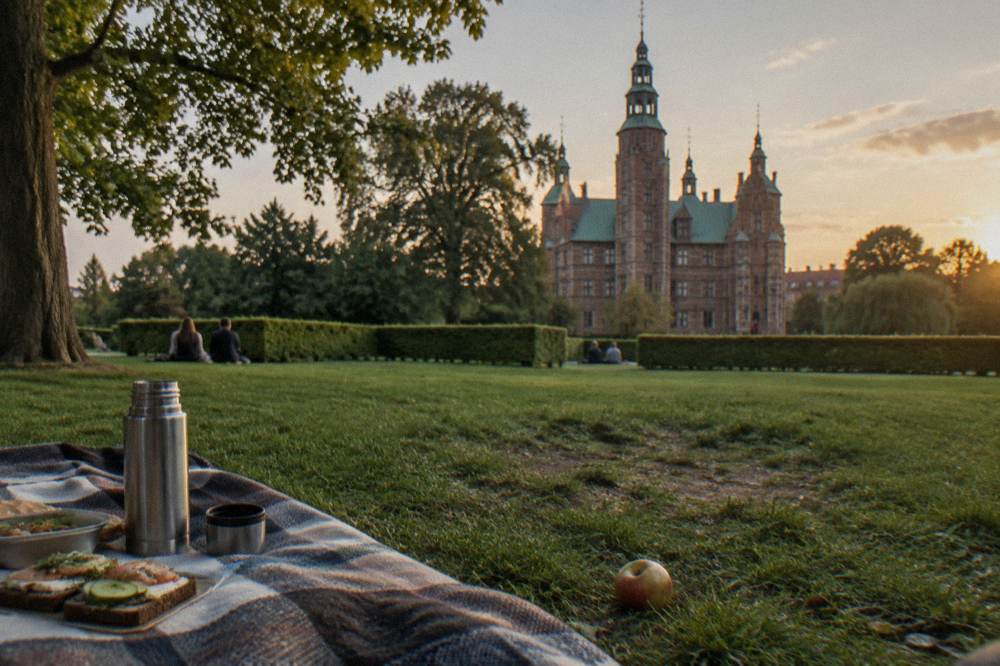
Danish Lunch Culture: Hygge, Rye Bread And The Early Dinner
Danish lunch culture is shaped by two things: the madpakke, the packed lunch of rye bread and simple toppings that most Danes still eat on workdays, and the early evening meal, eaten around six, which keeps lunch as the day's social food moment. Hygge, the Danish art of everyday cosiness, applies to lunch too, in the form of shared toppings, candles at festive tables and unhurried eating. That explains why restaurants serve smørrebrød properly only at midday.
The madpakke is the quiet backbone of Danish food culture. Ask a cross-section of Danes what they had for lunch and a large share will describe rye bread from home, packed in the morning and eaten at a desk or in a staff canteen. This is not a poverty habit but a preference: rugbrød keeps well, carries nearly any topping, and tastes of home in a way that a shop sandwich does not. The consequence for visitors is that the restaurant smørrebrød tradition is concentrated at midday precisely because that is when Danes consider lunch to happen, and many classic lunch rooms serve their full topping menu only until mid-afternoon.
Hygge enters at the festive table. When smørrebrød becomes a celebration, the toppings multiply, the snaps gets poured, the candles come out in winter, and the meal stretches comfortably past two hours. The word hygge resists exact translation but the lunch version of it is easy to recognise: warm food, good company, no rush. For visitors who want the concept explained rather than just eaten, the Hygge Tour in Copenhagen on GuruWalk, rated 4.66 out of 5 across 2,132 GuruWalk reviews and running a full 3 hours from City Hall in English, Spanish or Italian, is built around exactly this theme, which makes it an unusually good match for a food-focused day.
A word on drinks, since they are part of the tradition. The classic festive smørrebrød table includes a pale lager and a snaps, and the snaps comes with its own micro-rituals: it is drunk in one go, often accompanied by a sung toast at longer lunches. None of this is compulsory, and a visitor ordering water at a lunch table is entirely normal. The food is the point; the ceremony is optional.
Free Walking Tours That Pair Well With Lunch
The best lunch-day walks are the ones that finish near food. The Grand Tour, English and Spanish ends in the medieval core beside the classic lunch rooms; the Historic Center Walk, Map Included hands you a recommendations map at the finish; and the Comedy Walk in English runs from Gammel Strand, a street with lunch options on it. All are pay-what-you-want and listed on GuruWalk, so the walk costs only the tip you choose to give.
Matching a walk to a meal is mostly geography. A walk that ends at Rådhuspladsen or in the Strøget area puts you a few minutes on foot from the Indre By lunch rooms. A walk that starts at Gammel Strand starts you on a street with canal views and dining already in sight. A Christianshavn walk ends near the harbourside where a picnic is the natural next move. The table below matches the featured English-capable walks to the lunch plan that suits each one.
| Walk | Platform and rating | Duration | Best lunch pairing |
|---|---|---|---|
| Grand Tour, English and Spanish | GuruWalk, 4.82 out of 5 across 2,538 reviews | 2 hours and 30 minutes | Classic lunch rooms of Indre By, a short walk from the finish |
| Historic Center Walk, Map Included | GuruWalk, 4.84 out of 5 across 1,421 reviews | 2 hours | Use the included recommendations map to pick a spot |
| Comedy Walk in English | GuruWalk, 4.82 out of 5 across 1,863 reviews | 2 hours | Gammel Strand and the canal-side options at the meeting point |
| 3-Hour Hygge Experience | GuruWalk, 4.66 out of 5 across 2,132 reviews | 3 hours | A long, cosy lunch that continues the theme |
| Working-Class Vesterbro, Red-Light Past | GuruWalk, 4.81 out of 5 across 27 reviews | 1 hour and 30 minutes | Vesterbro bakeries and casual counters near the central station |
The Spanish-language options deserve a mention because the lunch connection works just as well. Spanish Essentials by Pedro, rated 4.97 out of 5 across 2,882 GuruWalk reviews, is the single most-reviewed walk on the entire roster, and it runs 2 hours and 30 minutes through the same centre, so Spanish-speaking visitors get the same walk-then-eat day. There is also a Spanish-language bakery walk among the non-featured listings, Bakery Walk, Cinnamon and Cardamom, which has no reviews yet and runs 2 hours, a reminder that the food-tour end of the roster is newer than the historic walks. Our free walking tours in Copenhagen overview lists the full pooled roster of 21 walks across both platforms, with language and meeting-point details for each.
Planning the day around the tip is the last piece. Free tours in Copenhagen work on pay-what-you-want, the guide is paid from tips alone, and the going rates are higher than many visitors expect. Decide your tip before the walk starts rather than after, when the moment can feel awkward, and treat the walk plus a single good lunch plate as the two worthwhile spends of the day. Everything else on this page, the harbourside, the parks, the squares, the free museum Wednesday, costs nothing.
If you are still choosing a walk for a lunch-focused day, these three are the strongest all-round options on the roster.
Common Questions About A Typical Danish Lunch In Copenhagen
What Is A Typical Danish Lunch, And Is Any Of It Free To Sample?
A typical Danish lunch is smørrebrød, open-faced sandwiches on dark rye bread topped with herring, fish, cold cuts or cheese, often with a beer or snaps at festive tables, and on workdays the simpler packed-lunch version called a madpakke. Free samples of it are rare in Copenhagen, and nothing in the city's verified free-attraction record involves complimentary food, so plan on paying for the plate and getting the surrounding experiences free: walking tours, harbourside picnic space and museum free days.
What is smørrebrød exactly?
Smørrebrød is a single slice of buttered rye bread, rugbrød, topped with anything from pickled herring to fried plaice to roast pork with crackling, and eaten with a fork and knife rather than by hand. The name literally means butter and bread. It started as a worker's packed lunch and became a composed restaurant dish in Copenhagen's classic lunch rooms.
How many smørrebrød should I order for a full lunch?
Two to three slices is a standard full meal for one adult, eaten in the traditional order of herring first, then other fish, then meat, then cheese. A single slice works as a snack, and festive tables work by sharing toppings and building slices as you go.
Are there any free food samples in Copenhagen?
Not reliably. Bakeries and market counters occasionally offer a taste, and December Christmas markets sometimes have sample stands, but none of this is a dependable institution. The dependable free things in Copenhagen are the walking tours, the parks and harbourside, the historic districts and the museums on their free days, such as the Ny Carlsberg Glyptotek's free last-Wednesday entry to the whole museum.
When do Copenhagen restaurants serve smørrebrød?
At midday. The classic lunch rooms serve their full topping menu around lunch hours and wind down in mid-afternoon, because Danish lunch culture treats midday as the meal's proper time and the evening meal, eaten early, is a separate thing. Arriving between noon and two gives you the fullest choice.
Can I do a free walking tour and a proper Danish lunch on the same day?
Yes, and it is the best-value plan in the city. Walks like the Grand Tour, English and Spanish, rated 4.82 out of 5 across 2,538 GuruWalk reviews and running 2 hours and 30 minutes from City Hall, finish in the medieval core beside the classic lunch rooms, so the tip and one lunch plate are the day's only necessary spends.