Is The Metro Free In Copenhagen?
No, the Copenhagen Metro is not free. Here is what tickets actually cost, when the Copenhagen Card makes sense, and the free walking alternatives that cover the same ground.
Is The Metro Free In Copenhagen?
No, the Copenhagen Metro is not free. It is a ticketed transit system, and riding it without a valid ticket risks a fine. A single 2-zone ticket is commonly cited at around DKK 24, though that figure comes from a secondary source rather than the transit authority's own page, and a 24-hour City Pass costs DKK 100. Nothing about the metro is complimentary, and no attraction in the city includes metro travel.
That surprises some visitors because Copenhagen has a strong reputation for free things: the changing of the guard at Amalienborg costs nothing to watch, the Christiansborg Palace Tower viewing platform is free, and the David Collection charges no admission at all. Public transport sits firmly outside that list. The metro, the buses and the S-trains all belong to the same fare system, divided into zones, and every journey inside it needs a ticket or a pass.
The zone system is simpler than it looks at first. The whole central city, including Indre By, Christianshavn and Vesterbro, sits within zones 1 and 2, so a 2-zone ticket covers almost everything a short-stay visitor wants to do. The complication is not the zones but the price of getting it wrong: inspectors do check, and a penalty fare costs far more than any ticket. Buying before you board, through a ticket machine or a phone app, is the normal routine.
The honest framing matters here. Some travel content loosely calls Copenhagen "a free city" because so many of its best sights cost nothing, and readers sometimes carry that impression onto a metro platform. The distinction is worth stating plainly: the attractions are often free, the transport never is. A day built around free museums, free parks and free harbour views still needs a transit budget, unless you plan it around walking, which in central Copenhagen is genuinely easy.

That is also where this site's own roster of pay-what-you-want walks comes in. There are 21 pooled walks across the site, on both GuruWalk and freetour.com, and every one of them runs on tips rather than a fixed price. If the metro is the one thing you cannot get for free, a free walking tour is the natural counterweight: it costs what you decide to tip, and it replaces the metro ride with the walk itself. Here are three of the strongest options for a first visit.
What A Metro Ticket Actually Costs?
A single 2-zone ticket, the one that covers the entire city centre, is commonly cited at around DKK 24, though that figure traces to a secondary information site rather than the official DOT pages, so treat it as approximate. The firmer numbers are the passes: a 24-hour City Pass costs DKK 100, and the Copenhagen Card, which bundles transport with attractions, runs DKK 589 for 24 hours and DKK 859 for 48 hours.
The single ticket is the right choice for one-off journeys: a ride from Kongens Nytorv to the airport boundary, or a hop from Nørreport down to Christianshavn. It is worth being careful with the exact fare, because the commonly cited DKK 24 figure comes from copenhagenmetro.org, a secondary information site, rather than from the DOT's own fare page. Check the current price at a station machine or in the official app before budgeting around it.
The City Pass is the pass most short-stay visitors should compare against singles. At DKK 100 for 24 hours, it pays for itself once you make roughly four or more central journeys in a day, which is easy to do if you are pairing morning sights with evening neighbourhoods. The pass covers the metro, buses and S-trains within the zones it includes, and it removes the worry about penalty fares entirely for its validity window.
| Ticket option | What it covers | Price | Best for |
|---|---|---|---|
| Single 2-zone ticket | One journey in the central zones | Commonly cited at around DKK 24 | One or two rides a day |
| 24-hour City Pass | Unlimited metro, bus and S-train travel for a day | DKK 100 | A packed sightseeing day |
| Copenhagen Card, 24 hours | Transport plus attraction entry | DKK 589 | Heavy museum days |
| Copenhagen Card, 48 hours | Transport plus attraction entry | DKK 859 | Two full paid-sight days |
The Copenhagen Card deserves its own honest math, and this site has a full guide on that question: is the Copenhagen Card worth it on a free trip. The short version is that the card only pays off if you are visiting several paid attractions. If your Copenhagen plan is built around free sights, and this site exists to help you build exactly that kind of plan, the card's DKK 589 price buys transport you could have bought for DKK 100 and museum entry you were not going to use.
There is a neat illustration of the walking-first logic right at the metro's own doorstep. The Grand Tour, English and Spanish, rated 4.82 out of 5 across 2,538 GuruWalk reviews, meets at Københavns Rådhus on Rådhuspladsen, which is precisely the square where many visitors surface from a metro station. Instead of descending again, the tour spends 2 hours and 30 minutes walking the centre, covering Strøget, the historic core and the harbour-side sights that a metro ride would simply pass beneath. For a first day in the city, it is the single best argument that the metro is optional rather than essential.
For anyone weighing that first walk against a day of metro rides, the practical comparison is straightforward. Two single tickets and a pair of walking shoes cover a central day for roughly DKK 48, while the same day done entirely above ground with a guided walk costs the tip alone. The Grand Tour also runs in Spanish as well as English, so the choice is not language-dependent, and its meeting point doubles as a transit hub for anyone arriving from further out. If the plan for day one is the historic centre, the walk and the ticket machine are solving the same problem, and only one of them comes with a guide.
Does The Copenhagen Card Include The Metro?
Yes, the Copenhagen Card includes unlimited travel on the metro, buses and S-trains within its covered zones, on top of admission to a long list of attractions. But the card itself is paid: DKK 589 for a 24-hour adult card and DKK 859 for a 48-hour card, per the official pricing page. So the metro is never free, it is at best pre-paid, bundled into a card you buy upfront.
The bundling is genuinely useful for one type of visitor: someone doing a museum-heavy itinerary. The card's attraction list includes several of the city's paid institutions, and if you plan to visit three or four of them in a day or two, the transport component effectively comes free with the museums. The official price list is published at the Copenhagen Card's own pricing page, and it is the one source to check before buying, because the attraction list and terms change.
For a budget visitor the math usually collapses. Consider a day built from this site's own material: the Amalienborg changing of the guard in the morning, the free Christiansborg Tower platform at midday, the Botanical Garden grounds in the afternoon and the harbour baths at Islands Brygge in the evening. That day costs nothing in admissions, so the card would be DKK 589 spent entirely on transport that a DKK 100 City Pass, or two single tickets and a pair of comfortable shoes, would have covered.
| Itinerary type | Transport need | Cheapest option | Card makes sense? |
|---|---|---|---|
| Free-sights day, central | 2-3 short rides or walking | Single tickets or none | No |
| Free-sights day, wide reach | 4+ rides across the city | 24-hour City Pass, DKK 100 | No |
| Three paid museums in a day | Rides plus admissions | Copenhagen Card, DKK 589 | Often yes |
| Two heavy museum days | Rides plus admissions | 48-hour card, DKK 859 | Compare against door prices |
One more nuance matters for honesty's sake. Some attraction marketing describes card-covered transport as "free travel", and that phrasing is misleading in exactly the way this article's question implies. The metro ride included in a Copenhagen Card was paid for when the card was bought. Free, in the sense that the Little Mermaid is free or Nyhavn is free, means no money changes hands at all. The metro never operates on that basis, with or without a card.
Free Ways To Cover The Same Ground?
Walking replaces the metro for most central journeys, and Copenhagen is unusually walkable: Indre By, Christianshavn and Vesterbro sit within roughly half an hour's walk of each other, and the city's free sights cluster tightly along the harbour. A pay-what-you-want walking tour covers the main central sights in a single outing, with the tip as the only cost, and the 24-hour City Pass at DKK 100 handles any stretch that is genuinely too far.
The geography does most of the work. Copenhagen's centre is compact in a way that surprises people who have only seen it on a metro map, where three stops can feel like a distance. On foot, Rådhuspladsen to Nyhavn is a pleasant stroll through Strøget's shopping stretch, Nyhavn to the Little Mermaid follows the harbour edge past some of the best free views in the city, and Christianshavn's canals sit just across the inner harbour bridge. The walks between sights are themselves the attraction.
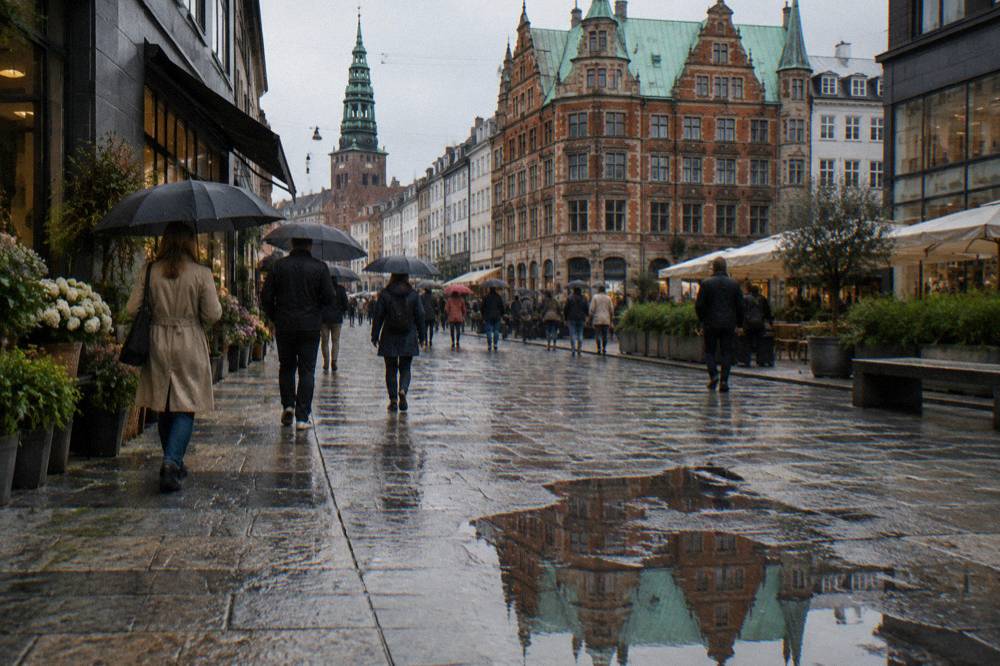
The free-sight density along a walking route is the real argument. The Royal Danish Library's Black Diamond building and foyer cost nothing to enter, Kastellet's ramparts are free to walk, Amalienborg's changing of the guard is free to watch from the square, and the Church of Our Saviour's interior is free even though its famous spire climb is a paid add-on at around DKK 70. A metro ride between any two of these would cost a ticket and skip the sights in between; the walk costs nothing and strings them together. For a fuller breakdown of the city's no-cost sights, see the guide to free museums and free days in Copenhagen.
A guided walk makes the same point with a guide's knowledge attached. The Comedy Walk in English, rated 4.82 out of 5 across 1,863 GuruWalk reviews, meets at Gammel Strand, a street that sits directly above a metro station, and then spends two hours delivering the city's history as comedy on foot. Reviewers describe a walk that covers the central sights with a humour angle rather than a lecture format, and like every walk on this site's roster it is pay-what-you-want: the tip is the only cost, decided at the end. It is a good example of the pattern, a tour that starts where the metro drops you and then makes the metro unnecessary for the rest of the afternoon.
For the stretches that really are too far to walk, the bus and S-train network uses the same tickets as the metro, so the DKK 100 City Pass covers those too. The practical planning guide to Copenhagen public transport basics for visitors covers the zones, the apps and the ticket machines in detail, and the fare information is published officially at dinoffentligetransport.dk. The rule of thumb is simple: walk the centre, ticket the edges.
Neighbourhoods Where You Do Not Need The Metro?
Indre By, Christianshavn and Vesterbro, the three neighbourhoods that hold most of Copenhagen's free sights, are all walkable from the central station area in under 40 minutes, and each is compact enough internally that a metro ride inside it is rarely worth the ticket. A visitor who bases themselves anywhere central can cover all three on foot over two days without buying a single ride beyond an airport transfer.
Indre By is the obvious starting point because it holds the densest cluster of free sights: Strøget's pedestrian stretch, Rådhuspladsen, Nyhavn, the cathedral at Vor Frue Kirke and the Christiansborg Tower viewing platform are all within a short walk of each other. The walking tours concentrate here for that reason. This site's Indre By free walking guide maps the whole circuit, and the pay-what-you-want walks that meet at City Hall and Gammel Strand cover the same ground with a guide narrating it.
Christianshavn is the next argument for staying above ground. Its canals, its church interiors and the entrance to Freetown Christiania are all free, and the neighbourhood sits directly across the inner harbour from the centre, reachable by a walk over the bridge or a short metro hop. Once inside Christiania, walking is the only option anyway, and the photo rules there apply to everyone on foot or otherwise. The site's guide to free things to do in Christianshavn covers the district, and the Politically Incorrect Hippies Walk, rated 4.74 out of 5 across 393 GuruWalk reviews, explores it with a guide.
Vesterbro rounds out the trio, and it is the one district where the free-story angle is least obvious and most interesting. The neighbourhood's working-class and former red-light-district history is exactly the kind of content a metro ride would skip past, and the Working-Class Vesterbro walk, rated 4.81 out of 5 across 27 GuruWalk reviews, covers it from the central station, meeting at Hovedbanegården. A visitor stepping off a train or metro at the station can be on that walk within minutes, then spend the rest of the day in the Meatpacking District and Enghaveparken without another ticket.
| Neighbourhood | Walk time from the central station area | Free anchors | Metro needed inside it? |
|---|---|---|---|
| Indre By | 5-15 minutes | Strøget, Nyhavn, Christiansborg Tower, Vor Frue Kirke | No |
| Christianshavn | 25-35 minutes across the harbour bridge | Canals, Christiania entrance, Church of Our Saviour interior | No |
| Vesterbro | 10-20 minutes | Enghaveparken, Meatpacking District streets, Værnedamsvej | No |
The pattern generalises to the whole city. Free Things To Do In Copenhagen is built on the observation that the city's best experiences cluster in walkable districts, and the metro map, useful as it is, flattens that geography into dots. The districts further out, Nørrebro with Superkilen and Assistens Cemetery, Refshaleøen, Amager Strandpark, justify a ticket for the round trip, and the site's Nørrebro free things guide covers what waits at the other end. But the core three neighbourhoods reward the visitor who never buys a central ride at all.
Planning A Metro-Free Day In Copenhagen?
A metro-free day in Copenhagen is entirely realistic: start at Rådhuspladsen, walk Strøget to Nyhavn, follow the harbour to the Little Mermaid and Kastellet, cross to Christianshavn for the canals and Christiania, and finish in Vesterbro, all on foot, with a free walking tour replacing the guidebook. Budget DKK 100 for a City Pass only if the day stretches to the outer districts, and zero if it stays central.
The sample day below assumes comfortable shoes and a central base. It front-loads the free sights in the order the geography allows, and it leaves the paid options, the Glyptotek's last-Wednesday free day, the museums with their DKK 140 to 150 tickets, as deliberate choices rather than defaults. The one figure to double-check before relying on it is the single-ticket price, which as noted above is commonly cited at around DKK 24 but comes from a secondary source.
| Time | Activity | Cost |
|---|---|---|
| Morning | Rådhuspladsen, Strøget, Nyhavn on foot | Free |
| Midday | Harbour walk to the Little Mermaid and Kastellet | Free |
| Afternoon | Christianshavn canals and the Church of Our Saviour interior | Free |
| Late afternoon | A pay-what-you-want walking tour of the centre or Vesterbro | Your tip |
| Evening | Islands Brygge harbour baths or a Vesterbro wander | Free, or DKK 100 with a City Pass if riding |
Two practical notes finish the planning picture. First, the walks on this site's roster run across both GuruWalk and freetour.com, and the two platforms rate on different scales, out of 5 and out of 10 respectively, so compare a walk's rating against its own platform's figures rather than across them. Second, meeting points cluster at the same central squares the metro serves, City Hall, Gammel Strand, Kongens Nytorv, so a walking tour day and a metro day start from identical positions. The difference is what happens after the starting point: one spends the day underground between sights, the other spends it inside them. If you are weighing which walk suits a first visit, the guide to where Copenhagen free walking tours meet maps the starting points, and the site's free walking tours overview compares the strongest options across both platforms.
Here are three more walks worth a slot in a metro-free plan, each starting from a square the metro passes underneath.
Common Questions About The Copenhagen Metro
Is The Metro Free In Copenhagen?
No. The Copenhagen Metro is a ticketed service. A single 2-zone ticket covering the central city is commonly cited at around DKK 24, and a 24-hour City Pass costs DKK 100. Transport can be bundled into a paid Copenhagen Card, but it is never free in the way the city's parks, harbours and many museums are.
Can You Ride The Copenhagen Metro Without A Ticket?
No. Ticket inspections take place across the network, and travelling without a valid ticket or pass carries a penalty fare well above the ticket price. Buy from a station machine or the official app before boarding.
Does The Copenhagen Card Cover The Metro?
Yes. The card includes unlimited travel on the metro, buses and S-trains within its zones, alongside attraction admissions. But the card itself is paid, DKK 589 for 24 hours and DKK 859 for 48 hours for an adult, so the transport is pre-paid rather than free.
Is Walking A Realistic Alternative To The Metro In Copenhagen?
Yes, in the centre. Indre By, Christianshavn and Vesterbro are all within roughly half an hour's walk of the central station area, and most of the city's free sights cluster along the harbour between them. A pay-what-you-want walking tour covers the central circuit with a guide for the price of your tip.
What Is The Cheapest Way To Use Public Transport In Copenhagen?
For one or two rides, single tickets. For a busy sightseeing day, the 24-hour City Pass at DKK 100, which covers the metro, buses and S-trains. For museum-heavy days, compare the Copenhagen Card against the door prices of what you actually plan to visit.