Free Beaches And Harbour Baths In Copenhagen: Where To Swim For Nothing
Copenhagen cleaned its harbour water to the point where the city built swimming baths in it, and every one of them is free to enter. This guide covers the harbour baths, the beaches and the free walks that stitch them together.
Short answer
Yes, swimming in Copenhagen harbour is free. The harbour bath at Islands Brygge, Amager Strandpark, Refshaleoen and the CopenHill rooftop trail all cost nothing. A 24-hour transit City Pass runs DKK 100, and the Copenhagen Card at DKK 589 for 24 hours is a paid product, not a free pass.
Copenhagen is one of the few capital cities where the harbour itself became the swimming pool. Three decades of wastewater investment cleaned the inner harbour to bathing standard, and the city responded by building wooden-decked harbour baths right next to the expensive apartments. The result is a budget traveller's oddity: the best swimming in the city costs exactly nothing, while the museum across the road charges DKK 150.
This guide walks through the free harbour baths and beaches, the neighbourhoods around them, and the free walking tours that tie the waterfront together. Every price below is a verified figure; where a price is genuinely unresolved, we say so rather than guessing. For the wider picture of parks and green space, see our guide to free parks and gardens in Copenhagen.
Are Copenhagen's Harbour Baths Really Free To Swim In?
Yes, the harbour baths are genuinely free, with no ticket, no membership and no time slot to book. Islands Brygge harbour bath, the Refshaleoen waterfront and Amager Strandpark are all free, unconditional entries on our verified list of 42 Copenhagen attractions. The only paid things at the water's edge are separate products: the CopenHill ski slope, Tivoli Gardens entry from DKK 180, and the Copenhagen Card, which is a paid pass at DKK 589 for 24 hours.
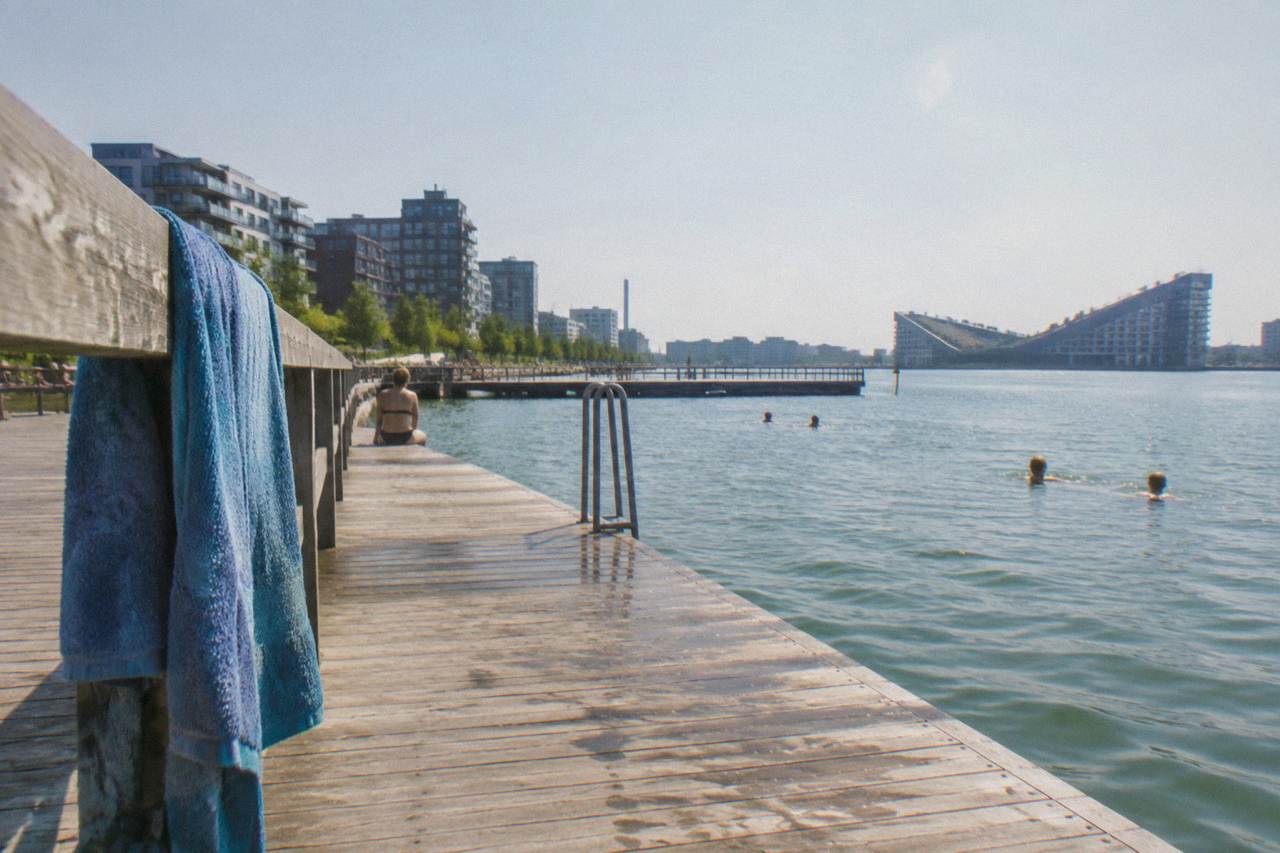
The harbour baths are municipal facilities, open air, and built as floating decks with ladders, ramps and separated shallow zones. They sit in cleaned harbour water, which is the whole point: Copenhagen diverted its sewage overflows and stormwater so thoroughly that the inner harbour meets bathing water standards on normal summer days. After heavy rain the harbour can temporarily exceed those standards, and the city's bathing sites post water quality readings publicly, so check the boards at the bath itself or the city's bathing-water pages before you swim.
What makes this useful for anyone planning Copenhagen on a budget is how concentrated it is. The harbour baths sit minutes from the city centre by bike or metro, the beaches are on one metro line, and the walks between them pass through the most photogenic districts in the city. You can build an entire day around water that costs nothing.
| Site | Neighbourhood | Entry | What It Is |
|---|---|---|---|
| Islands Brygge harbour bath | Islands Brygge | Free | Wooden-decked harbour bath with diving towers and shallow zones |
| Amager Strandpark | Amager | Free | A full sandy beach park on the protected coast |
| Refshaleoen waterfront | Refshaleoen | Free | Industrial harbour edge, swimmable at calm spots |
| CopenHill rooftop hiking trail | Amager | Free | Hiking trail on the roof of the waste-to-energy plant |
| CopenHill ski slope | Amager | Paid, exact price unresolved | Synthetic ski slope on the same roof |
Islands Brygge: The Classic Free Harbour Bath
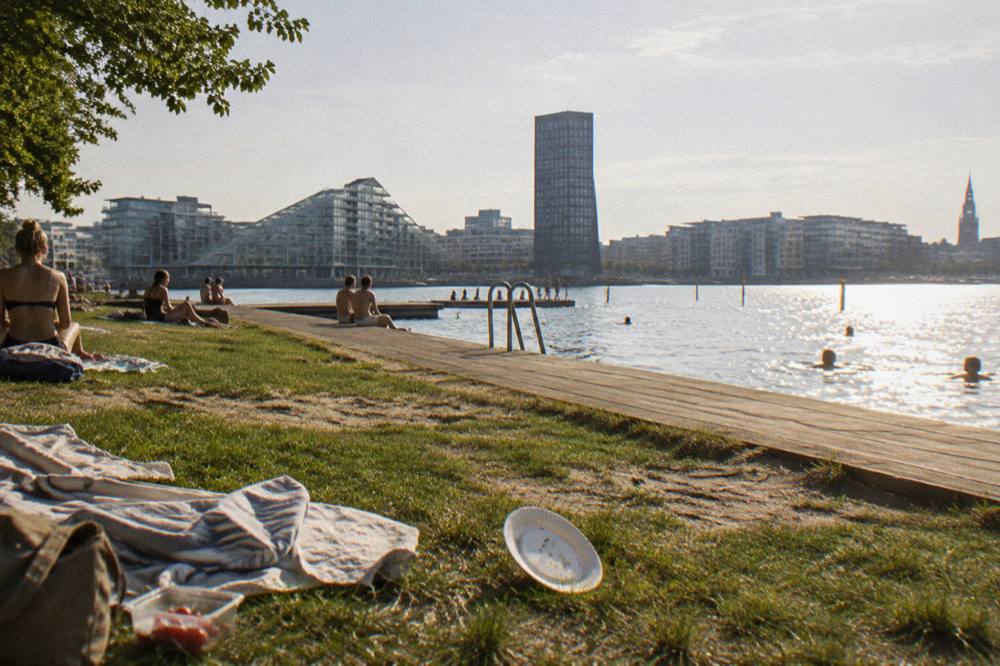
Islands Brygge harbour bath is the one most visitors mean when they say "the harbour bath." It is free to enter, sits directly across the water from the city centre, and packs diving towers, sunbathing decks and a shallow children's zone onto a floating wooden platform. It is a five-minute walk from Islands Brygge metro station, and the surrounding lawn fills with picnics on any warm day.
The bath is at its best on weekday mornings, before the after-work crowd arrives. The decks face the city, so you swim with the spires of the old town behind you, and the water is calm because the bath sits inside a basin. There are no lockers worth trusting with valuables, so travel light: a towel, a swimsuit and nothing you would mourn. The lawn around the bath is free public space, and the barbecues on the grass are a local institution in summer, which makes this the cheapest full afternoon in the city.
The walk across the bridge from Islands Brygge back toward the city centre lands you in the Indre By district within twenty minutes on foot. That is where most of the free walking tours meet, including the Grand Tour, which we cover in full below. If you would rather let someone else plan the route, here are our 9 picks from the 21 pay-what-you-want walks currently listed across the site's roster:
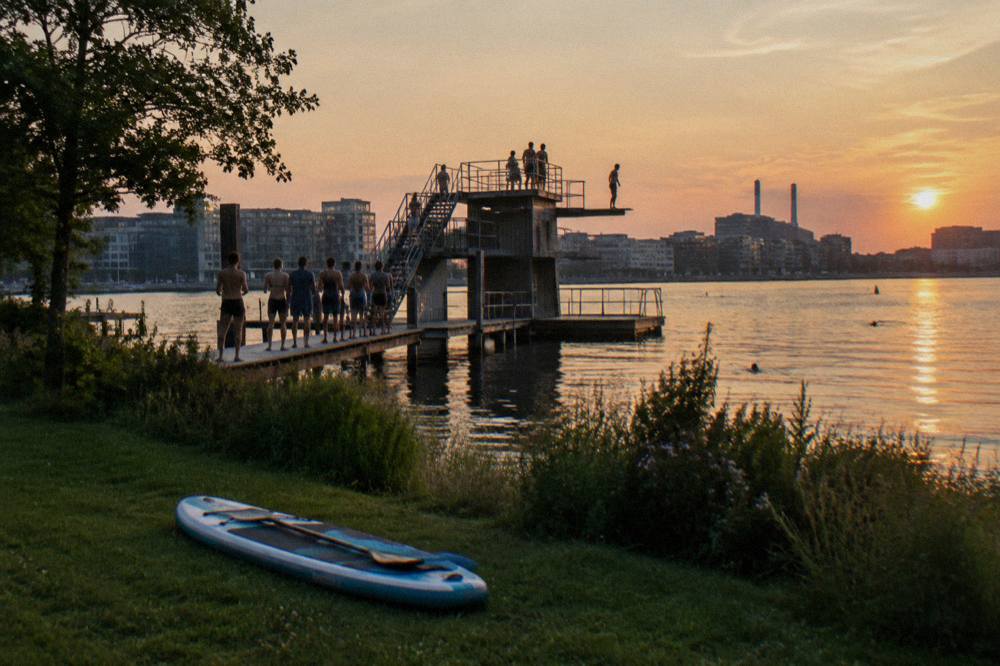
One thing worth knowing before you swim: the harbour bath is unheated seawater, so the season is shorter than the calendar suggests. Locals swim from late May into September, and the water in June can still carry a genuine chill. The bath itself stays accessible year-round, and winter swimmers use it regularly, but a summer visit is the realistic plan for most travellers.
Amager Strandpark: A Free Beach With A Metro Station
Amager Strandpark is a full sandy beach park, free to enter, with a two-kilometre lagoon behind an artificial island, and it has its own metro station. It is the closest thing Copenhagen has to a seaside resort, complete with dunes, beach volleyball courts and kite surfers at the far end, and it costs nothing beyond the fare to get there. The 24-hour City Pass covers the trip at DKK 100.
The beach was rebuilt as an engineered lagoon: a sandy island shelters a flat, shallow bathing lagoon on the landward side, while the seaward side faces the open sound. Families tend to stay in the lagoon, where the water is waist-deep far out and warm quickly, and stronger swimmers use the outer coast. The sand is real, the grass dunes behind it are free to sit on, and there are paid kiosks for food, which you can simply skip and bring your own.
Getting there is the only cost. The metro to Amager Strand station takes under fifteen minutes from Kongens Nytorv, and the 24-hour City Pass at DKK 100 covers all buses, trains and metro in the city zone, sourced from the official Danish transit fare site dinoffentligetransport.dk. A single 2-zone ticket is commonly cited at around DKK 24, though that figure comes from a secondary information site rather than the transit authority's own page, so treat it as approximate. For the full picture, read our Copenhagen public transport basics guide.
| Getting To The Water | Route | Fare |
|---|---|---|
| Islands Brygge harbour bath | Metro M1 to Islands Brygge, then a short walk | Covered by City Pass, DKK 100 per 24 hours |
| Amager Strandpark | Metro M2 to Amager Strand | Covered by City Pass, DKK 100 per 24 hours |
| Refshaleoen | Bus or bike over the bridge from Christianshavn | Covered by City Pass, DKK 100 per 24 hours |
| CopenHill | Bus to Refshalevej or bike | Covered by City Pass, DKK 100 per 24 hours |
The beach is also the setting for one of the city's better budget afternoons with children. There is a playground on the sand, the lagoon is safe for paddling, and the whole thing is free. Our piece on free things to do in Copenhagen with kids covers the rest of the day if the beach fills only half of it.
Refshaleoen: The Industrial Waterfront Edge
Refshaleoen is the old shipyard island at the far end of the harbour, free to walk and increasingly free to linger. The water around it is swimmable at calm spots, the industrial architecture is the rawest backdrop in the city, and the island now holds food halls and studios in the old welding halls. The walk out from Christianshavn takes about thirty minutes and passes the entrance to Freetown Christiania on the way.
The island rewards the walk. On one side the harbour opens wide toward the sound, on the other the old dry docks sit half-filled and silent. Swimming here is less formalised than at Islands Brygge: there is no decked bath, so you choose your spot with more care, avoid the boat traffic lanes, and treat the water as what it is, a working harbour that happens to be clean. The free thing to do here is the walk itself, which our guide to the Christianshavn and Christiania waterfront covers in detail.
Christianshavn, the district on the way out, is the canal quarter, and it is one of the three neighbourhoods this site covers walk by walk. The free tour scene here is real: the Politically Incorrect Hippies Walk, a 90-minute GuruWalk tour rated 4.74 out of 5 across 393 reviews, covers the district's alternative history in English, and there is a Spanish-language Christianshavn walk rated 4.56 out of 5 across 362 GuruWalk reviews for those who prefer it. Both are pay-what-you-want.
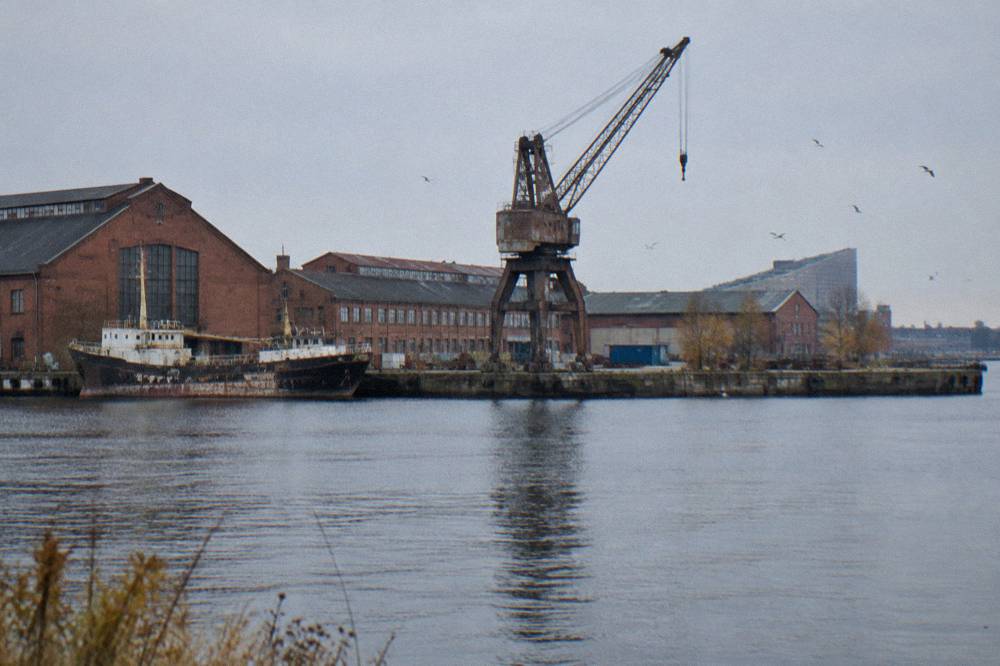
Refshaleoen is also where the harbour's cleaning story is most visible. The island's seawall looks out over the same water that was closed to swimming a generation ago, and the food halls that now occupy the halls are built on the fact that the water outside became an asset. It is a free history lesson, if you know to look for it.
CopenHill: Free Rooftop Hiking, Paid Skiing
CopenHill is the waste-to-energy plant with a public park on its roof, and the hiking trail up it is free. The ski slope on the same roof is a separate, paid product, and its exact price is unresolved in our research, so we will not print a number. The free trail climbs over the roof and gives the widest free view over the harbour and the sound of anything in the city.
The building is a working incineration plant, which sounds like an odd attraction until you stand on it. The roof has a hiking trail, a forest plantation, and viewing platforms facing both the city and the Swedish coast across the water. The climb is short and steady. There is no ticket for the trail, no fence money, no queue.
The distinction between the free trail and the paid slope matters for budget planning, and it is a pattern that repeats across Copenhagen's attractions. The Church of Our Saviour has a free interior and a paid spire climb at around DKK 70. Frederik's Church has a free interior and a paid dome climb at around DKK 50. Carlsberg Byen is free to walk while the brewery experience inside is ticketed, price unresolved. Our free viewpoints guide collects the other free panoramas, several of which need no climb at all.
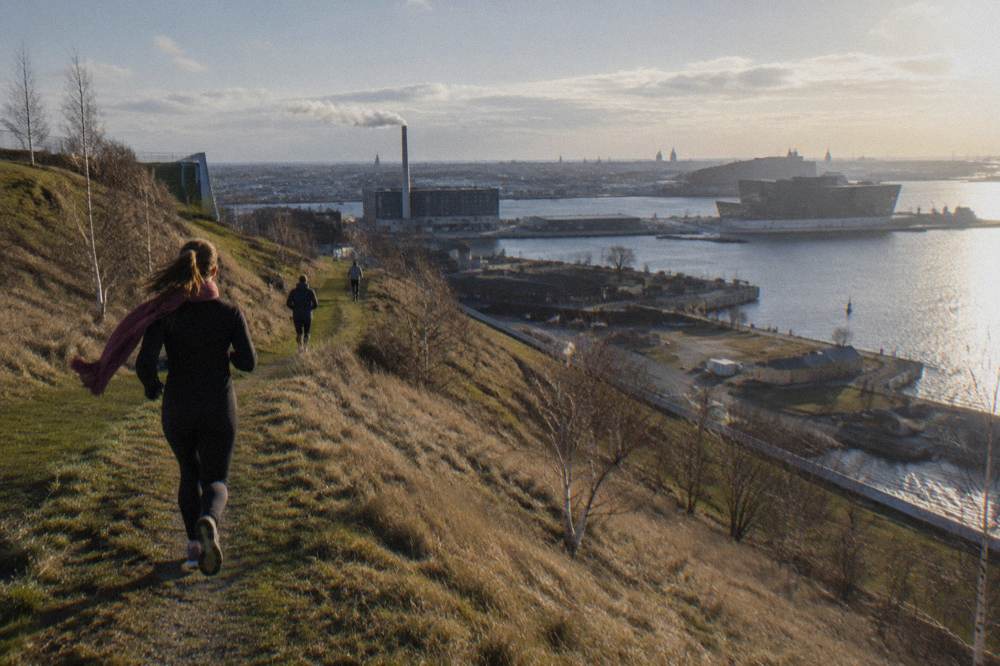
CopenHill sits on Amager, the same island as Amager Strandpark, so the two combine naturally: the beach in the morning, the roof in the afternoon, and the whole day costing nothing but transit. The plant is a short bike ride or bus hop from the beach, and the trail surface is a proper path, so ordinary shoes are fine.
Free Walks That Connect The Waterfront Neighbourhoods
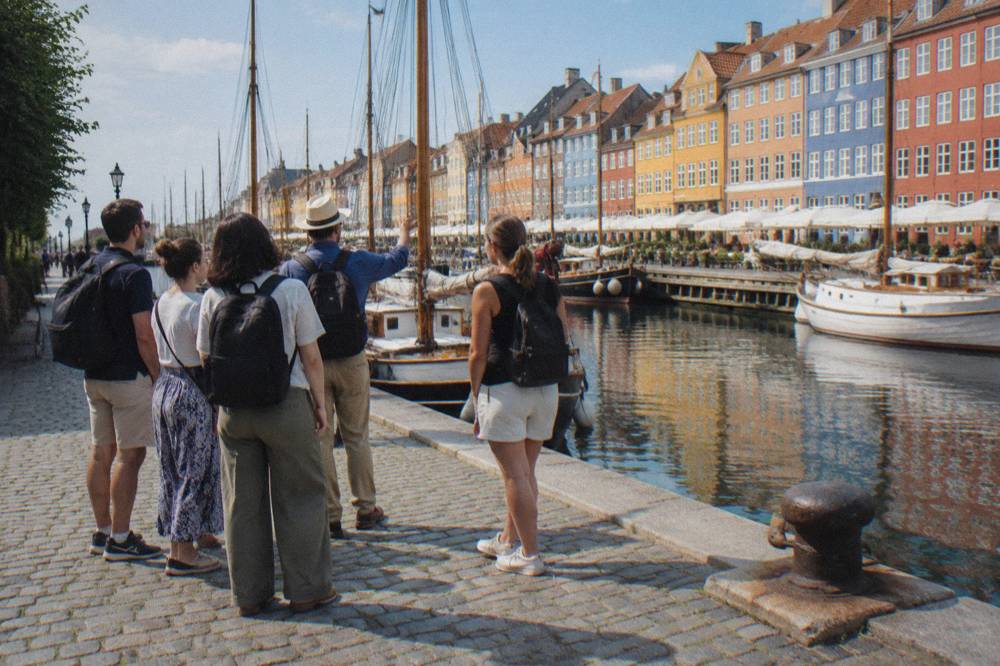
The cheapest way to see the waterfront is on foot with a pay-what-you-want guide. The site currently lists 21 pooled walks across GuruWalk and freetour.com, each with its own page, and here we highlight nine of the strongest. The Grand Tour, the Comedy Walk and the 3-Hour Hygge Experience are the three English-language GuruWalk walks that best complement a beach day, rated 4.82, 4.82 and 4.66 out of 5 respectively.
The Grand Tour, English and Spanish, is the anchor. It runs two hours and thirty minutes, meets at City Hall on Radhuspladsen, and is rated 4.82 out of 5 across 2,538 GuruWalk reviews, which is one of the largest review pools on the roster. It covers the Indre By core, the district between the harbour baths and the palace, and it ends within walking distance of the water. The Grand Tour's own page has the meeting point and the current schedule.
The Comedy Walk in English takes a different route through the same centre. It runs two hours, meets at Gammel Strand, which is the old fish market street directly on the harbour, and is rated 4.82 out of 5 across 1,863 GuruWalk reviews. Gammel Strand is two minutes from the water's edge, so it is the natural walk to pair with a morning swim at Islands Brygge: swim, dry off, walk, tip what you think it was worth.
The 3-Hour Hygge Experience goes deeper into Danish daily life, covering the habits and the small rituals that make the city feel the way it does. It meets at City Hall, runs three hours, and is rated 4.66 out of 5 across 2,132 GuruWalk reviews on GuruWalk, in English, Spanish and Italian. Three hours is a real commitment, but it pairs well with a beach afternoon because it starts where the transit hub is.
For Vesterbro, the district behind the central station, the free option is the Working-Class Vesterbro walk, a 90-minute English GuruWalk tour rated 4.81 out of 5 across 27 reviews, which covers the industrial era and the former red-light district. It is a small review pool, so weigh it accordingly, but the district it covers is the one most visitors walk through without reading at all.
What A Waterfront Day Actually Costs
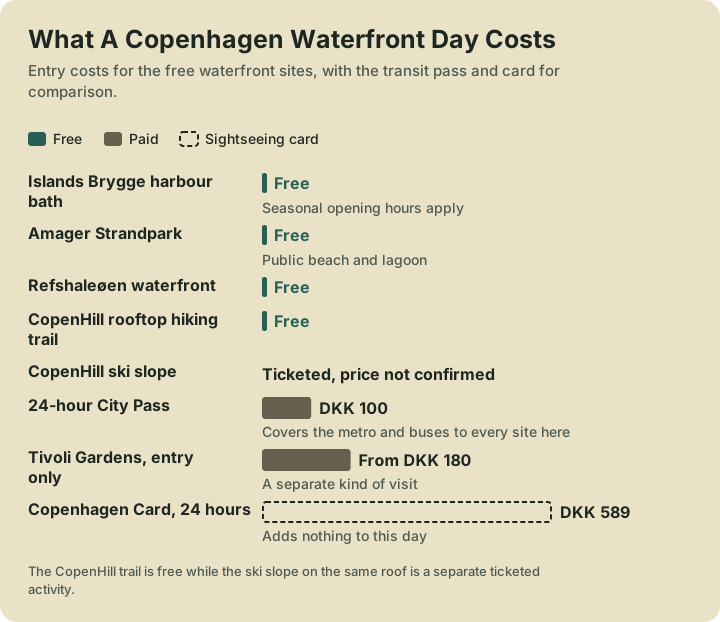
The swimming, beaches, viewpoints and walks cost nothing. The real costs are transit and food, and both are controllable: a 24-hour City Pass is DKK 100, a supermarket lunch is cheaper than any kiosk, and the Copenhagen Card at DKK 589 for 24 hours is only worth it if you also plan to visit the paid museums inside. For a beach-and-walk itinerary, the card is unnecessary because everything on this page is free without it.
The Copenhagen Card is a paid product, and nothing in this guide is "free with the card." The 24-hour adult card costs DKK 589 and the 48-hour adult card DKK 859, per the official price page at copenhagencard.com. It buys entry to the paid museums and attractions, so its value depends entirely on how many DKK 140 and DKK 150 tickets you would otherwise buy. Our Copenhagen Card worth-it analysis runs the arithmetic for a free-first itinerary.
One free museum fact is worth folding in here because it surprises people: the Ny Carlsberg Glyptotek is paid most days at around DKK 150, but free entry to the whole museum on the last Wednesday of every month, per the museum's own site at glyptoteket.dk. Note it is the last Wednesday, not a standing Tuesday, which breaks the pattern most European cities follow.
| Item | Cost | Needed For A Beach Day? |
|---|---|---|
| Islands Brygge harbour bath | Free | Yes, it is the point |
| Amager Strandpark | Free | Yes |
| CopenHill hiking trail | Free | Optional |
| 24-hour City Pass | DKK 100 | Recommended, covers all transit |
| Copenhagen Card, 24-hour adult | DKK 589 | No, everything here is free without it |
| Tivoli Gardens entry | From DKK 180 | No, and it is a separate kind of visit |
Practical Tips For Swimming In Copenhagen
Swim between late May and September for realistic water temperatures, check the posted water-quality boards after rain, and bring a towel rather than expecting facilities. The harbour baths are unsupervised municipal decks, not staffed pools, so you swim at your own judgement. Water shoes help on the wooden gratings, and the nearest metro station to every site on this page is covered by the same DKK 100 City Pass.
The season question deserves honesty. Copenhagen is at Scandinavian latitude, and the harbour is seawater, so even in August the water is bracing by southern European standards. Locals swim anyway, and the baths are busy on any genuinely warm day, but the first minute is always cold. The baths are physically accessible year-round and winter swimming has a devoted local following, so nothing stops a hardy visitor in January except sense.
After heavy rainfall, the combined sewer system can overflow into the harbour, and the city's bathing sites post measured bacteria levels. The rule locals follow is simple: skip the day after a big storm. The water-quality boards at the baths themselves are the authoritative source, updated with actual measurements rather than forecasts.
Finally, the etiquette. Diving is only from the designated towers, the shallow zones are for children, and the decks fill completely on weekend afternoons, so a weekday morning is the calmer swim. Barbecues on the Islands Brygge lawn are welcome, glass is not, and the whole setup is built on the assumption that people behave. It generally works.
If the walking tours here have caught your interest, the full comparison of the city's pay-what-you-walk options is in our best free walking tour comparison, and the wider free-attraction list, including the museums with genuinely free days, is at Free Things To Do In Copenhagen. For the beach end of the day, these three walks cover the districts the water touches:
Common Questions About Free Beaches And Harbour Baths In Copenhagen
Is it really free to swim at Copenhagen's harbour baths?
Yes. Islands Brygge harbour bath and the other municipal bathing sites are free to enter, with no ticket, booking or membership. The only costs are getting there and whatever food you bring or buy.
When can you swim in Copenhagen harbour?
The realistic season runs from late May into September. The water is unheated seawater, cold even in midsummer, and after heavy rain the posted water-quality readings at the baths should be checked before swimming.
Is Amager Strandpark free?
Yes, the whole beach park is free, including the sandy lagoon island and the surrounding dunes. The metro fare to get there is covered by the 24-hour City Pass at DKK 100.
Is CopenHill free?
The rooftop hiking trail on CopenHill is free. The ski slope on the same roof is a separate paid product, and its exact current price is not settled in our research, so we do not print a figure.
Does the Copenhagen Card get you into the harbour baths?
No, and it does not need to. The harbour baths and beaches are free to everyone. The Copenhagen Card is a paid pass at DKK 589 for 24 hours, and it only pays off if you are also visiting the paid museums and attractions it covers.
Are there free walking tours near the waterfront?
Yes, 21 pay-what-you-want walks are listed across the site, including the Grand Tour rated 4.82 out of 5 across 2,538 GuruWalk reviews and the Highlights of Copenhagen walk rated 9.5 out of 10 across 6,894 freetour.com reviews. Several meet within minutes of the harbour.