Free Parks And Green Spaces In Copenhagen: A Complete Visitor Guide
Copenhagen keeps a large share of its green space genuinely free, and the best of it sits within a short walk or a single metro ride of the centre. This guide covers the parks, gardens and waterfront spaces that cost nothing to enter, neighbourhood by neighbourhood, and pairs them with the free walking tours that pass nearby.
Short answer
Copenhagen's best free green spaces include Kongens Have, the Botanical Garden grounds, Frederiksberg Gardens, Superkilen, Assistens Cemetery, the Islands Brygge harbour baths and the CopenHill rooftop hiking trail. All of these cost nothing to enter. Only a few edge experiences charge, such as the CopenHill ski slope and the Botanical Garden's historic glasshouses, where ticketing rules are unclear.
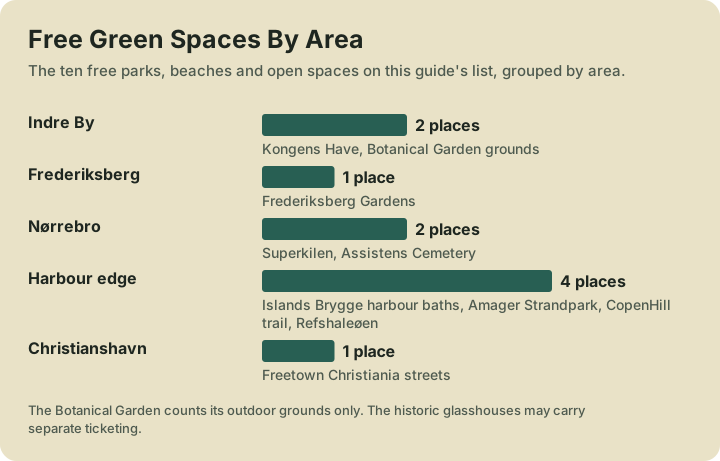
Copenhagen is a city that hides its green space in plain sight. The royal gardens, the old military grounds, the community squares and the reclaimed industrial waterfront all cost nothing to walk into, and several of them sit within ten minutes of Rådhuspladsen. This guide walks through the free parks and green spaces neighbourhood by neighbourhood, from the historic centre to Nørrebro, Vesterbro, Christianshavn and the harbour edge, and flags the few places where a free entrance and a paid experience sit side by side.
The Best Free Parks And Green Spaces In Copenhagen
Copenhagen's standout free green spaces are Kongens Have and the Rosenborg edge of the centre, the Botanical Garden grounds, Frederiksberg Gardens in the west, Superkilen and Assistens Cemetery in Nørrebro, the Islands Brygge harbour baths, Amager Strandpark, and the CopenHill rooftop hiking trail. Every one of these is free to enter with no ticket, no timed slot and no seasonal charge.
That list covers a wide range of what "green space" means in this city. Some of these places are formal royal gardens, laid out in straight lines and clipped hedges. Others are community design projects, like Superkilen, built as a strip of public design along a bike route. Two are cemeteries that function as public parks, a very Danish arrangement that surprises first-time visitors. And a growing number are waterfront spaces, because Copenhagen spent recent decades turning its old harbour from an industrial working zone into a place where people swim off concrete platforms in the middle of the city.
The free-first pattern matters for planning. Unlike several European capitals, Copenhagen does not wall its best green space behind palace ticketing. The palaces themselves often charge, and this guide flags those prices where they are confirmed, but the gardens around them are almost all open to walk through. That makes a green itinerary one of the cheapest full days available in a city whose restaurants and museums are otherwise expensive.
Here is the full shortlist at a glance, before the neighbourhood-by-neighbourhood detail.
| Green space | Neighbourhood | Type | Entry cost |
|---|---|---|---|
| Kongens Have | Indre By | Royal garden | Free |
| Botanical Garden grounds | Indre By | Botanical garden, outdoor areas | Free |
| Frederiksberg Gardens | Frederiksberg | Landscape park with palace views | Free |
| Superkilen | Nørrebro | Public design park | Free |
| Assistens Cemetery | Nørrebro | Park cemetery | Free |
| Islands Brygge harbour baths | Islands Brygge | Harbour swimming baths | Free |
| Amager Strandpark | Amager | Beach and lagoon park | Free |
| CopenHill rooftop trail | Amager / Refshaleøen edge | Rooftop hiking trail | Free |
| Refshaleøen | Christianshavn edge | Former shipyard island, walkable | Free |
| Freetown Christiania streets | Christianshavn | Self-governing district, walkable | Free |
Kongens Have And The Botanical Garden: Free Green Space In The Centre
Kongens Have, the garden beside Rosenborg Castle, and the outdoor grounds of the Botanical Garden are the two great free green spaces of the historic centre, and they sit a few minutes' walk from each other. Kongens Have is free with no conditions. The Botanical Garden's outdoor grounds are free too, but its historic glasshouses are a separate matter, and the current ticketing rule for those could not be confirmed, so treat the greenhouses as possibly paid.
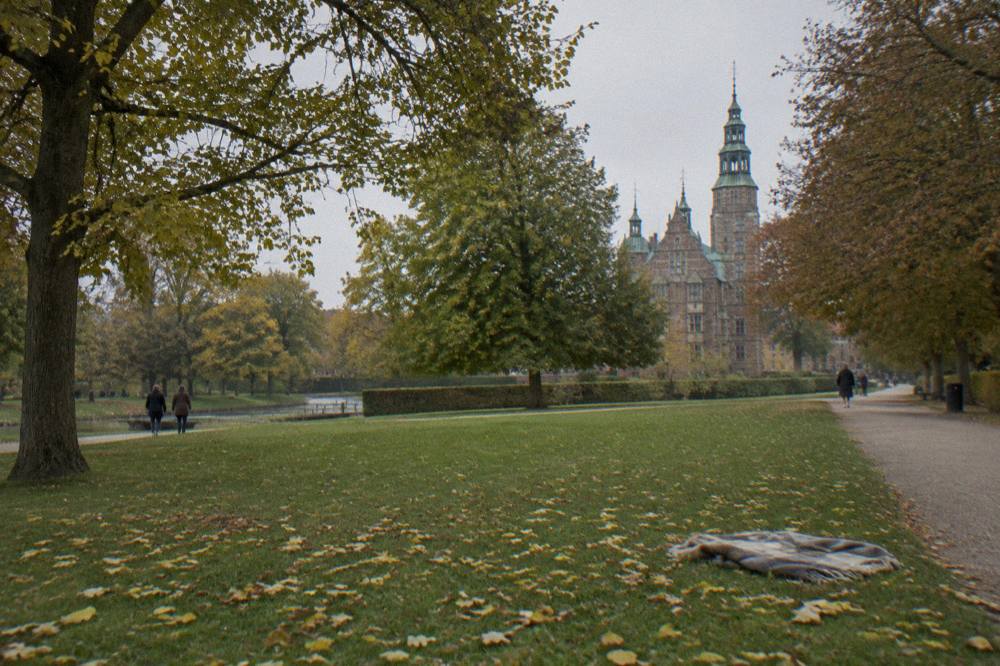
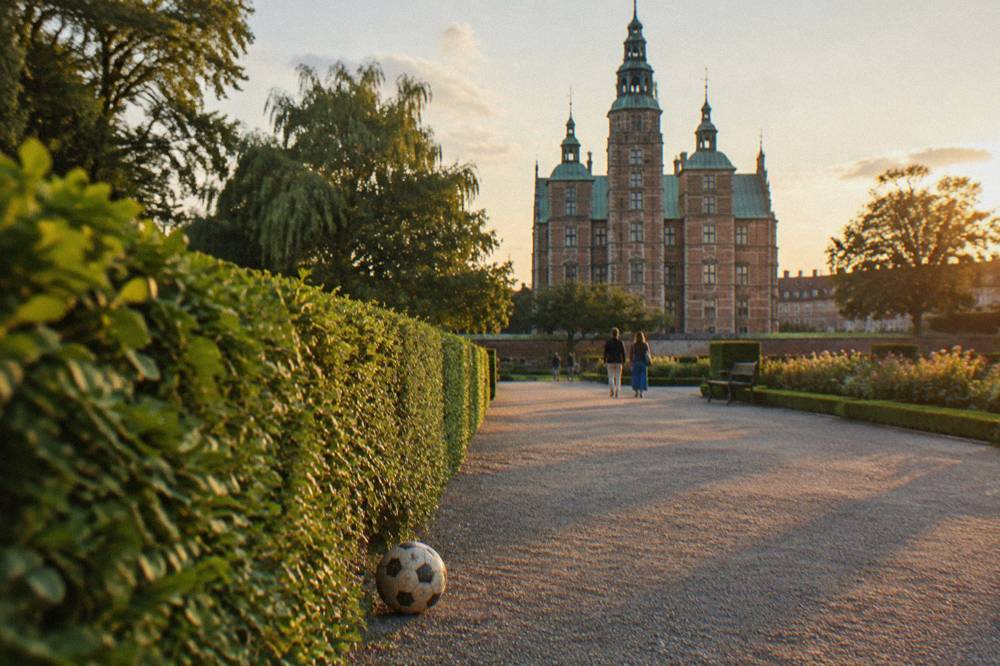
Kongens Have is Copenhagen's oldest royal garden, laid out as a private pleasure garden for the king and opened to the public long before most European royal gardens followed. It is the classic free centrepiece: broad gravel paths, big old trees, sculpture, lawns that fill with sunbathers on any warm day, and Rosenborg Castle rising at one end. The castle interior is paid, at DKK 140 online or DKK 150 at the door, but the garden itself has never required a ticket, and the contrast is worth stating plainly: you can walk the whole garden, photograph the castle from every angle and picnic under the trees for nothing.
The Botanical Garden sits just west of Kongens Have, attached to the university. Its outdoor grounds, the paths, the lake, the tree collections and the lawns, are free. The famous Palm House and the other historic glasshouses are the one open question. Research against official sources could not settle whether the glasshouses currently carry separate ticketing on some days, so this guide records that honestly rather than guessing. Walk the grounds freely, and check at the gate if you want to go inside the glass structures.
A short walk south from the Botanical Garden brings you to Ørstedsparken, another free green space built on the old city ramparts, though its condition and facilities vary. The centre's green spaces cluster tightly enough that a half-day loop, Kongens Have, the Botanical Garden grounds, Ørstedsparken, then down through the castle island, is entirely walkable.
This loop is also where several of the city's free walking tours operate, which is worth knowing if you like your green space with some history attached. The Grand Tour, English and Spanish on GuruWalk runs two and a half hours from City Hall, rated 4.82 out of 5 across 2,538 GuruWalk reviews, and its route through the core puts the castle garden edge within easy reach. See this free tour if you want the guided version of this walk.
The Grand Tour is not the only way to see this cluster. The Historic Center Walk, Map Included, rated 4.84 out of 5 across 1,421 GuruWalk reviews on GuruWalk, hands you a recommendations map at the end, which pairs well with a self-guided garden loop afterwards, while the Nordic Freedom Tours City Walk, rated 4.46 out of 5 across 24 GuruWalk reviews, covers the core in two hours from Kongens Nytorv.
Frederiksberg Gardens And CopenHill: Free Green Space West And South
Frederiksberg Gardens is the largest free landscape park within the city, a rolling garden with lakes, herons and free views of Frederiksberg Palace, and it costs nothing to enter. CopenHill, the power-plant-turned-recreation-hill on the Amager side, offers a free rooftop hiking trail with harbour views, while its ski slope is a separate paid attraction whose exact price is not consistently published.
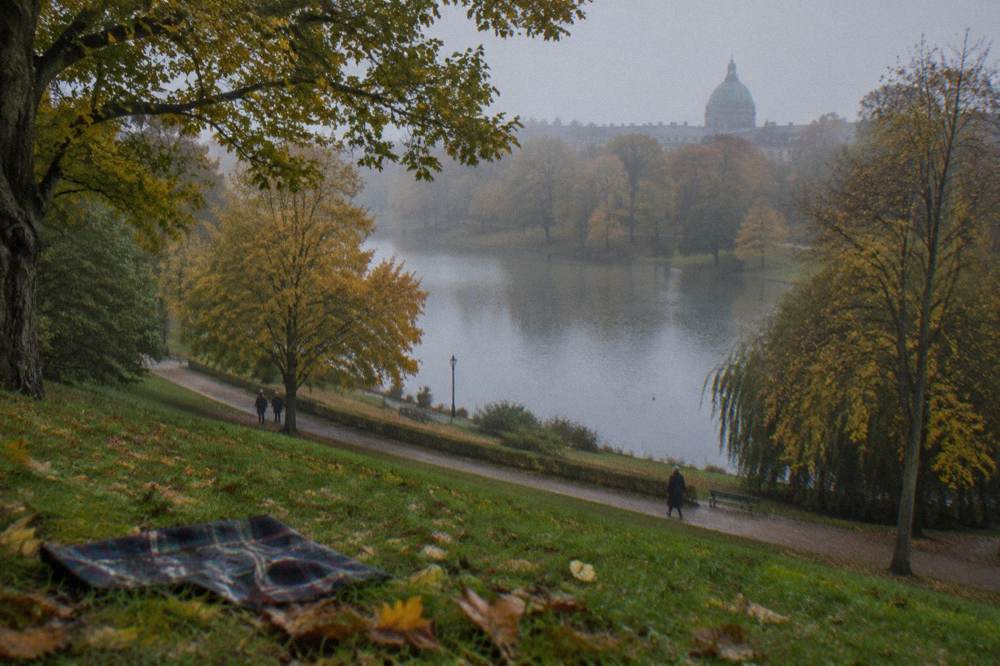
Frederiksberg Gardens sits west of the centre, one metro stop or a short bike ride from Vesterbro, and it feels different from the centre's formal gardens: bigger, wilder at the edges, designed as a landscape park rather than a formal parterre. The palace on the hill above it is a viewpoint rather than a paid attraction for most visitors, and the garden's network of paths, bridges and water makes it the place Copenhageners themselves go on weekends. The Copenhagen Zoo sits at the garden's southern edge, but the garden and the zoo are separate: the garden is free, the zoo is not, and the two should not be confused when planning.
CopenHill is the stranger entry, and one of the most distinctive free green spaces in Europe. It is the roof of a functioning waste-to-energy plant, converted into a recreation area with a hiking trail that runs up and along the roofline, ending in a viewing point over the harbour and the city. The rooftop trail is free. The artificial ski and snowboard slope on the same roof is ticketed, and its exact current price could not be confirmed against a stable official figure, so check the operator's own page before budgeting for it. The free trail and the paid slope are two separate experiences on the same structure, and this guide keeps them separate for exactly that reason.
Between the two, Frederiksberg Gardens and CopenHill bracket the range of what free green space means here: a historic royal landscape on one side, a piece of contemporary industrial design on the other, both open to anyone.
If you are basing yourself near Vesterbro, the gardens pair naturally with that neighbourhood's own green corners, covered in the Vesterbro free things to do guide. And if you are weighing green space against other free sightseeing, the free viewpoints in Copenhagen guide covers the towers and platforms that cost nothing to climb.
Superkilen And Assistens Cemetery: Nørrebro's Free Green Landmarks
Nørrebro's two signature green spaces are Superkilen, a free public design park of three zones running along a bike corridor, and Assistens Cemetery, a free park cemetery where Hans Christian Andersen and Søren Kierkegaard are buried. Both are open to walk in at no cost, and both sit within ten minutes of each other, making Nørrebro the city's densest free green-space district outside the centre.
Superkilen is not a park in the classical sense. It is a long, narrow strip of public space designed with objects contributed by the neighbourhood's many communities: a giant slide, a fountain, a Moroccan fountain bench, neon signage, a boxing ring. It runs in three colour-coded zones and functions as both a park and a main bike artery, so it is green space and infrastructure at once. It costs nothing, it is open all day, and it is one of the most photographed pieces of public design in Scandinavia.
Assistens Cemetery is the other kind of Nørrebro green space, and the kind that takes explaining. Copenhagen's historic cemeteries double as public parks: people picnic, sunbathe and stroll among the graves quite openly, and Assistens is the largest and most famous of them. Hans Christian Andersen and Søren Kierkegaard are both buried here, and finding their graves is free. The cemetery's tree cover makes it one of the coolest green walks in the city on a hot summer day, and its position on the Nørrebro ridge means the walk to it passes the neighbourhood's cafés and squares.
The comedy angle on this district is real too. The Comedy Walk in English, a GuruWalk tour rated 4.82 out of 5 across 1,863 GuruWalk reviews, runs two hours from Gammel Strand and takes a deliberately irreverent line through the city's sights and stories, a good fit for travellers who prefer their history with jokes rather than solemnity.
Harbour Baths, Beaches And Waterfront Green Space
Copenhagen's harbour baths, including the Islands Brygge baths, and the Amager Strandpark beach park are free, and they represent the city's biggest transformation: industrial harbour water clean enough to swim in. Refshaleøen, the former shipyard island at the end of Christianshavn, is free to walk and now mixes wild harbour edges with food halls and culture. None of these charge entry.
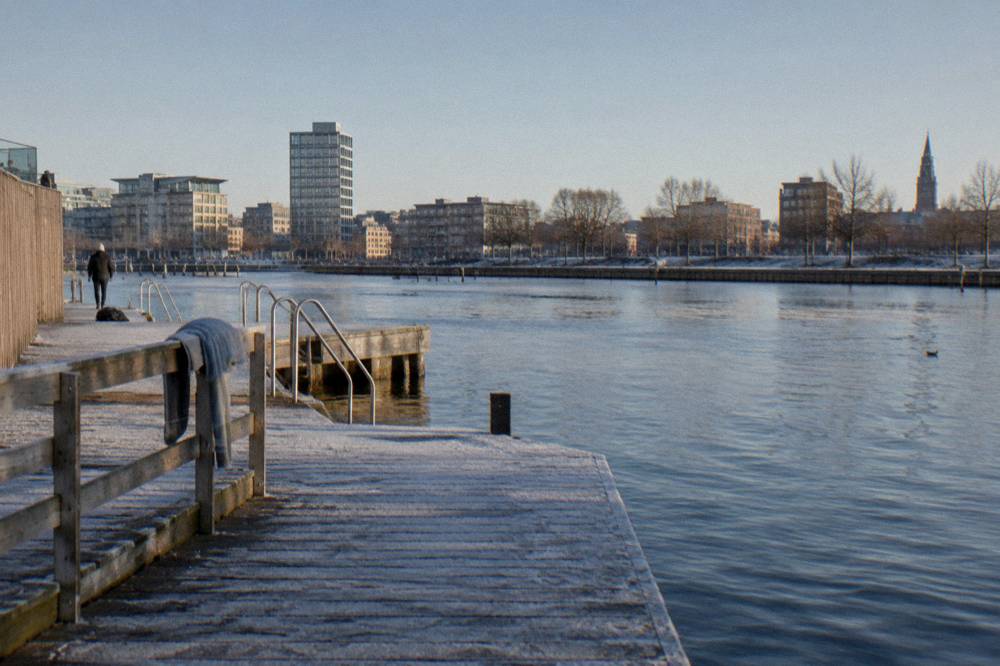
The harbour baths are the clearest evidence of how far the waterfront has come. A generation ago the inner harbour was a working industrial port where swimming would have been unthinkable; today the Islands Brygge baths, concrete platforms with ladders and diving towers set right into the canal, are one of the most popular free summer spots in the city. The water quality is monitored and the baths are lifeguarded in season, and they cost nothing. Amager Strandpark, further out on the metro, is a manufactured beach and lagoon park, free to enter, with a long sandy edge facing the sound.
Refshaleøen is the quieter, wilder end of the same story. The old shipyard island at the far end of Christianshavn is free to walk, and its mix of rusting industrial structures, new food halls, studios and open harbour edges makes it one of the best free walks in the region on a clear afternoon. You can walk out from Christiania through the island and back, or take the harbour bus, which uses regular public transit fares.
Getting between these places by metro or bus costs a normal transit fare, commonly cited at around DKK 24 for a single 2-zone ticket, though that figure comes from a secondary source rather than the transit authority's own page, so check current fares before relying on it.
Christianshavn And Christiania: Green Space On The Islands
Christianshavn's free green space centres on its canals, its ramparts and the walkable streets of Freetown Christiania, all free to enter, with photo rules applying inside Christiania. The district pairs water, historic military earthworks and the self-governing commune's lanes and lake edges into one walkable landscape, and it sits directly on the walking route to Refshaleøen's open ground.
Christianshavn was built as a canal district and its green space still follows that logic: the water is the park, and the green comes in the form of rampart walks, allotment colonies, canal-side trees and the low, planted islands between the waterways. Walking the canal loop costs nothing and is one of the best free hours in the city. The old fortification earthworks on the Amager side of the district give the walk its elevated sections.
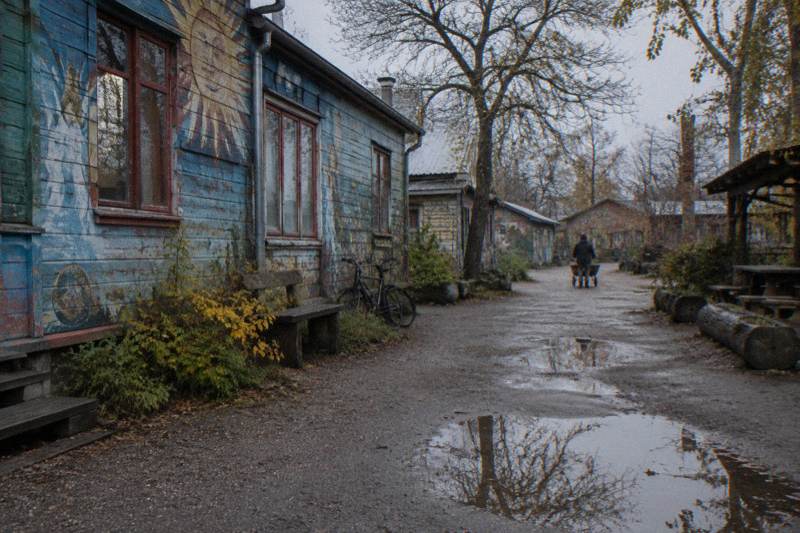
Freetown Christiania needs a specific mention because its status is unusual. Walking into Christiania is free, the district's lanes and lake edges are open to stroll, and the community's own rules apply, including restrictions on photography on and around Pusher Street. The Christiania what to know before you go guide covers the etiquette in detail; the short version is that the green space is free but not lawless, and visitors should read the rules before walking in.
The district also has a strong free-tour presence. The Politically Incorrect Hippies Walk on GuruWalk, rated 4.74 out of 5 across 393 GuruWalk reviews, runs 1 hour and 30 minutes from Havnegade and leans into the district's counterculture history, while Spanish-speaking visitors have the Christianshavn in Spanish walk, rated 4.56 out of 5 across 362 GuruWalk reviews on GuruWalk, as a language-matched alternative.
Which Free Green Space Fits Your Day?
For a classic first-day walk, use Kongens Have and the Botanical Garden grounds. For a long relaxed afternoon, Frederiksberg Gardens. For design and people-watching, Superkilen, paired with Assistens Cemetery for shade and history. For swimming in summer, the Islands Brygge harbour baths or Amager Strandpark. For a walk with an edge, Christianshavn and Refshaleøen. All of them cost nothing to enter.
The table below matches each space to the kind of day it serves best.
| If you want... | Go to... | Nearest free walking tour theme |
|---|---|---|
| Formal gardens and castle views | Kongens Have | Indre By history walks |
| Botanical planting and tree cover | Botanical Garden grounds | Indre By history walks |
| A long landscape walk | Frederiksberg Gardens | Vesterbro working-class history |
| Contemporary public design | Superkilen | Nørrebro street culture |
| Shade, graves and literary history | Assistens Cemetery | Nørrebro street culture |
| Swimming in the city | Islands Brygge harbour baths | Christianshavn waterfront |
| Beach and lagoon | Amager Strandpark | Christianshavn waterfront |
| Industrial-edge walking | Refshaleøen | Christianshavn counterculture |
One planning note on the paid items that sit inside this free landscape. The Copenhagen Card, which costs DKK 589 for 24 hours and DKK 859 for 48 hours for an adult, is a paid product that covers museums and transit, and nothing in this guide's green spaces needs it. The same honesty applies to the few paid attractions mentioned in passing, like Rosenborg Castle's interior at DKK 140 online or DKK 150 at the door, or the Glyptotek museum, which is paid most days at roughly DKK 150 but opens its whole museum free on the last Wednesday of every month, per the museum's own site. The table below lists the free and paid halves of the split attractions, so nothing catches you out at a gate.
| Attraction | Free part | Paid part |
|---|---|---|
| CopenHill | Rooftop hiking trail | Ski and snowboard slope, price unresolved |
| Carlsberg Byen | Walking the district | Visit Carlsberg brewery experience, price unresolved |
| Church of Our Saviour | Interior | Spire climb, roughly DKK 70 |
| Frederik's Church (Marmorkirken) | Interior | Dome climb, roughly DKK 50 |
| Botanical Garden | Outdoor grounds | Historic glasshouses, ticketing unresolved |
| Christiansborg Palace | Tower viewing platform | State rooms, DKK 150 at door / 140 online |
For the guided version of a green day, the 3-Hour Hygge Experience on GuruWalk, rated 4.66 out of 5 across 2,132 GuruWalk reviews, is the roster's longest English walk and builds Danish daily-life context into its route, a natural companion to the parks and café culture this guide describes.
If your green itinerary is really a broader free-things budget, Free Things To Do In Copenhagen is the site's full directory: 21 pooled free walking tours across GuruWalk and freetour.com, each with its own page, alongside the attraction coverage you are reading now.
Common Questions About Free Parks In Copenhagen
Are Copenhagen's parks free to enter?
Yes, all the major ones. Kongens Have, Frederiksberg Gardens, Superkilen, Assistens Cemetery, the Botanical Garden's outdoor grounds, the harbour baths and Amager Strandpark cost nothing to enter, with no ticket or pass required. Only separate experiences attached to them, like the CopenHill ski slope or Rosenborg Castle's interior, charge.
Is the Botanical Garden in Copenhagen free?
The outdoor grounds are free. The historic glasshouses, including the Palm House, are a separate question: the current ticketing rule for them could not be confirmed against official sources, so treat the greenhouses as possibly paid and check at the gate.
Can you swim in Copenhagen's harbour for free?
Yes. The harbour baths, including the Islands Brygge baths, are free public bathing platforms set into the cleaned harbour water, monitored and lifeguarded in season. Amager Strandpark offers a free beach alternative further out on the metro.
Is Assistens Cemetery free to visit?
Yes, it is free to enter and it functions as a public park as well as an active cemetery. Hans Christian Andersen and Søren Kierkegaard are both buried there, and finding their graves costs nothing.
Is CopenHill free?
The rooftop hiking trail on CopenHill is free and ends in a harbour viewing point. The ski and snowboard slope on the same roof is a separate paid attraction, and its exact current price is not consistently published, so check the operator's page before planning to ski.
What is the best free park walk near the city centre?
Kongens Have beside Rosenborg Castle, combined with the Botanical Garden grounds just to the west, is the densest free green walk in the centre, and both are within a few minutes of the main free walking tour meeting points at Rådhuspladsen.