What Actually Happens On A Copenhagen Free Walking Tour
A step-by-step account of what actually happens on a Copenhagen free walking tour, from the City Hall meeting point through Indre By, Christianshavn and Vesterbro to the tip at the end.
What Actually Happens On A Copenhagen Free Walking Tour
A Copenhagen free walking tour unfolds in five predictable stages: you book a slot online, you meet a guide at a stated square, you walk a fixed route for roughly two to three hours with commentary, the guide answers questions and gives local recommendations, and at the end you tip what the walk was worth to you. There is no upfront price anywhere in the process, and the whole experience is built around the tip.
The first thing to understand is that nothing about the word "free" is a trick, but it is also not a charity. The guide works for tips alone. The listing you book through, whether it is a GuruWalk listing or a freetour.com listing, takes no payment from you either. What you are actually signing up for is a pay-what-you-want arrangement, and the entire two hours of a walk is shaped by that: the guide has an incentive to be good, because the tip is the entire wage.
The shape of a typical walk is remarkably consistent across the 21 pooled walks this site tracks across both platforms. You get a confirmation message with a meeting point. You arrive five or ten minutes early. The guide holds up a sign or wears a badge, collects names, sometimes asks where everyone is from, and then delivers a short preamble: this is how long we will walk, this is where we will finish, this is how the tip works. Then the city begins.
| Stage | What happens | What you pay |
|---|---|---|
| Booking | You reserve a date and time slot through GuruWalk or freetour.com | Nothing |
| Meeting | You find the guide at the stated square, five to ten minutes early | Nothing |
| The walk | One and a half to three hours of route and commentary | Nothing |
| Questions | The guide answers questions and gives recommendations | Nothing |
| The finish | You tip the guide what the walk was worth | Your chosen tip |
What follows depends on the neighbourhood the walk covers. The old centre routes move between City Hall, the pedestrian Strøget, Gammel Strand and the cathedral quarter. The Christianshavn routes cross the harbour and end near Freetown Christiania. The Vesterbro routes start at the central station and work through the former red-light district. If you want the short version of which walk suits which plan, our Copenhagen free walking tours comparison breaks the featured options down side by side, and the guide to free walking tours in Copenhagen covers the full roster.
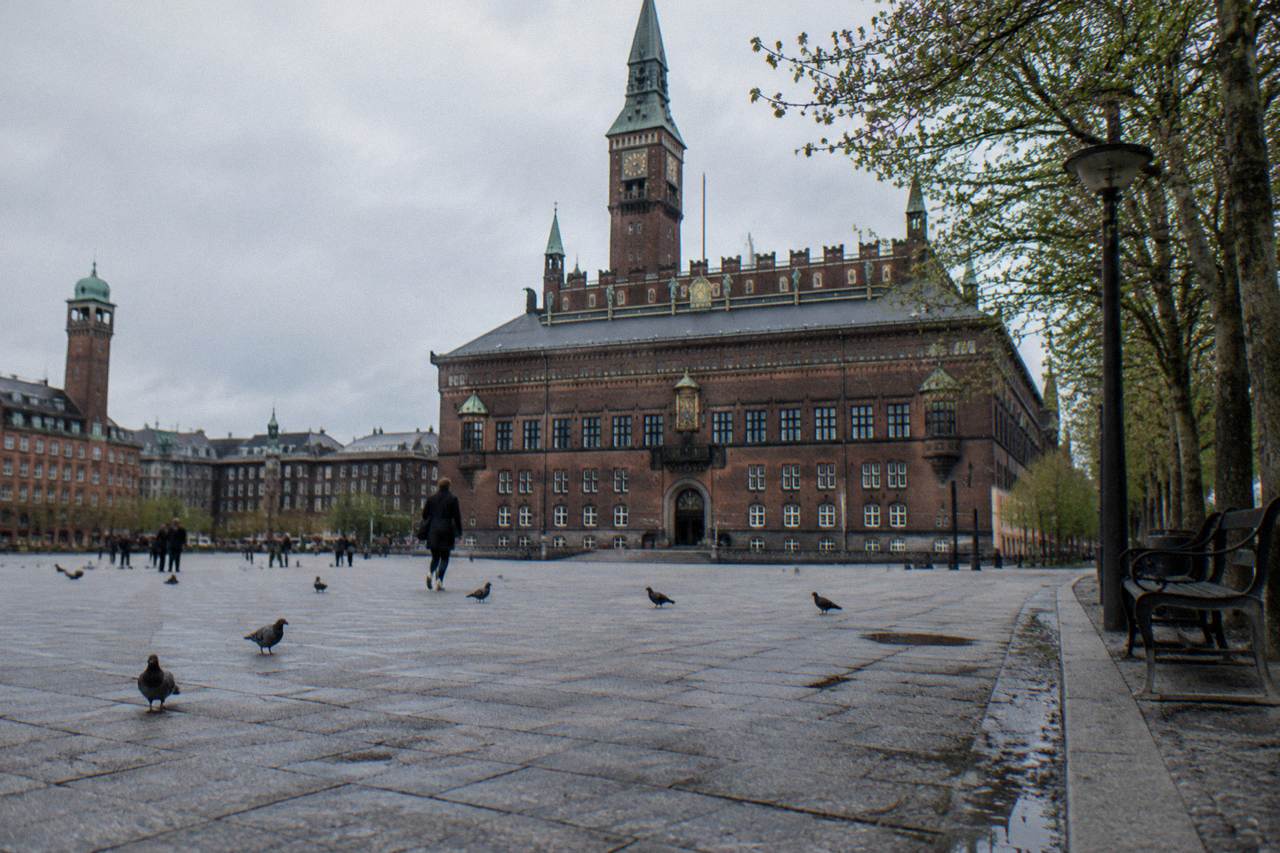
Of the three walks above, the Grand Tour, English and Spanish is the closest thing to a default Copenhagen free tour: it is rated 4.82 out of 5 across 2,538 GuruWalk reviews, runs two hours and 30 minutes, and starts at Københavns Rådhus on Rådhuspladsen, the big square in front of City Hall. The 3-Hour Hygge Experience stretches the same idea across three hours and adds the Danish lifestyle angle, and it is rated 4.66 out of 5 across 2,132 GuruWalk reviews. The Historic Center Walk, Map Included, rated 4.84 out of 5 across 1,421 GuruWalk reviews, ends by handing you a recommendations map, which is a genuinely useful touch if it is your first day in the city.
Where Do The Walks Start And How Do You Join One?
You join a Copenhagen free walking tour by reserving a spot through GuruWalk or freetour.com, then turning up at the stated meeting point a few minutes before the start time, with no payment made before the walk begins. The most common starting points are Rådhuspladsen in front of City Hall, Gammel Strand, Kongens Nytorv and the central station. The meeting point is printed on the walk's own page, and you check it on the morning of the walk.
The booking step is lighter than most people expect. You pick a date and a time slot, you leave a name and an email, and you receive a confirmation. No card is charged. Some listings cap group sizes, which is why reserving matters even for a walk with no ticket: a guide who takes 30 reservations will plan for 30, and walk-ups get squeezed out when a slot is full. If your plans change, you cancel through the same listing, and because nothing was paid, there is nothing to refund.
The meeting itself is the same ritual on nearly every walk. The guide is identifiable, usually with a badge, a folder or a sign, and stands at the exact address given. In Copenhagen that address is often one of a handful of squares: Rådhuspladsen for the City Hall walks, Gammel Strand 26 for the Comedy Walk, Kongens Nytorv 11A for the Nordic Freedom Tours City Walk, and Hovedbanegården, the central station, for the Vsterbro walk. Our piece on where Copenhagen free walking tours meet goes deeper on each point and what is within walking distance of it.
| Walk | Platform | Meets at | Duration | Language |
|---|---|---|---|---|
| Grand Tour, English and Spanish | GuruWalk | Rådhuspladsen 1, City Hall | 2 hours 30 minutes | English and Spanish |
| Comedy Walk in English | GuruWalk | Gammel Strand 26 | 2 hours | English |
| Historic Center Walk, Map Included | GuruWalk | City Hall | 2 hours | English, Spanish, Italian |
| Nordic Freedom Tours City Walk | GuruWalk | Kongens Nytorv 11A | 2 hours | English |
| Working-Class Vesterbro, Red-Light Past | GuruWalk | Hovedbanegården | 1 hour 30 minutes | English |
| Politically Incorrect Hippies Walk | GuruWalk | Havnegade 54 | 1 hour 30 minutes | English |
Once the group has gathered, the guide does three things before moving: a headcount against reservations, a short route summary, and the tipping explanation. The tipping explanation is honest and unembarrassed, usually a single sentence: the walk is free to join, the guide is paid only by tips, and you decide the amount at the end. From there the walk starts moving, and it rarely stops for more than a few minutes at any single spot.
If you would rather lock in the most-reviewed option before reading further, the Grand Tour is the walk most first-time visitors end up on, and you can reserve a spot on its GuruWalk listing without paying anything upfront.
The Indre By Route: What You See In The Old Centre
The Indre By free walking tour covers Copenhagen's medieval core in roughly two to two and a half hours of easy walking, taking in Rådhuspladsen, the Strøget pedestrian street, Gammel Strand, the cathedral quarter, the outside of Christiansborg, and the canals. Guides mix royal history, fire history, and design trivia, using the city's catastrophic fires to structure the story, and they flag which building interiors are free versus paid.
The Grand Tour, English and Spanish is the standard-bearer for this route. It starts at City Hall, a building that anchors Rådhuspladsen and gives the guide an easy opening: the square has been the city's gathering point for centuries, and it is where most of Copenhagen's public celebrations and protests happen. From there the walk typically drops onto the Strøget, one of the longest pedestrian shopping streets in Europe, and the guide uses the side alleys to escape the crowds and show the older city behind the shopfronts.
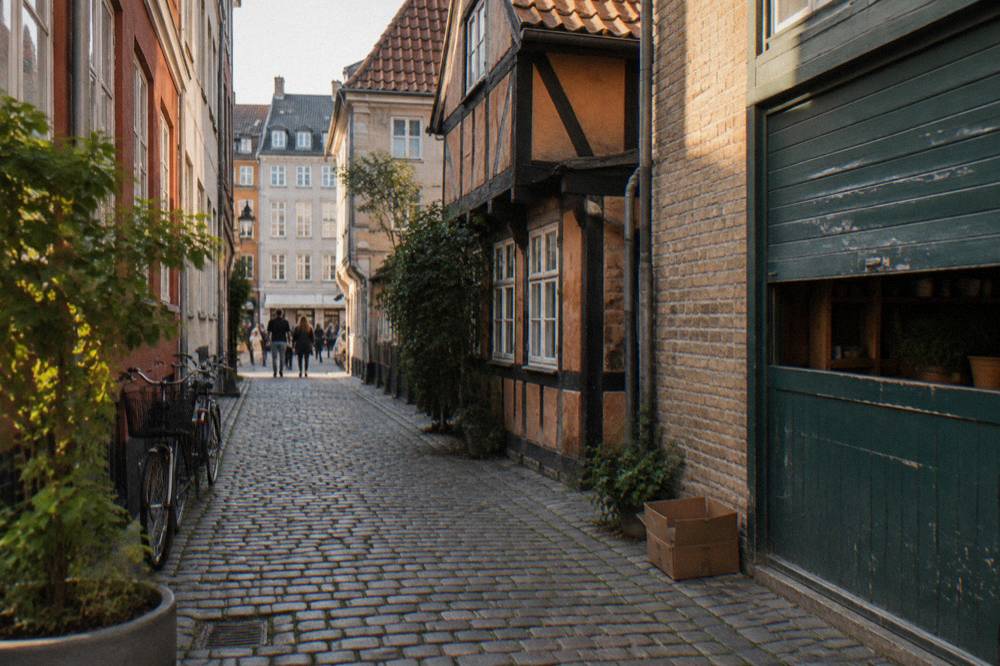
What the guide actually says is the part no listing fully describes. On the old-centre routes the recurring themes are the great fires that burned most of the medieval city and the British bombardment that finished the job. That is why so much of "old" Copenhagen is actually architecture from a later rebuilding era, and it is why the cathedral, Vor Frue Kirke, has a neoclassical interior rather than anything medieval. The good guides turn this into a running joke about Copenhagen being a city that keeps having to rebuild itself, and reviewers on the Grand Tour's GuruWalk listing repeatedly single out the storytelling as the reason they tipped well.
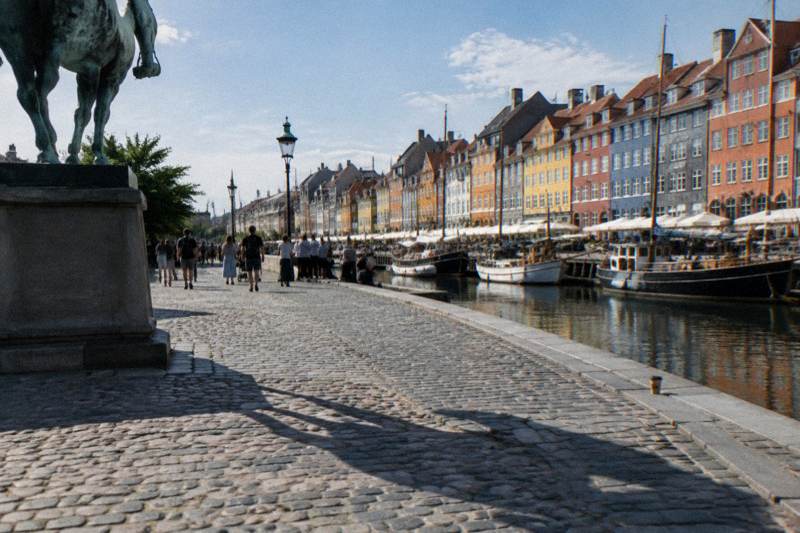
The route also passes several genuinely free sights that a first-time visitor would otherwise walk past without clocking. The Christiansborg Palace Tower viewing platform is free, the Little Mermaid is free, and Nyhavn is free to wander, so an old-centre walk doubles as an orientation session for the rest of your trip. The guide will usually point out which museums are worth the entry fee and which have free days. The Ny Carlsberg Glyptotek, for example, is paid most days at around DKK 150 but opens the whole museum free on the last Wednesday of every month, a detail confirmed on the museum's own site, and it is the single most useful piece of timing advice a guide can give a budget traveller.
The Grand Tour's own page on this site has the full route breakdown, and because it is the most-reviewed English walk on the roster, it is also the walk with the most consistent feedback: at 4.82 out of 5 across 2,538 GuruWalk reviews, the pattern in those reviews is that guides who start strong at City Hall tend to hold the group the whole way.
The Comedy Walk: The Same Streets, Different Stories
The Comedy Walk in English covers much of the same old-centre ground as a standard history walk but delivers it as stand-up, with jokes, characters and absurd historical anecdotes replacing the usual royal chronology. It runs two hours from Gammel Strand 26, is in English only, and is rated 4.82 out of 5 across 1,863 GuruWalk reviews. The tipping dynamic is identical to every other walk on the roster.
This is the walk to pick if the phrase "two hours of history" sounds like a chore. The guide plays it for laughs, and the material is still real Copenhagen history, just the parts with the best punchlines: disastrous kings, absurd municipal decisions, drinking culture, and the city's long tradition of satire. Reviewers on the GuruWalk listing describe it as closer to street comedy than a lecture, and the review pool is large enough that the 4.82 out of 5 figure is a meaningful signal rather than a handful of friends rating their mate.
The practical differences from a standard walk are small but worth knowing. It is English only, so it does not suit a group that needs Spanish or Italian. It meets at Gammel Strand 26, on the old fish market street by the canal, which is a five-minute walk from the Strøget. And because the delivery is comedy, the group tends to stand in a loose semicircle more often than a history walk does, so you spend slightly more time stationary and slightly less time walking than the mileage suggests.
Whether the comedy format suits you is a matter of taste, and the honest framing is this: if you want facts per minute, take a history walk, and if you want to be entertained for two hours and pick up history accidentally, take this one.
Christianshavn And Christiania: What The Walk Covers Across The Harbour
A Christianshavn free walk crosses the harbour to the old canal district and typically finishes at the edge of Freetown Christiania, covering the canal houses, the church spire and the self-governing neighbourhood's history and rules in about an hour and a half. Walking into Christiania itself is free, photography rules apply inside, and the guide explains them before you enter. The English option is the Politically Incorrect Hippies Walk, rated 4.74 out of 5 across 393 GuruWalk reviews.
Christianshavn is the part of Copenhagen that looks like Amsterdam, and the walk there has a different rhythm from the old centre: fewer royal anecdotes, more stories about sailors, merchants, and the hippies who squatted an abandoned military base over half a century ago and never left. The Politically Incorrect Hippies Walk, meeting at Havnegade 54, leans into the irreverent side of that story, and its title is a fair warning that the script does not sanitise the district's history. More of these guides are collected on Free Things To Do In Copenhagen.
What actually happens at the Christiania end of the walk is a briefing. The guide stops before the entrance and sets out the ground rules, which is standard practice on any responsible walk into the area: no photography on Pusher Street, respect the residents, and stay with the group. The district's own rules matter here, and our guides to Christiania before you go and to Pusher Street rules in Copenhagen cover them in full for anyone who wants to explore beyond the walk.
The Spanish-language alternative in this neighbourhood, Christianshavn in Spanish, is not carded on this site but has its own page: it is rated 4.56 out of 5 across 362 GuruWalk reviews and runs the same hour and a half from Højbro Plads. Spanish speakers have a real choice here, and the neighbourhood guide at free walking tours in Christianshavn and Christiania compares the two directly.
Vesterbro: The Working-Class Story On The Other Side Of The Station
A Vesterbro free walk starts at the central station and covers the district's industrial and red-light past, from the meatpacking district's history to the streets around Istedgade, in about an hour and a half. The English option is Working-Class Vesterbro, Red-Light Past, rated 4.81 out of 5 across 27 GuruWalk reviews, a small review pool that reflects a newer listing rather than a weaker walk. The tone is social history: workers, immigration, vice and gentrification.
Vesterbro is the neighbourhood that most contrasts with the postcard Copenhagen, and the walk there is the one that answers the question of what the city was like for the people who were not royal. The guide walks you through the district's time as the working-class buffer between the station and the meatpacking yards, its decades as the centre of the city's sex industry, and its recent transformation into one of the most expensive postcodes in the country. It is a shorter walk, at an hour and a half, and it moves faster because the district is more spread out.
The honest caveat is the review pool. At 27 reviews, the 4.81 out of 5 rating is encouraging but thin, and this site's policy is to say so plainly rather than dress it up. What the walk offers that the big old-centre tours cannot is a route almost no tourist walks by accident, and a guide whose entire script is about the Copenhagen that the postcards leave out. If you have already done an old-centre walk, this is the natural second walk of a trip.
How Long Do The Walks Last And What Should You Bring?
Copenhagen free walking tours last between one and a half and three hours depending on the walk, with two hours the most common length, and the distance covered is a few kilometres of mostly flat walking with frequent stops. You need comfortable shoes, weather protection for Danish conditions, and a card or some cash for the tip. There is no dress code, no equipment, and no ticket to print.
The duration differences are larger than they look on paper. A short walk like the Vesterbro or Christianshavn routes is a stroll with commentary; the 3-Hour Hygge Experience, rated 4.66 out of 5 across 2,132 GuruWalk reviews, is closer to a half-day activity with a coffee stop built into the concept. First-time visitors with limited time should match the walk to their energy rather than to the rating alone.
| Walk | Duration | Pace | Best for |
|---|---|---|---|
| Politically Incorrect Hippies Walk | 1 hour 30 minutes | Brisk, two stops per theme | A short introduction to Christiania |
| Working-Class Vesterbro, Red-Light Past | 1 hour 30 minutes | Steady, spread-out district | A second walk after the old centre |
| Comedy Walk in English | 2 hours | Stationary-heavy, joke pacing | Entertainment over facts-per-minute |
| Historic Center Walk, Map Included | 2 hours | Standard, ends with a map | First-day orientation |
| Grand Tour, English and Spanish | 2 hours 30 minutes | Standard | The default first walk |
| 3-Hour Hygge Experience | 3 hours | Relaxed, lifestyle focus | Slow travellers, Danish culture fans |
Weather is the one variable that genuinely changes the experience. Copenhagen walks run in rain, and guides do not cancel for the light drizzle that the city treats as background noise, so the practical advice is a waterproof layer rather than an umbrella, since umbrella groups block each other's view of the guide. Our piece on what to wear on a free walking tour in Copenhagen covers the seasonal specifics, and the broader question of timing is handled in the best time to visit Copenhagen.
Getting to the meeting point is usually free of complication because the starts cluster around Rådhuspladsen, Kongens Nytorv and the central station, all on the metro or a short walk from most central hotels. A 24-hour City Pass for the city's public transport costs DKK 100 per the official fare site dinoffentligetransport.dk, and the single 2-zone fare is commonly cited at around DKK 24, though that figure comes from a secondary source rather than the transit authority's own page, so treat it as approximate.
How The Tip Works At The End Of The Walk
At the end of a Copenhagen free walking tour the guide thanks the group, reminds everyone that tips are how the walk is paid for, and stands by while guests tip individually, in cash or increasingly by card or mobile payment, at whatever amount they choose. There is no stated minimum, no invoice and no pressure beyond that reminder. The amount is entirely your call, and the etiquette is simpler than most first-timers fear.
The final five minutes of a walk are the part first-timers are most curious about, and the reality is more relaxed than the internet makes it sound. The guide does not collect money in a hat with a speech. In practice the group disperses slowly, and guests who want to tip approach the guide one at a time. Most guides now accept mobile payments, which matters in Denmark, one of the least cash-dependent countries in Europe, so arriving with no kroner is not a problem. Our dedicated piece on how much to tip a free walking tour guide in Copenhagen covers amounts, currencies and payment methods in detail.
| Moment | What happens | What you owe |
|---|---|---|
| The guide's closing | A thank-you, a recap of the tip model, a reminder of the meeting point for questions | Nothing |
| The dispersal | Guests drift, ask final questions, take photos | Nothing |
| The tip | Guests who want to pay approach the guide one at a time | Your chosen amount |
| After | The guide answers recommendations questions for whoever lingers | Nothing further |
One question that comes up in couples and groups is whether two people can share a single tip. The short answer is that nothing prevents it, and the guide will not audit your party, but the convention is per person because the wage is per guest served. That question, and the etiquette around it, is covered in full in can two people share one tip on a Copenhagen free walking tour.
Which Walk Fits Your Day?
Pick the Grand Tour or Historic Center Walk if you want a first-day orientation of Indre By, the Comedy Walk if you want laughs, the Politically Incorrect Hippies Walk for Christiania, and the Vesterbro walk for social history off the postcard route. All run on the same tip-only model, reserve free through their listings, and the two freetour.com walks both rate 9.5 out of 10 across 11,288 and 6,894 reviews.
The two freetour.com walks deserve a word because they are the roster's scale outliers. The Renaissance Era City Walk and the Royal Highlights Walk are both English-and-Spanish walks through the old centre, and their review pools are far larger than any GuruWalk listing's. The rating scales differ between platforms, so the honest comparison is not "9.5 beats 4.82": 4.82 out of 5 is a stronger score than 9.5 out of 10 on a common scale, and both platforms' figures should be read on their own scale, as this site does throughout.
A practical way to sequence a longer trip is to take one old-centre walk on day one for orientation, then a neighbourhood walk on day two or three. The old-centre walk tells you what Copenhagen is; the Christianshavn or Vesterbro walk tells you how it actually lives. Visitors who want the full decision framework will find it in the guide to free walking tours in Copenhagen by neighbourhood, which maps every walk on the roster to the district it covers.
Whatever you choose, the mechanics stay the same: reserve free, turn up at the square, walk, tip at the end. That is what actually happens on a Copenhagen free walking tour, and it is why the model has spread across 21 walks in this city alone.
Common Questions About Copenhagen Free Walking Tours
What Actually Happens On A Copenhagen Free Walking Tour?
You reserve a free spot, meet a guide at a stated square such as Rådhuspladsen or Gammel Strand, walk a fixed route for one and a half to three hours with commentary, and tip the guide at the end. No payment happens at any earlier stage, and the tip amount is entirely your decision.
Do I Need To Book In Advance Or Can I Just Show Up?
You can sometimes show up, but many walks cap group sizes and reservations are counted, so a walk-up guest can be turned away from a full slot. Booking is free and takes a minute, so there is no reason to risk it.
How Much Should I Tip At The End?
There is no stated minimum, and the amount is entirely your call. Our dedicated tipping guide covers the amounts, currencies and payment methods Copenhagen guides actually accept, including card and mobile payment.
Are The Walks Really Free, Or Is There A Hidden Charge?
The walks are genuinely pay-what-you-want. The listing takes no payment, the guide takes only tips, and the only money that changes hands is the tip you choose to give at the end.
Which Languages Do The Copenhagen Free Walks Run In?
English, Spanish, Italian and German walks all exist on the roster, and several English walks are bilingual or trilingual. Spanish speakers have the widest choice, including dedicated Spanish-only walks with their own pages on this site.
Do The Walks Get Cancelled In Bad Weather?
Copenhagen guides walk in rain and cold as a rule, so assume the walk runs. Dress for the weather rather than expecting a cancellation, and check your booking confirmation on the morning if the forecast is severe.