What To Wear On A Free Walking Tour In Copenhagen
Practical clothing, footwear and packing advice for Copenhagen's free walking tours, season by season, with what to expect on cobblestones, canalsides and evening walks.
What To Wear On A Free Walking Tour In Copenhagen
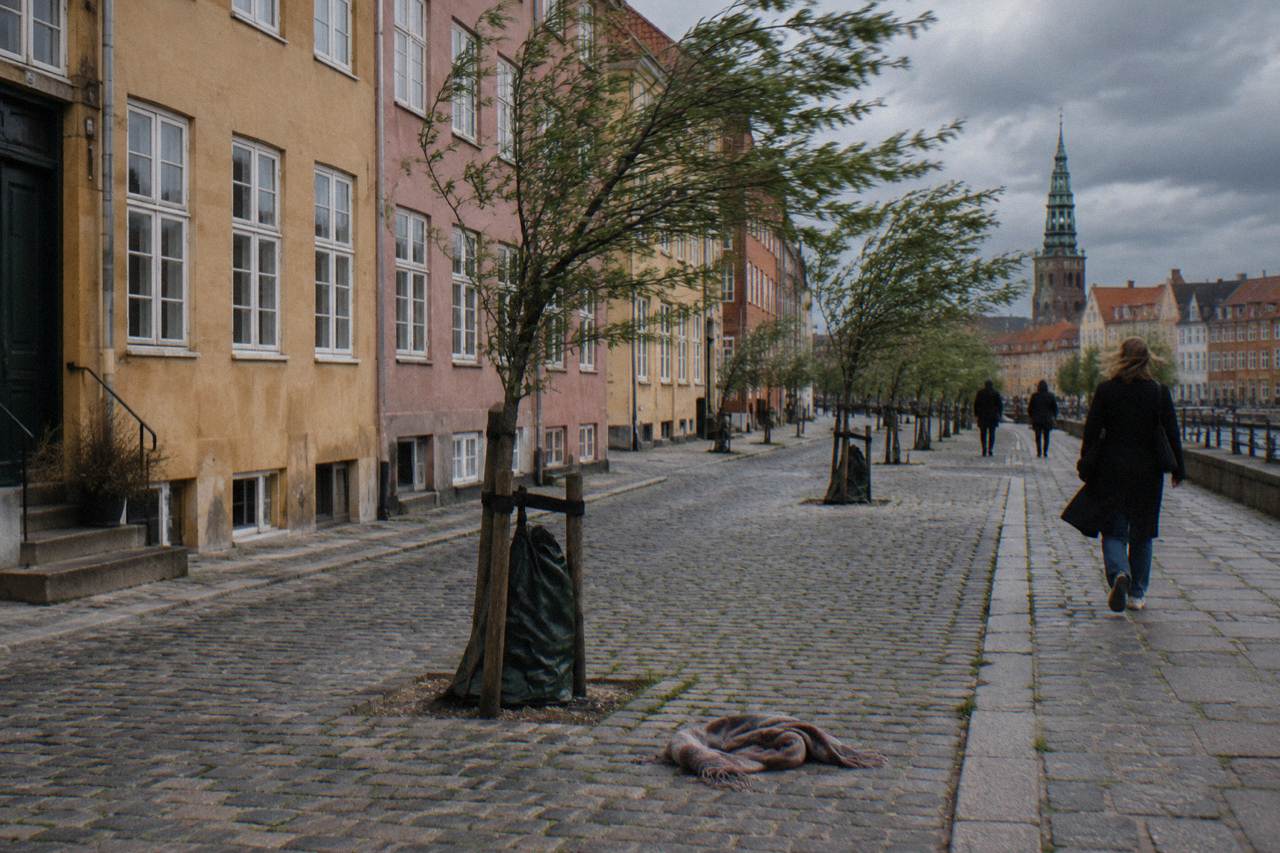
Wear layers you can shed, waterproof shoes with real grip, and a windproof outer layer in every season. Copenhagen's free walking tours run two to three hours, mostly outdoors on cobblestones and canalside paths, and the weather can shift from sunshine to drizzle within an hour. Nothing about the dress code is formal: comfort and dry feet matter far more than style.
That is the short version. The longer version depends on when you visit, which neighbourhood the walk covers, and whether your guide keeps the group standing still for long storytelling stops, because standing still is when the cold gets in. The roster of pooled free walks on this site runs to 21 across the GuruWalk and freetour.com platforms, and they range from a short Christianshavn circuit to a three-hour hygge experience, so one outfit rarely fits every walk on the list.
A good starting point is the most booked option, the Grand Tour, English and Spanish, which runs two hours and 30 minutes from City Hall and is rated 4.82 out of 5 across 2,538 GuruWalk reviews. A walk that long, crossing Rådhuspladsen, the medieval core and the waterfront, will expose every weakness in your shoe choice within the first forty minutes. If you are still choosing which walk to book, these three are the ones most first-time visitors compare:
All three are pay-what-you-want walks listed on GuruWalk, all meet in the city centre, and all spend their entire duration outdoors. That single fact shapes every clothing decision below.
What Should You Wear For Copenhagen's Weather?
Dress for around freezing in deep winter, roughly 20°C in a good summer, and assume rain is possible in all twelve months. The practical uniform is a base layer, a warm mid-layer, and a windproof shell, with the shell packed even on a bright morning. Danish summer evenings drop cool fast, and winter wind off the Øresund makes the canalside stretches feel several degrees colder than the forecast.
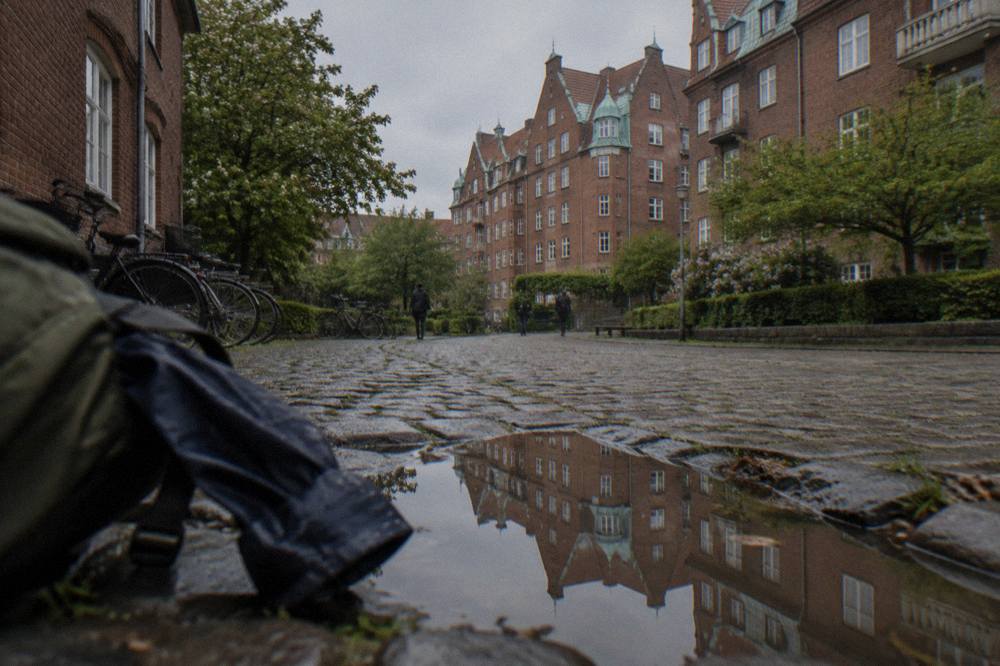
The mistake most visitors make is dressing for the temperature at their hotel door at 10am. Tours start mid-morning and finish early afternoon, and the gap between those two moments is often eight or ten degrees in spring and autumn. A light down jacket or fleece that compresses into a daypack is the single most useful item on this list, because you will wear it at the meeting point, carry it by mid-tour, and want it back by the final stop.
Summer, roughly June through August, is the easiest season: a t-shirt, a light jumper and a packable rain jacket covers almost everything. Winter, December through February, is a different job entirely. You will be standing on stone for two hours in temperatures around freezing, and stone conducts cold straight through thin soles. Insulated boots, wool socks, a hat and gloves are not overkill; they are the difference between enjoying the walk and counting minutes until it ends.
The shoulder seasons, April, May, September and October, are the trickiest to dress for and the most popular for visiting. This table gives planning ranges drawn from typical Danish conditions, not operator promises:
| Season | Typical daytime feel | Base layer | Mid layer | Outer layer |
|---|---|---|---|---|
| December to February | Around freezing, wind chill on the waterfront | Thermal or wool | Fleece or light down | Windproof winter coat, hat and gloves |
| March to May | 5 to 15°C, changeable | T-shirt or long sleeve | Jumper or fleece | Packable rain and wind shell |
| June to August | 15 to 20°C, occasionally warmer | T-shirt | Light jumper for evenings | Packable rain shell |
| September to November | 5 to 15°C, windy and damp | Long sleeve | Fleece or light down | Waterproof jacket |
One more seasonal note worth planning around: if your walking day includes a museum stop, the Ny Carlsberg Glyptotek is free to enter on the last Wednesday of every month, per the museum's own site, which makes the last Wednesday of the month a good day to pair an outdoor walk with an indoor warm-up.
Which Shoes Work Best On Copenhagen's Cobblestones?
Waterproof walking shoes or boots with a lugged sole are the best choice, and anything with smooth leather soles or thin canvas is the worst. The medieval core is laid with rounded cobblestones that are slick in rain, the Christianshavn canalside is a mix of stone and gravel, and a typical tour covers several kilometres of standing and walking combined. Broken-in shoes beat new shoes every time.
The cobblestone point deserves emphasis because it surprises people. Strøget and the main squares are flat and easy, but the side streets of the old core, the stretch along Nyhavn and the lanes of Christianshavn are old stone that puddles and polishes smooth. Trainers are fine if they have decent tread; the failure cases are dress shoes, smooth-soled boots and canvas sneakers that soak through in the first shower.
Heels are a genuine problem, not a style judgement. Cobbles with gaps between them, tram tracks crossing several tour routes, and long standing stops combine to make anything with a raised heel actively unpleasant. Flat, grippy and already worn in is the formula.
If you are walking in winter, add one more consideration: ice. Copenhagen does not salt its cycle lanes and side streets as heavily as some cities, and a January morning can leave patches of black ice on the stones. Boots with a real tread pattern, the kind you would trust on a frosty pavement at home, are worth packing for a December to February visit.
There is also a case for two pairs of shoes on a longer trip. If you are in Copenhagen for several days and taking more than one walk, the same damp trainers worn two days running never fully dry out, and the second day is the one where blisters arrive. Rotating shoes sounds like an extravagance until you are an hour into a walk with a wet heel, at which point it sounds like basic planning. A second pair does not need to be a second walking shoe: any dry, flat, comfortable alternative gives the first pair a night to recover.
What Should You Pack For Rain On A Walking Tour?
Pack a hooded rain jacket or a compact umbrella, a dry layer underneath, and a plastic bag or dry pouch for your phone. Copenhagen sees frequent light rain year round, and tours run in drizzle without stopping, so the question is not whether you get caught but whether you care when you do. Trousers that dry fast beat jeans in every season.
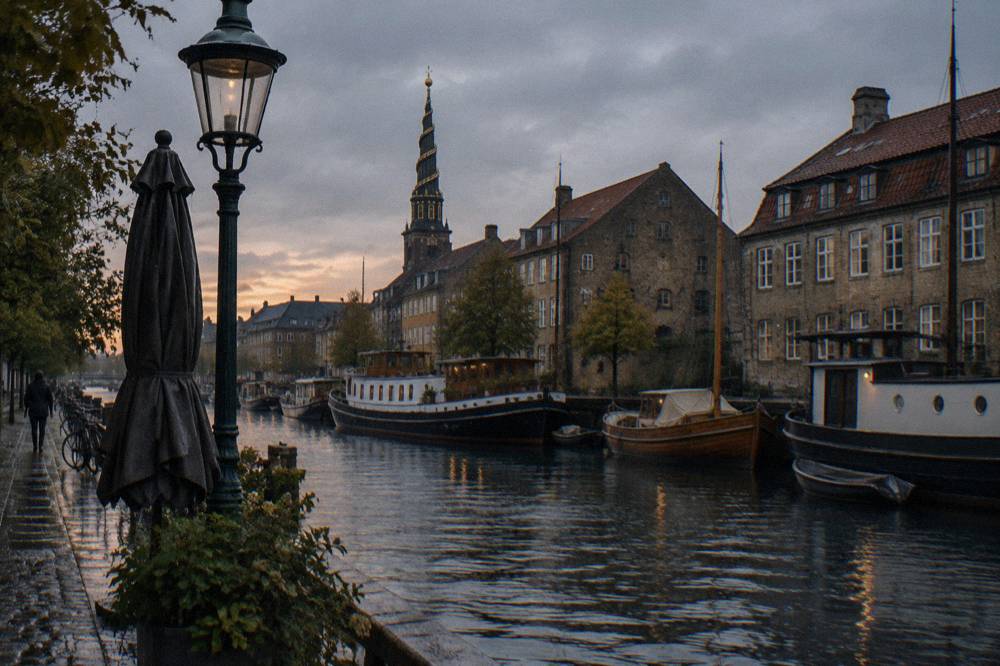
The hood-versus-umbrella question comes down to wind. Copenhagen is a coastal city and the breeze along the harbor picks up umbrellas and turns them inside out with some regularity, so a hooded waterproof is the more reliable of the two. A compact umbrella is fine as a backup for the calmer streets of Indre By, but do not make it your only rain plan if the walk includes the waterfront, because that is exactly where the wind lives.
Denim is the other common misstep. Jeans are heavy, slow to dry, and cold against the skin once wet, which matters on a two-hour walk with no chance to change. Synthetic trousers, or anything marketed as quick-drying, keep a rainy tour from becoming a miserable one. Wool socks deserve the same logic: cotton socks hold moisture against your foot inside a damp shoe, while wool keeps insulating even when wet.
A short packing checklist for any season:
| Item | Why it earns its place | Season |
|---|---|---|
| Hooded rain jacket | Tours continue in drizzle, wind kills umbrellas | All year |
| Packable fleece or down | Warmth at standing stops, compresses when not needed | All year |
| Wool socks | Stay warm when damp, unlike cotton | All year, critical in winter |
| Dry pouch or plastic bag | Protects phone and tip cash in rain | All year |
| Hat and gloves | Standing still on stone in wind drains heat fast | October to April |
| Water bottle | Two to three hours of walking, few stops to buy drinks | All year |
The tip cash point is worth a sentence of its own. These walks are pay-what-you-want, and guides are tipped in cash at the end, so a note tucked somewhere dry is part of the outfit. The details of how much to give are covered in how much to tip a free walking tour guide, which is worth reading before your first walk rather than after.
One rain detail that catches visitors from drier climates: Danish rain is usually light rather than torrential. The jacket you would trust for a heavy shower is more protection than you need; what matters more is coverage duration, because a fine drizzle that lasts the whole walk soaks a non-waterproof layer just as thoroughly as a downpour does, only more slowly. This is why the shell goes in the pack even when the morning sky looks clear, and why a jacket with a hood beats a jacket that needs a separate hat to keep the rain off your neck.
Does What You Wear Change By Neighbourhood?
Yes, modestly. Indre By means cobblestones and exposed squares, Christianshavn means canalside wind and gravel lanes around Christiania, and Vesterbro means pavement and the Meatpacking District's cobbles. The base outfit stays the same, but the waterfront walks demand more wind protection and the old-core walks demand more shoe grip.
The Indre By walks are the classic tourist circuit: Rådhuspladsen, the cathedral, the university quarter, Nyhavn. The stones are the story here, and so is the standing time, because the old core has the densest concentration of storytelling stops. The Grand Tour, English and Spanish covers exactly this ground, two hours and 30 minutes from City Hall, rated 4.82 out of 5 across 2,538 GuruWalk reviews on its listing. Dress for it the way you would dress for a long museum queue that happens to be outdoors: warm layers you can open and close as the group moves and stops.
Christianshavn is the wind test. The neighbourhood sits between the harbor and the canals, and its lanes run close to open water on two sides. The Politically Incorrect Hippies Walk, an English-language GuruWalk walk rated 4.74 out of 5 across 393 reviews, spends an hour and a half in exactly this exposure, and the practical difference from Indre By is simple: bring the windproof layer even on a mild day, because the canalside stretch will find whatever gap your jacket has. The neighbourhood guide at Christianshavn and Christiania free things to do covers what the walks themselves pass.
Vesterbro is the most forgiving underfoot: wider pavements, fewer old stones, and a route that usually hugs the main streets out from the central station toward the Meatpacking District. The Working-Class Vesterbro walk, rated 4.81 out of 5 across 27 GuruWalk reviews, is an hour-and-a-half English walk from Hovedbanegården, and standard city trainers handle it without complaint. The one Vesterbro-specific note is evening light: the district's atmosphere walks run late, and reflective or lighter-coloured outer layers are a small courtesy to cyclists on the unlit side streets.
And then there is the walk that is mostly about laughing rather than looking, which changes the clothing maths in one specific way. The Comedy Walk in English, rated 4.82 out of 5 across 1,863 GuruWalk reviews, runs two hours from Gammel Strand, and groups spend more time standing in a circle than walking between stops. Standing is colder than walking, so on any day below about 10°C, add one warmer layer than you think you need for a comedy-format tour.
What Should You Wear On An Evening Or Nightfall Tour?
Wear everything the daytime version of the walk requires, plus visible layers and reflectors, because Copenhagen's evening walks run after the street lights come on and the city dims its side streets deliberately. A light-coloured jacket, a reflective strip or a small bike light in a pocket is the local-standard move. Warmth matters even more: evening temperatures sit several degrees below the afternoon's.
Copenhagen in the evening is a city of cyclists, and cyclists assume they can see you. Danish street lighting on the minor lanes is deliberately low, and a dark jacket on an unlit Christianshavn lane is genuinely hard to spot. This is not a legal requirement for pedestrians, it is just how the city works, and it is the one piece of local dress culture worth copying.
The nightfall formats on the roster include a Medieval Tour at Nightfall, a Spanish-language GuruWalk walk rated 4.95 out of 5 across 44 reviews, which runs two hours and 15 minutes from the Rosenborg lions. Evening walks also pair naturally with a Tivoli visit afterwards, and it is worth knowing that Tivoli Gardens entry starts from DKK 180, per the official Tivoli site, so budget that separately from your walking-tour tip.
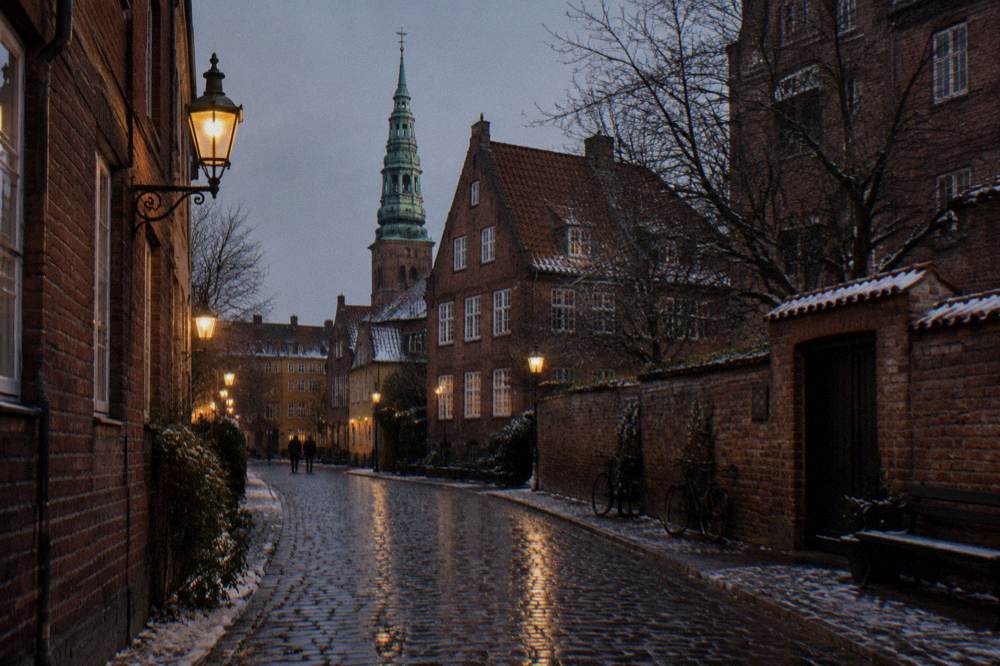
For evening wear in practice: the same waterproof shell, one extra mid-layer compared to the afternoon, and shoes you trust on stones you can no longer see clearly. The cobblestones that were merely slick at midday are slick and invisible after dark, and this is where the lugged-sole advice from earlier pays off a second time.
Which Walks Are Worth Dressing Up For?
None of them, in the formal sense. Every walk on the roster is an outdoor, standing-heavy, tip-based street tour where guides and locals alike wear practical clothing. The only dress decisions that genuinely affect the experience are warmth, grip and rain protection. If you look slightly underdressed next to a well-heeled crowd on Strøget, you are dressed correctly for the walk.
That said, walks differ in how much standing they involve, and standing is the hidden clothing variable. The three-hour Hygge Experience, rated 4.66 out of 5 across 2,132 GuruWalk reviews, is the longest carded walk on the roster, and three hours outdoors is a different thermal problem from a short loop. The Historic Center Walk, rated 4.84 out of 5 across 1,421 GuruWalk reviews, packs its two hours into the compact old core with frequent stops, which means less walking-generated warmth and more standing still.
A quick comparison of the main English walks and what they ask of your outfit:
| Walk | Length | Rating on its listing | Terrain demand | Warmth demand |
|---|---|---|---|---|
| Grand Tour, English and Spanish | 2h 30m | 4.82 out of 5, 2,538 GuruWalk reviews | Cobbles, squares, waterfront | High |
| 3-Hour Hygge Experience | 3h | 4.66 out of 5, 2,132 GuruWalk reviews | Mixed city streets | Highest, longest exposure |
| Historic Center Walk, Map Included | 2h | 4.84 out of 5, 1,421 GuruWalk reviews | Dense old-core cobbles | High, many standing stops |
| Comedy Walk in English | 2h | 4.82 out of 5, 1,863 GuruWalk reviews | Flat central streets | High, standing in circles |
| Politically Incorrect Hippies Walk | 1h 30m | 4.74 out of 5, 393 GuruWalk reviews | Canalside wind and gravel | Moderate but wind-exposed |
The pattern is consistent: the longer and more stop-heavy the walk, the warmer you need to dress relative to the thermometer. A two-hour walk with a dozen standing stops asks more of your mid-layer than a brisker route of the same length, because your body never builds up the warmth that continuous walking generates. This is also why the same outfit can feel perfect on one walk and inadequate on another on the very same afternoon.
If you want to compare the walks in full rather than just their clothing demands, the best free walking tour comparison breaks down all the featured picks side by side.
Whatever you choose, the booking itself is the easy part: every walk here is free to reserve and paid by tip at the end, and this Free Things To Do In Copenhagen guide sits alongside a full roster of walks you can check without paying anything upfront. If you are still deciding, these three are the walks most visitors weigh against each other for a first visit:
Common Questions About What To Wear On A Free Walking Tour In Copenhagen
What To Wear On A Free Walking Tour In Copenhagen?
Layers, waterproof shoes with grip, and a windproof shell in every season. Tours run two to three hours outdoors on cobblestones, so comfort and dry feet matter more than style, and a packable warm layer handles the gap between the meeting point and the final stop.
Do Copenhagen free walking tours run in rain?
Yes, walks generally run in light rain and drizzle, which is why a hooded waterproof is the most useful single item you can pack. Guides move the group under awnings for long stops where possible, but the route itself stays outdoors.
Are trainers enough, or do I need boots?
Trainers with decent tread are fine for most routes in dry weather. Boots with a lugged, waterproof sole are the better call from October through March, when the stones are wet or icy and the wind off the harbor drops the felt temperature.
How cold does a winter walking tour actually feel?
Colder than the forecast, because you spend much of the walk standing still on stone. Plan for around freezing in deep winter, add wind chill on the canalside stretches, and bring a hat and gloves rather than trusting the midday sun.
Should I dress differently for an evening tour?
Only by adding warmth and visibility. Evening walks run after dark on deliberately low-lit side streets, so a light-coloured or reflective outer layer is the local-standard courtesy to cyclists, and one extra mid-layer covers the temperature drop.
Does what I wear affect the tip or the tour experience?
Not the tip, which is entirely up to you and covered in the site's tipping guide. But cold feet or a soaked jacket will shorten your patience on a two-hour walk, so the clothing choices affect how much of the tour you actually enjoy.